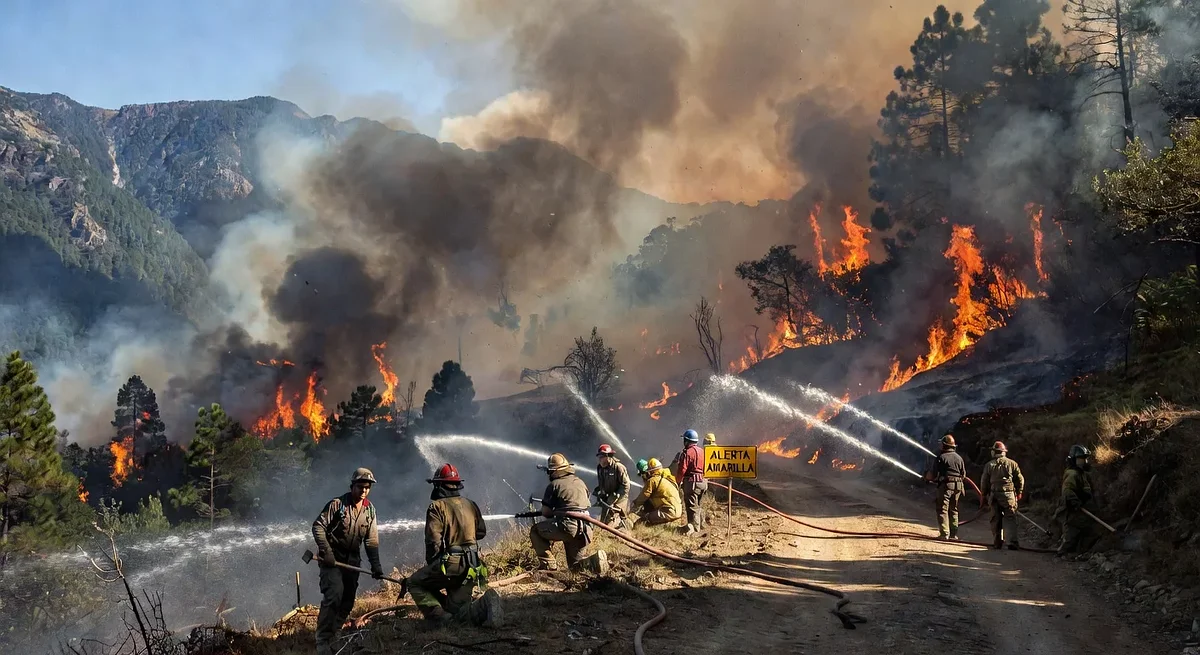
Over 3000 tourists have been evacuated from Patagonia due to intense wildfires in Chubut, which have ravaged thousands of hectares. Authorities confirm the El Hoyo fire was intentional, while experts warn of respiratory health risks from smoke affecting 16 provinces.
Wildfires in Patagonia trigger mass evacuations
In the last 48 hours, Patagonia has become the epicenter of multiple forest fires, mainly in Chubut province. In areas like El Hoyo and Epuyén, over 3000 tourists were evacuated as flames advanced aggressively, fueled by drought and strong winds. Governor Ignacio Torres confirmed: “over 3,000 tourists were evacuated from the area and the miserable people who set the fire will end up in prison”.
The fire in Puerto Patriada, near El Hoyo—an Andean village with about 50 permanent residents—started on Monday, January 5, and spread rapidly. By Wednesday, it had affected at least 2000 hectares, with 1800 hectares destroyed in El Hoyo and Epuyén. Prosecutor Carlos Díaz Mayer determined that “it started with an accelerator or gasoline, which indicates someone intentionally set it”. The prosecutor's office is investigating possible links to self-proclaimed Mapuche groups, and the Ministry of Security vows: “There will be no impunity. The Ministry will identify, arrest, and bring the responsible parties to trial”.
95% of fires have human origins, per authorities, and open fires are prohibited on public lands. Meanwhile, the Argentine Association of Respiratory Medicine (AAMR) warns of smoke reaching cities in 16 provinces—including Tucumán, Córdoba, Mendoza, and Buenos Aires—with “potentially explosive or extremely critical” alert levels. The smoke, containing PM2.5 and PM10 particles, carbon monoxide, and nitrogen oxides, irritates respiratory tracts, worsens asthma and COPD, and impacts children, elderly, and those with chronic conditions. There is an increase in respiratory consultations and emergency visits.
AAMR recommendations include avoiding exposure, closing windows, using air conditioning in recirculation mode, and N95 masks when going out. Specialists conclude: “Fires are not just an environmental or landscape issue: the smoke they generate is a serious pollutant that affects lung function and can aggravate chronic diseases. It is essential to prioritize fire prevention and public health protection at all government levels”. Report any fire spots to 100.