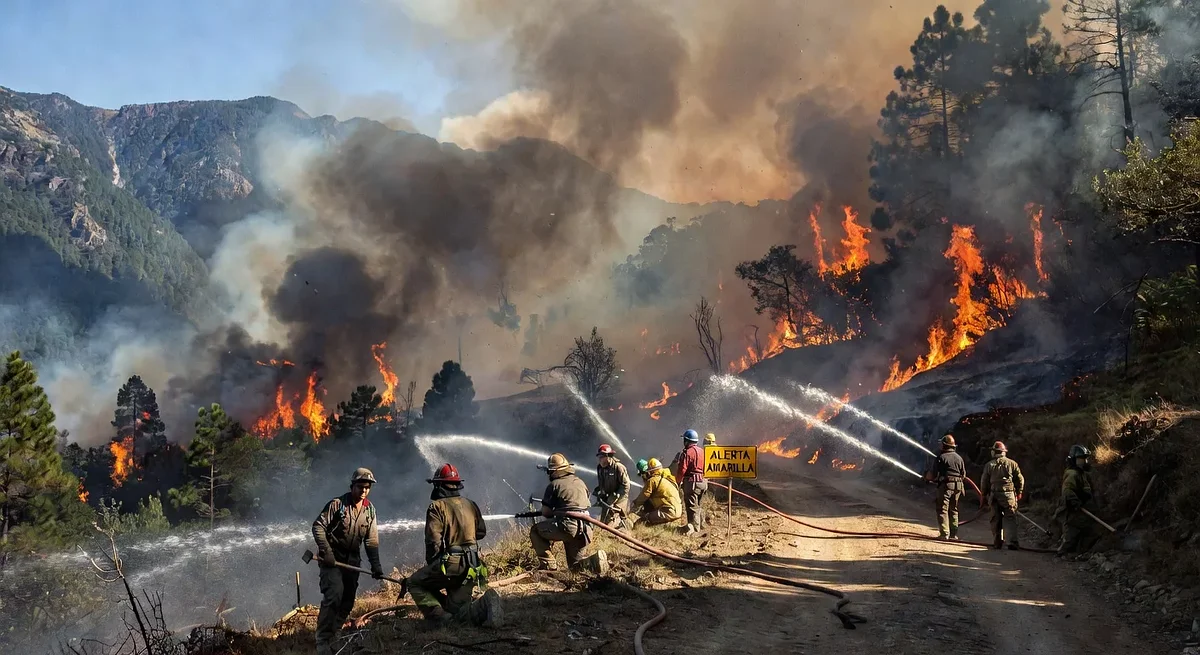
Mayon Volcano's activity has intensified since early January, with the alert level raised to 3 on January 6—up from Level 2 set on New Year's Day—and a lava dome collapse on January 10 producing glowing pyroclastic flows and lava along multiple gullies. Over 4,000 residents in Albay have been evacuated amid heightened risks.
Following the elevation to Alert Level 2 on January 1 due to increasing unrest, Phivolcs raised the alert to Level 3 on January 6 amid magmatic eruption signs from the summit lava dome and rising pyroclastic flows.
On January 10, the lava dome collapsed, sending bright red magma and pyroclastic density currents down the Mi-isi, Bonga, and Basud gullies. Phivolcs reported 150 rockfalls and 90 pyroclastic events in the prior 24 hours, with summit glow observed around 9:46 p.m. on January 9. Sulfur dioxide emissions reached 195 tons per day, with a 500-meter plume drifting west-northwest and southwest.
Evacuations now cover 4,139 residents from Tabaco City, Malilipot, Ligao City, Camalig, and Guinobatan in Albay, who are in centers supported by P6.62 million in aid from the NDRRMC, including food packs, medicines, and kits.
Phivolcs urges staying outside the 6-km permanent danger zone and vigilance for landslides, fragments, lava flows, pyroclastics, explosions, and lahars. Bicol region authorities continue monitoring and preparedness.