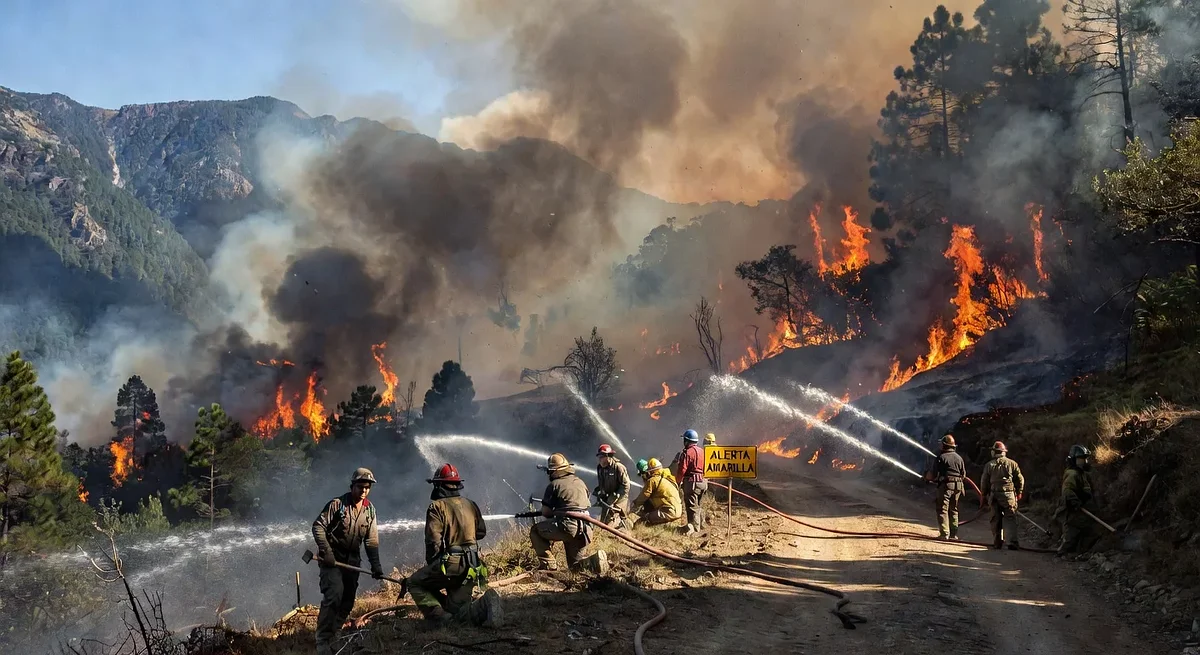
Wildfires in Chubut, especially near Los Alerces National Park, have reignited due to high temperatures and wind gusts after 43 days of impact. US Ambassador to Argentina Peter Lamelas delivered 12 boxes of equipment to fight the fires in critical areas of the Andean Comarca. Meanwhile, firefighters demand better pay and working conditions.
Wildfires in Argentina's Chubut province, in Patagonia, have intensified again due to high temperatures and strong wind gusts. The alert focuses near Los Alerces National Park, which has been affected for 43 consecutive days.
In response to a request for aid, US Ambassador to Argentina Peter Lamelas announced and delivered 12 boxes containing hoses, keys, and communication equipment. These supplies, partly made in Germany and marked with US flags, were aimed at fighting fire hotspots in Puerto Patriada, Epuyén, and Los Alerces National Park. The handover was signed by Santiago Hardie, director of the Federal Emergency Agency, which took over the National Fire Management Service at the start of 2025 under then-Security Minister Patricia Bullrich.
Lamelas emphasized bilateral cooperation: “Being a partner of Argentina also means being there when it needs us. In the face of the fires in Patagonia, we responded to the request for assistance with fire management and communications equipment to fight the fires and care for those who protect their communities.”
Yet, the situation is tense. The national government has accused the Mapuche people of starting the fires without evidence, drawing criticism from environmental organizations. Firefighters and National Parks workers continue to demand higher wages, stable contracts, and better job security, worsened by budget cuts that eliminated funding for the Forests Law and weakened prevention policies.
President Javier Milei thanked the firefighters via an AI-generated image without visiting the area. Firefighter Ariel Dattoli captured the frustration: “Now they call us heroes, but for years we suffered wage penalties and quarterly contracts, always with the uncertainty of not knowing if we would continue working.”