Experts discuss India's path to third largest economy at Davos

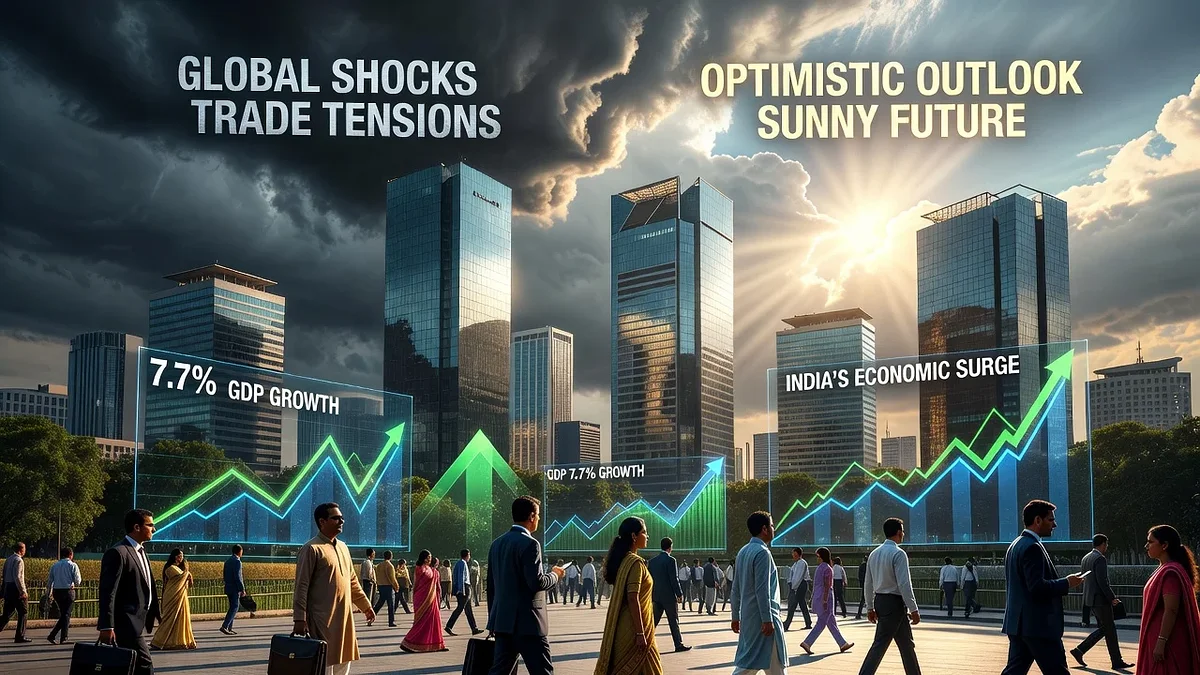
At the World Economic Forum in Davos, global experts discussed India's robust growth rate, deepening reforms, and key challenges in a panel session. Organized with the India Today Group, participants including Gita Gopinath, Sunil Mittal, Ashwini Vaishnaw, and IKEA's CEO shared insights on India's goal to become a developed nation by 2047. They highlighted digital infrastructure, labor reforms, and obstacles like pollution.

On January 21, 2026, at the World Economic Forum in Davos, a special session organized with the India Today Group was moderated by Vice Chairperson Kalli Purie. The discussion focused on whether India can become the world's third largest economy.

IMF Deputy Managing Director Gita Gopinath praised India's achievements. She stated, “Digital infrastructure has been impressively built. What has been done with GST, especially the recent simplifications, is extremely helpful for the economy.” She emphasized maintaining momentum by increasing per capita income and achieving the 'Viksit Bharat' goal by 2047. Low single-digit inflation was seen as positive, but she pointed to challenges in land acquisition, judicial reforms, and the labor market. She noted that only 30% of growth has come from labor and stressed the need for large-scale skilling. Pollution was highlighted as a major hurdle, citing World Bank data: “About 1.7 million people die annually in India due to pollution.”

Bharti Enterprises Chairman Sunil Mittal adopted an optimistic view. He said, “India will become the third largest economy for sure. If I say it in spiritual terms, it is written in destiny.” He stressed reaching a 25-30 trillion dollar economy, policy stability, and global trade deals. Recalling the old license raj, he praised current reforms.

IKEA's global CEO Juvencio Meztu Herrera described India as a large market with a young population and democracy. He said, “India has the capacity to leap from an agriculture-based economy directly into the advanced AI era faster than any other country.” He advised long-term investment.

Union Minister Ashwini Vaishnaw detailed reforms: “In the last ten years, 1,600 laws have been repealed. About 35,000 compliances have been removed.” Telecom tower permits now take 7 days instead of 270, and railway terminals 2.5 months instead of six years. Despite tariff challenges, exports have grown, with electronics becoming the third largest export sector.

In closing, Kalli Purie remarked, “India is a positive force for the world, and its golden future is already set.” The session underscored opportunities and challenges in India's economic journey.
Liittyvät artikkelit

Illustration of India's Economic Survey 2025-26 tabling in Parliament, highlighting GDP growth, reforms, manufacturing revival, and PM Modi's approval.
AI:n luoma kuva

India's economic survey 2025-26 highlights growth and reforms

Raportoinut AI AI:n luoma kuva

India's Economic Survey 2025-26, tabled in Parliament on January 30, 2026, projects robust GDP growth amid global uncertainties and recommends key reforms for strategic resilience. It emphasizes manufacturing revival, digital curbs and policy overhauls to bolster economic stability. Prime Minister Narendra Modi praised it as a roadmap for inclusive development.

India recorded an 8.2% GDP growth in the second quarter, driven by strong manufacturing and services sectors. However, the International Monetary Fund has assigned a 'Grade C' to the country's national income accounting practices, highlighting structural weaknesses. This assessment underscores questions about the long-term sustainability of the growth amid uneven sectoral performance.

Raportoinut AI

Trade wars and geopolitical tensions are shaping the EU-India summit in New Delhi. A planned mega-agreement aims to bundle economic strength and bring the world's two largest democracies closer together. A study forecasts significant GDP boosts for both sides.

Commerce Minister Piyush Goyal defended the newly concluded India-EU free trade agreement against domestic criticism, emphasizing its benefits for economic growth. The deal addresses key issues like carbon tariffs and mobility for professionals. However, US Treasury Secretary Scott Bessent expressed disappointment, accusing Europe of prioritizing trade over support for Ukraine.

Raportoinut AI

After several years of negotiations, 20 out of 24 chapters in the India-EU free trade agreement have been finalized. The aim is to conclude the deal before the EU leaders' visit to India this month, making it India's largest FTA. This pact would boost bilateral trade, though sensitive issues remain to be addressed.

The International Monetary Fund has raised its 2026 growth projection for China to 4.5 percent, up 0.3 percentage points from its October forecast, due to eased trade tensions and sustained domestic policy support. China's 2025 growth forecast was also revised upward by 0.2 percentage points to 5 percent. The changes reflect stimulus measures and additional policy bank lending for investment.

Raportoinut AI

At a national conference in Rajasthan, experts called for fair and inclusive markets to bolster small farmers' security and local food systems. The event highlighted ecological farming and policy needs amid climate challenges. Discussions involved stakeholders from eight states, focusing on resilient value chains.


Tämä verkkosivusto käyttää evästeitä

Käytämme evästeitä analyysiä varten parantaaksemme sivustoamme. Lue tietosuojakäytäntömme tietosuojakäytäntö lisätietoja varten.
Hylkää