Kiribati leads education spending as percentage of GDP

A Our World in Data study ranks Kiribati first in education investment at 16.4% of GDP. Colombia places third in South America with 5.3%.

The Republic of Kiribati, with just over 110,000 inhabitants, tops the list with an investment of 16.4% of its gross domestic product in education. It is followed by Tuvalu at 12.8% and Micronesia at 11.6%.

The study draws on UNESCO, OECD and national records to measure total public education spending, including teacher salaries, infrastructure and transfers.

In South America, Bolivia records the highest share at 7.5%, followed by Brazil at 5.6%. Colombia ranks third at 5.3%.

Countries with the lowest investment include Somalia at less than 0.1%, Nigeria at 0.3% and Zimbabwe at 0.4%. The analysis covers data through 2026.
Artikel Terkait

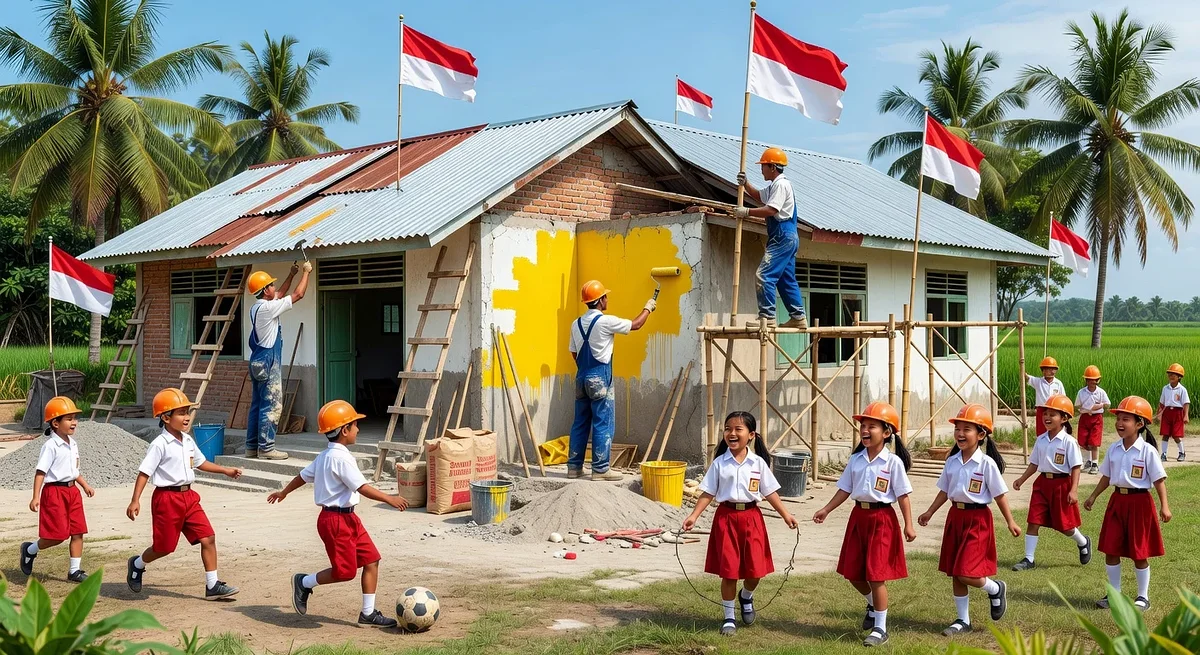
Illustration of workers renovating a rural Indonesian school with children playing nearby, representing the government's revitalization program.
Gambar dihasilkan oleh AI

Pemerintah targetkan revitalisasi 71.744 sekolah pada 2026

Dilaporkan oleh AI Gambar dihasilkan oleh AI

Pemerintah Indonesia menargetkan revitalisasi 71.744 satuan pendidikan pada tahun 2026 dengan anggaran Rp14 triliun. Menteri Pendidikan Dasar dan Menengah Abdul Mu'ti menyatakan realisasi dana telah mencapai Rp2,6 triliun. Program ini memprioritaskan sekolah rusak akibat bencana dan wilayah tertinggal.

Yahia Aboul Fotouh, Chief Executive Officer of Housing and Development Bank, highlighted Egypt's education investments at the Fifth Annual Education Investment Summit.

Dilaporkan oleh AI

The Alliance of Concerned Teachers called for an increase in the national education budget to at least six percent of GDP to reduce the financial burden on educators and parents.

Abelardo de la Espriella, Colombia's president-elect, held meetings with the World Bank and IMF to advance projects in infrastructure, health and education. Fitch Ratings warned of a fiscal deficit close to 7% of GDP and other economic challenges facing the new administration.

Dilaporkan oleh AI

Chile's Dirección de Presupuestos (Dipres) reported that the Government's gross debt hit US$158.215 billion by the end of Q1 2026, or 42.6% of GDP. Fiscal cash reserves fell to US$597 million, as fiscal revenues rose 0.9% in real annual terms and public spending 0.7%. The report notes heterogeneous performance driven by mining.

The Autonomous Fiscal Rule Committee reported that central government total and primary spending through April 2026 reached 7.5% and 6% of GDP respectively.

Dilaporkan oleh AI

Major global investment banks' average forecast for South Korea's 2026 economic growth reached 3 percent by the end of June. Strong semiconductor exports drove the upward revision.


Situs web ini menggunakan cookie

Kami menggunakan cookie untuk analisis guna meningkatkan situs kami. Baca kebijakan privasi kami untuk informasi lebih lanjut.
Tolak