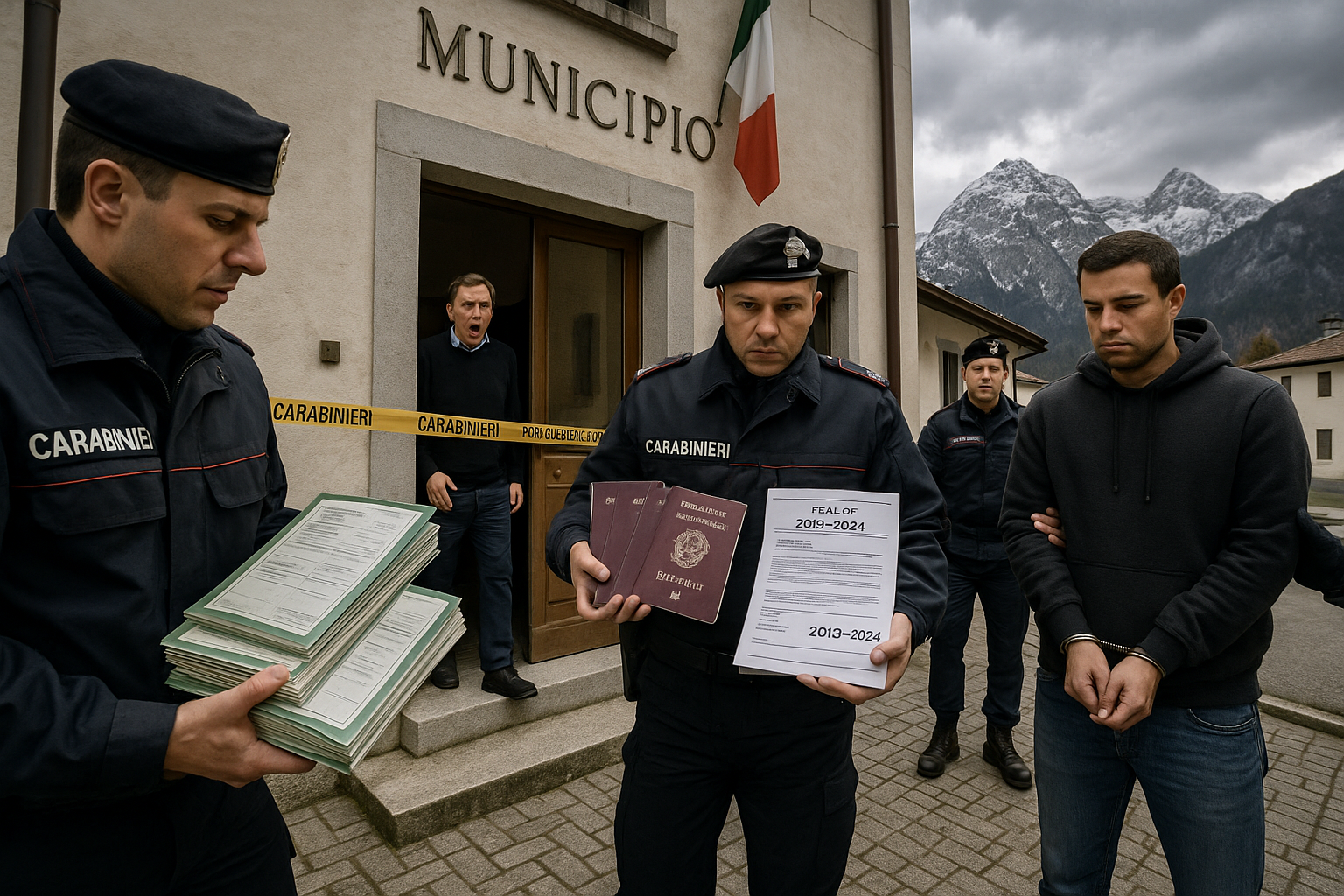
Italian authorities are investigating an alleged scheme in Moggio Udinese that enabled over 80 Brazilians to obtain Italian citizenship through fake residencies from 2018 to 2024. Six people, including municipal employees and one Brazilian, have been indicted for document forgery. The case contributed to recent changes in Italy's citizenship law, restricting access for descendants abroad.
In Moggio Udinese, a small town of about 1,600 residents in the Julian Alps in northern Italy, a probe by the Udine Public Prosecutor's Office uncovered a scheme that benefited 83 Brazilians with Italian citizenship by blood right. From 2018 to 2024, these individuals falsely declared residencies at two houses on Via Abbazia and Via Traversigne, near the town hall, paying around €6,500 (R$41,300) each for the process, including the fake residency title.
Six people were indicted: four municipal administration employees, Brazilian Sergio Luiz Garana, 54, from Veneto, and an Albanian woman. They face charges of ideological falsehood in public documents, punishable by one to six years in prison, potentially tripling for recidivism. Prosecutor Giorgio Milillo stated: "Some even came [to the city], but few. They stayed a few days, did some tourism, and left." Fake documents included fiscal codes issued before arrival, forged signatures, and rental contracts with incongruent dates. Most beneficiaries never actually resided in the town, using the administrative route to speed up recognition, which requires legal residency in Italy.
The list of beneficiaries includes 19 members of a Brazilian family with the surname Floresi or Florezi, spanning three generations aged 6 to 71. A family member in São Paulo claimed the process was legitimate but did not respond to detailed questions.
This case adds to other abuses, such as frauds in Veneto (160 requests in 2024), Catania (12 arrests in 2020), and falsifications for 68 Brazilians in 2023. To curb the "commercialization of the Italian passport," Giorgia Meloni's government amended the 1992 Citizenship Law in 2025, limiting blood transmission to two generations born abroad. The decree was presented in March and approved in May. Deputy Prime Minister Antonio Tajani said: "The granting of Italian citizenship is a serious matter. [...] It's not a joke to have the [Italian] passport in your pocket to shop in Miami."
The new rule affects millions of descendants in Brazil, home to about 30 million Italian-Brazilians. The Constitutional Court will review its validity in March 2026. Lawyer Celeste Di Leo warns that if fraud is proven, beneficiaries may lose citizenship through judicial or administrative annulment, as in a 2019 Milan Tribunal precedent that declared processes null without real residency.
Current mayor Martina Gallizia declined comment, citing the ongoing investigation. Milillo notes such schemes are easier in small towns with less oversight.
