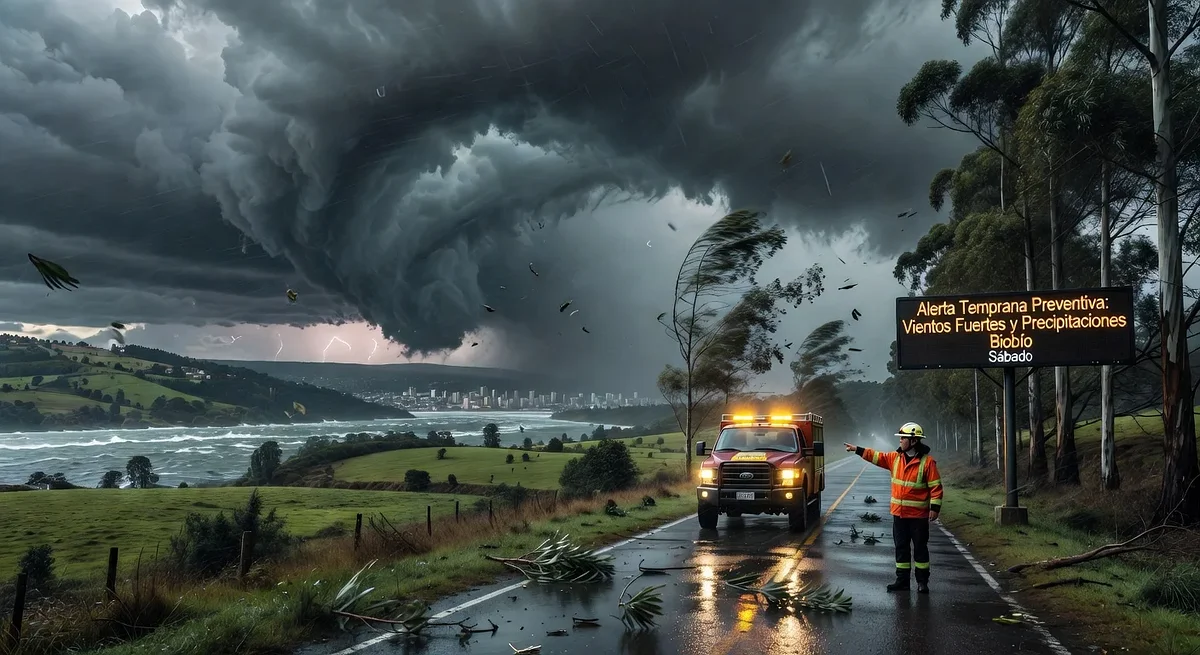
The National Unit for Risk and Disaster Management (Ungrd) warned of increased rainfall in the Caribbean, Andean, and Pacific regions due to a new cold front affecting Colombia from February 22 to 26. The Ideam specified special attention in areas like Córdoba and the Gulf of Urabá, while Dimar forecasts strong winds and high waves. Authorities recommend monitoring and preparation for potential floods and landslides.
The Ungrd issued a warning about the arrival of a new cold front that will cause increased rainfall in the Caribbean, Andean, and Pacific regions from February 22 to 26, 2026. According to the Institute of Hydrology, Meteorology and Environmental Studies (Ideam), special attention should be given to the Gulf of Urabá and departments such as Córdoba, Sucre, Bolívar, Atlántico, Magdalena, Cesar, central and southern La Guajira, Antioquia, Norte de Santander, Caldas, Risaralda, Quindío, Tolima, Huila, Valle del Cauca, Cauca, Nariño, and Chocó.
In the Sinú river basin in Córdoba, the Ideam alerted to heavy rains associated with an instability line in the Caribbean Sea linked to the cold front. For February 22, strong precipitations are expected in the center and south of the department, with accumulations of 20 to 40 millimeters, and moderate in the northwest, 10 to 20 millimeters. February 23 will see the highest accumulations, 40 to 60 millimeters in some areas, exceeding the usual February average. Rains will continue on February 24 with less intensity, accompanied by strong winds and higher waves along the Caribbean coast.
The General Maritime Directorate (Dimar) forecasts north-northeast winds between 30 and 50 km/h, and wave heights of 2.3 to 3.2 meters in the Archipelago of San Andrés, Providencia and Santa Catalina, and North Cayos Islands. Waves of 2 to 3 meters are also expected in central sectors of the Bolívar, Atlántico, and Magdalena coastlines.
Although the Sinú river level in Montería showed a slight decline, the Ideam does not rule out increases from February 23, with the flow reaching its highest point at the Urrá discharge on February 26, arriving in Montería that night and in Lorica in the early hours of February 27. The risk of flooding persists in vulnerable areas with histories of overflows.
"From the Ungrd, we maintain active coordination with municipal and departmental risk management councils across the country. We call to strengthen contingency plans and permanent monitoring, as well as for municipal and territorial entities to keep their preparation and response plans active," said Carlos Carrillo, director of the Ungrd.
Recommendations include monitoring slopes and activating early alerts, avoiding risk zones, reporting cracks or detachments, watching rivers and drains, preparing emergency kits, and following official instructions. In the Caribbean, watch coastal zones, secure roofs and light infrastructure, inform fishermen and the tourism sector, and stay away from the coast. The Ungrd will continue coordinating actions with the Ideam, Dimar, and territorial authorities, reiterating the call to stay informed through official channels and adopt self-protection measures.