Brazil's GDP grows 2.3% in 2025 amid slowdown

Brazil's Gross Domestic Product (GDP) expanded 2.3% in 2025, below the 3.4% of 2024, according to data released by the IBGE on Tuesday (3). The economy did not grow in the second half, with family consumption stagnant and productive investment declining, but government spending and exports prevented contraction. The slowdown stems from tighter monetary policy to control inflation.

The GDP data for 2025, released by the IBGE on March 3, 2026, show an expansion of 2.3%, lower than the 3.4% recorded in 2024. In the second half of 2025, the Brazilian economy recorded no growth: family consumption remained stagnant, while productive investment fell. Government spending and exports were the factors that prevented an overall contraction.

Performance was mainly supported by agriculture and extractive industry, sectors accounting for less than 11% of GDP but contributing nearly half of the annual growth. This sequence of positive surprises in economic activity, started after the Covid-19 pandemic and driven by public spending under the governments of Jair Bolsonaro and Luiz Inácio Lula da Silva, has been interrupted.

Fiscal stimulus reduced the credibility of public accounts, raised inflation, and led the Central Bank to increase interest rates to 15% per year. Donald Trump's management in the United States weakened the dollar, easing pressure on prices. Even so, 2025 growth exceeded the annual average of 1.4% seen between the end of the 2014-2016 recession and the start of the pandemic.

For 2026, the median of market forecasts compiled by the Central Bank is 1.8%, while the Finance Ministry projects 2.3%. The official assessment predicts recovery in industrial production and investments, supported by interest rate cuts, incentives for the industrial and civil construction sectors, and a reduction in Income Tax for the middle class. However, uncertainties include the presidential succession, doubts about the fiscal plan, and the potential impact of the war between the United States, Israel, and Iran, which could delay Selic cuts. The Central Bank's next decision on interest rates is scheduled for March 18.

GDP, calculated by the IBGE from the supply or demand perspective, measures the value added to the economy, excluding intermediate inputs. From the demand side, it includes family and government consumption, investments (FBCF), and the balance of exports and imports. Quarterly data are released about 60 days after the period, with definitive annual revisions two years later.
ተያያዥ ጽሁፎች

Realistic illustration of Colombia's 2025 GDP growth at 2.6%, featuring cultural events, consumption, and a growth chart below expectations amid declining investment.
በ AI የተሰራ ምስል

Colombia's gdp growth in 2025 reached 2.6%

በAI የተዘገበ በ AI የተሰራ ምስል

The National Administrative Department of Statistics (Dane) reported that Colombia's economy grew 2.6% in 2025, below expectations of 2.8%. In the fourth quarter, GDP expanded 2.3%, driven by household consumption, the public sector, and cultural activities like concerts. Investment fell 2.9%, the lowest level in two decades.

Following late-2025 reports of economic promise and investor optimism based on preliminary data, South Africa's gross domestic product expanded by just 1.1% for the full year of 2025—up from 0.5% in 2024 but below the Treasury's 1.4% estimate. Quarterly growth hit 0.4% in Q4 after a revised 0.3% in Q3. Industrial sectors like mining and manufacturing contracted, offset by gains in finance and investment.

በAI የተዘገበ

Japan's real gross domestic product grew at an annualized rate of 0.2% in the October-December quarter of 2025, falling short of market estimates. Preliminary data from the Cabinet Office showed a 0.1% quarter-on-quarter rise, marking the first positive growth in two quarters. The full-year growth rate for 2025 reached 1.1%, the highest since 2022.

The Bank of France has cut its GDP growth forecasts to 0.9% for 2026 and 0.8% for 2027 due to surging energy prices from the Middle East conflict. This adjustment is based on a main scenario of temporary hydrocarbon price increases. The bank also expects inflation at 1.7% this year.

በAI የተዘገበ

Japan's Q4 2025 GDP was revised upward to 1.3% annualized from the preliminary 0.2% reported on February 16, driven by strong business spending. January household spending on goods and private services held steady despite a year-on-year drop, with contained retail gasoline prices easing inflation. Analysts now expect the Bank of Japan to hold rates in April and hike in June.

China's first batch of hard economic activity data for 2026 exceeded downbeat forecasts, reports Seeking Alpha. Analysts note more work is required to support domestic growth amid rising inflation risks.

በAI የተዘገበ

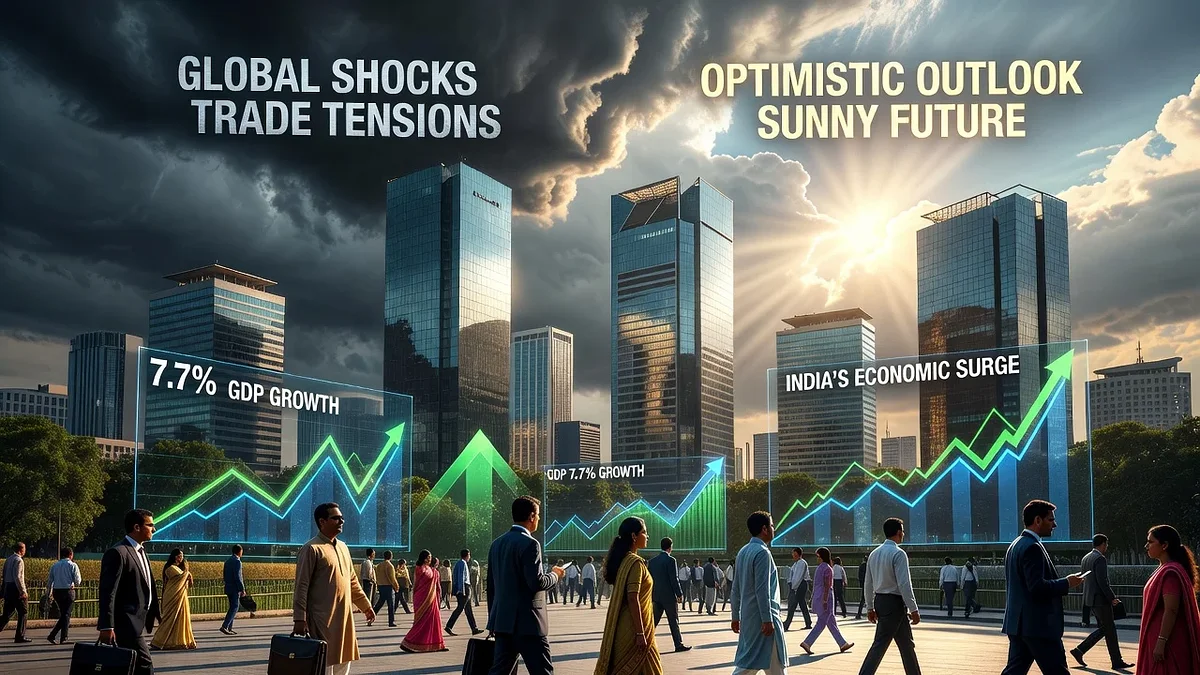
India's Economic Survey 2025-26, tabled in Parliament on January 30, 2026, projects robust GDP growth amid global uncertainties and recommends key reforms for strategic resilience. It emphasizes manufacturing revival, digital curbs and policy overhauls to bolster economic stability. Prime Minister Narendra Modi praised it as a roadmap for inclusive development.


ይህ ድረ-ገጽ ኩኪዎችን ይጠቀማል

የእኛን ጣቢያ ለማሻሻል ለትንታኔ ኩኪዎችን እንጠቀማለን። የእኛን የሚስጥር ፖሊሲ አንብቡ የሚስጥር ፖሊሲ ለተጨማሪ መረጃ።
ውድቅ አድርግ