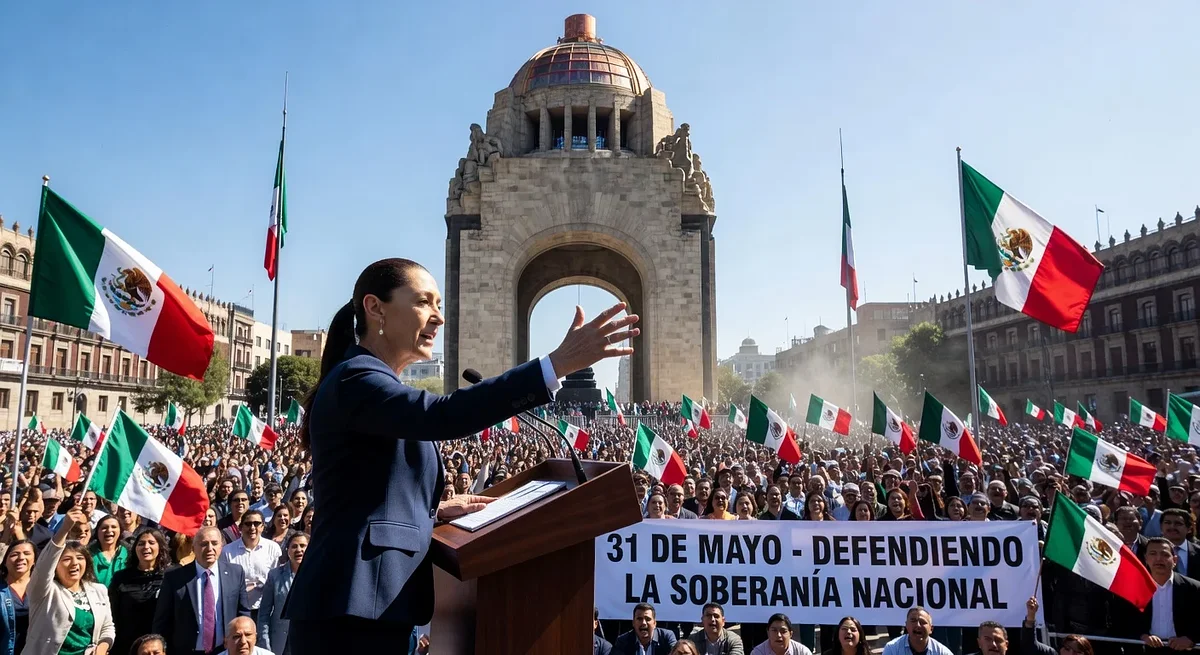
Mexico's Chamber of Deputies rejected President Claudia Sheinbaum's electoral reform proposal, with 259 votes in favor and 234 against, falling short of the required qualified majority. Sheinbaum denied it was a defeat and announced a Plan B to be sent to Congress next Monday, focusing on changes without constitutional reform. The initiative aims to reduce political privileges and strengthen citizen participation.
On March 12, 2026, President Claudia Sheinbaum defended her electoral reform initiative after its rejection in the Chamber of Deputies the previous day. The vote resulted in 259 in favor, mainly from Morena, 234 against, and one abstention, falling short of the 334 needed to amend the Constitution. The failure stemmed from lack of support from ruling party allies, the Labor Party (PT) and the Green Ecologist Party of Mexico (PVEM), though 12 PVEM lawmakers and one from PT voted in favor.
Sheinbaum stressed the goal is to 'decrease, to end the privileges' of political parties and electoral institutions. 'The electoral reform we presented aims to decrease, to end the privileges. In this case, of whom? Well, of the political parties and electoral institutions', she said during her morning press conference. She denied the rejection was a defeat: 'That it was not approved is not a defeat, I am very satisfied. On the contrary, people know that one is not willing to negotiate everything'.
Facing the setback, she announced a Plan B to be sent to Congress on Monday, March 17, with changes approvable by simple majority without constitutional reform. Proposals include reducing privileges in local congresses, decreasing the number of councilors in municipalities, strengthening popular consultations at state and municipal levels, and putting issues like party budgets to consultation. It also seeks to flexibilize mandate revocation to occur in the third or fourth year of government.
However, Ricardo Monreal, Morena's coordinator in the Chamber, maintained that these changes require constitutional reform, including reducing representatives in town councils, budget cuts in local congresses, mandate revocation, and popular consultations. Former mayor Sandra Cuevas accused Monreal of orchestrating the failure, calling him a 'traitor' and suggesting he operated against Sheinbaum.
Opposition party coordinators criticized the initiative. The PAN called it a 'simulation without dialogue'; the PRI, 'consecration of authoritarianism'; and MC, 'anti-democratic'. From the PT, Reginaldo Sandoval stated their position is correct and time will prove it; from the PVEM, Carlos Puente advocated for equal consensual reforms.