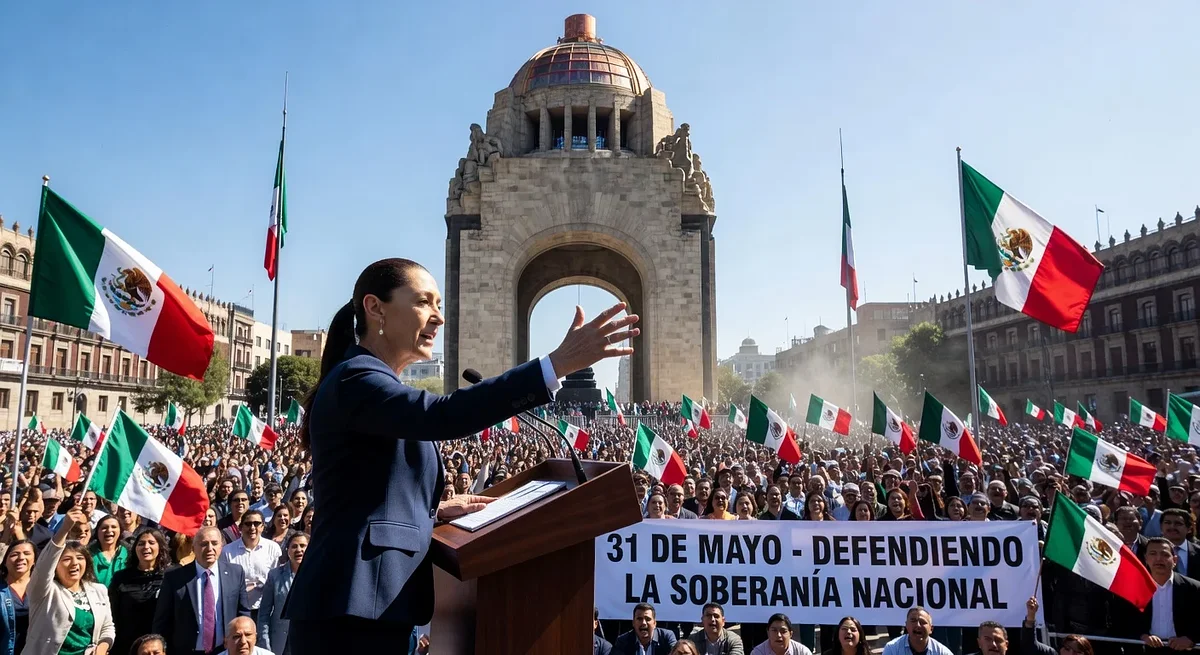
A column in El Financiero examines the political risks for Claudia Sheinbaum from a mandate revocation proposal under the Plan B electoral reforms. This vote would let the president campaign without AMLO's direct backing, measured against his 91.86% support in 2022. The piece notes the challenge of exceeding high thresholds to prevent political failure.
Salvador Camarena's column in El Financiero, dated March 19, discusses a proposed mandate revocation for President Claudia Sheinbaum as part of the so-called Plan B electoral reforms. The piece argues this would shape a political campaign exposing risks for Sheinbaum and highlighting Morena party tensions ahead of 2027. The revocation would enable the president to promote herself directly, marking her first contest without Andrés Manuel López Obrador (AMLO) leading. Camarena cites AMLO's precedent: on April 10, 2022, he received 91.86% votes for 'que siga' versus 6.44% against, from 16.5 million ballots. By comparison, Sheinbaum won the 2024 presidency with 60% in a three-way race, with current polls showing around 70% approval. A potential 2027 revocation would coincide with elections for 17 governorships, hundreds of municipalities, and legislative seats, likely shifting participation ratios. The author questions success thresholds: will Sheinbaum exceed AMLO's record or her own 60-70%? He notes her past wins (Tlalpan 2015, Mexico City 2018, presidency 2024) relied on AMLO's support. Camarena observes Sheinbaum's public activities already carry proselytizing tones, but revocation would heighten opposition scrutiny. No specific date or formal approval of the proposal is detailed.