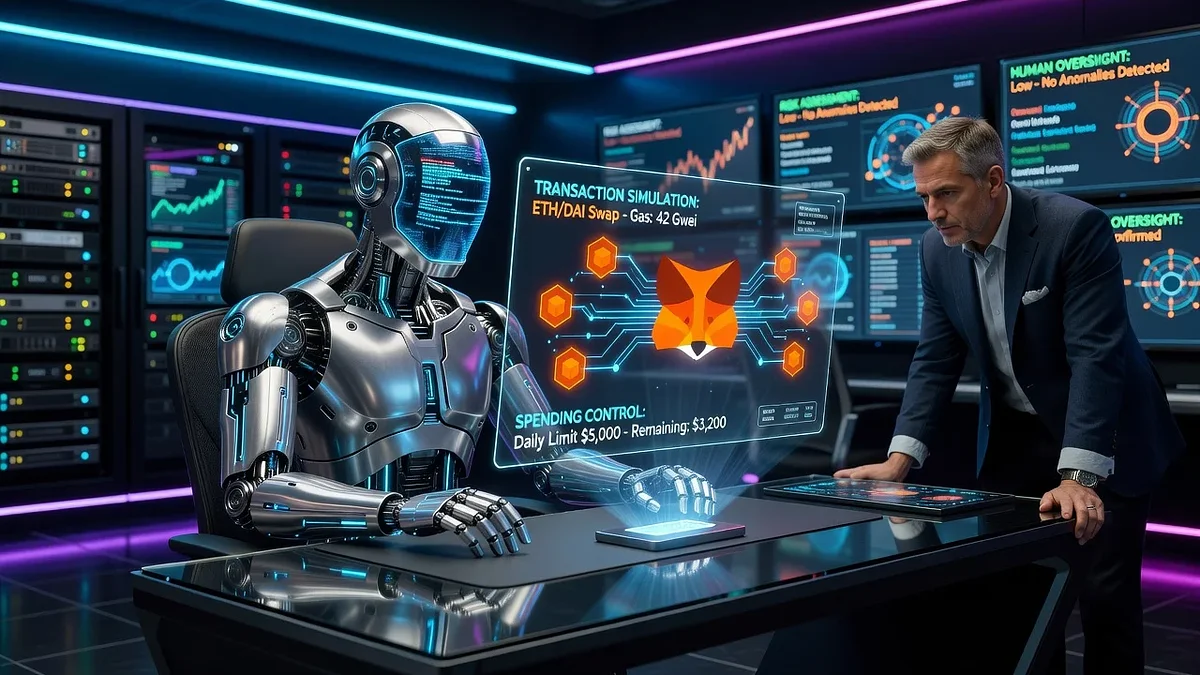
Developers are equipping increasingly autonomous AI agents with crypto wallets, enabling them to hold assets, trade tokens, and hire other agents, according to Electric Capital. While the technical infrastructure is advancing, legal frameworks lag behind. At NEARCON 2026, Avichal Garg highlighted the unresolved issues around liability for such non-human entities.
In San Francisco, California, the integration of cryptocurrency with artificial intelligence is paving the way for a financial system accessible to non-human actors. As AI agents become more independent, developers have begun providing them with crypto wallets. This allows the software to manage assets, make payments for services, execute token trades, and even employ other AI agents.
The technical foundations are aligning rapidly, facilitated by blockchain's features of programmable money, instant settlement, and worldwide accessibility. When combined with AI's decision-making capabilities, this results in software that can both reason and conduct transactions—capabilities not feasible in traditional finance.
Speaking at the NEARCON 2026 conference, Avichal Garg of Electric Capital described the development as a pivotal moment. "What happens if there’s not a human behind it at all?" he asked. "It’s some piece of code that owns a wallet, executing code to make more money… How does liability work in that case? I actually don’t know."
Garg drew parallels to the 19th-century invention of the limited liability corporation, which spurred economic expansion through pooled resources. "The cost of participating in the economy has come down so far," he explained. "You’re talking about anybody in the world, with relatively little money, being able to create value."
However, challenges persist in enforcement and accountability. "You can’t punish an AI," Garg observed. "You can turn them off, but they don’t care." As these agents engage in activities like trading, lending, and business operations on blockchain networks, regulators may need to address core questions about responsibility when wallet-owning software operates autonomously.