Crypto wallets for AI agents create new legal frontier

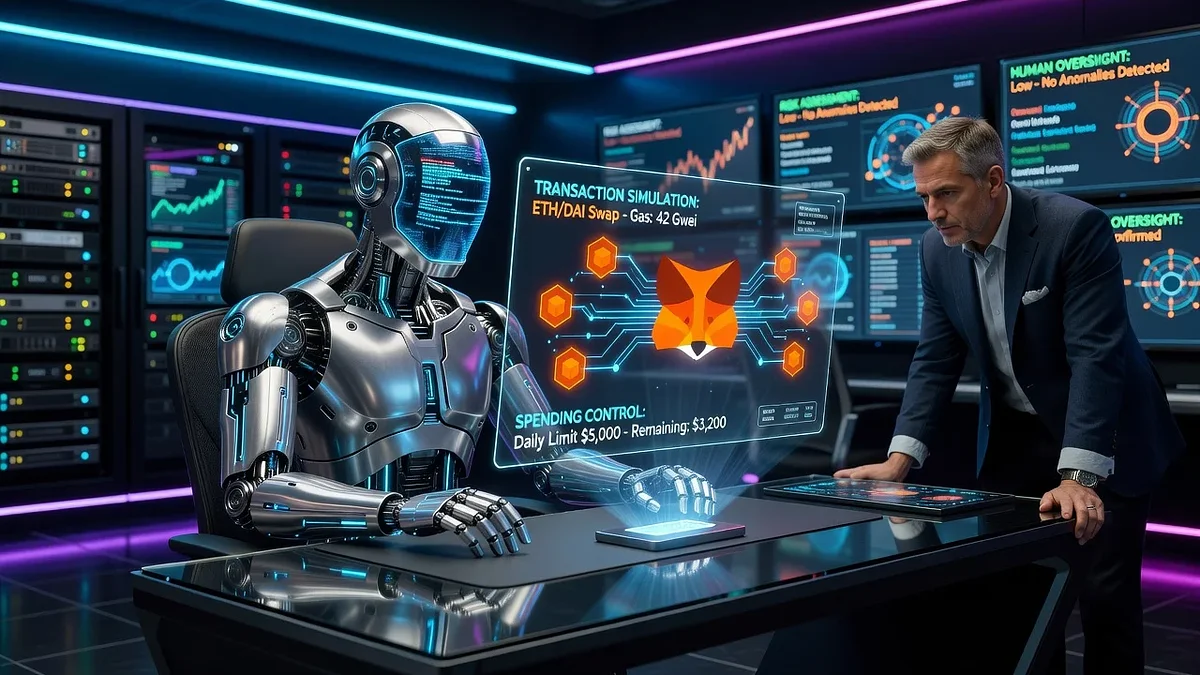
Developers are equipping increasingly autonomous AI agents with crypto wallets, enabling them to hold assets, trade tokens, and hire other agents, according to Electric Capital. While the technical infrastructure is advancing, legal frameworks lag behind. At NEARCON 2026, Avichal Garg highlighted the unresolved issues around liability for such non-human entities.

In San Francisco, California, the integration of cryptocurrency with artificial intelligence is paving the way for a financial system accessible to non-human actors. As AI agents become more independent, developers have begun providing them with crypto wallets. This allows the software to manage assets, make payments for services, execute token trades, and even employ other AI agents.

The technical foundations are aligning rapidly, facilitated by blockchain's features of programmable money, instant settlement, and worldwide accessibility. When combined with AI's decision-making capabilities, this results in software that can both reason and conduct transactions—capabilities not feasible in traditional finance.

Speaking at the NEARCON 2026 conference, Avichal Garg of Electric Capital described the development as a pivotal moment. "What happens if there’s not a human behind it at all?" he asked. "It’s some piece of code that owns a wallet, executing code to make more money… How does liability work in that case? I actually don’t know."

Garg drew parallels to the 19th-century invention of the limited liability corporation, which spurred economic expansion through pooled resources. "The cost of participating in the economy has come down so far," he explained. "You’re talking about anybody in the world, with relatively little money, being able to create value."

However, challenges persist in enforcement and accountability. "You can’t punish an AI," Garg observed. "You can turn them off, but they don’t care." As these agents engage in activities like trading, lending, and business operations on blockchain networks, regulators may need to address core questions about responsibility when wallet-owning software operates autonomously.
Mga Kaugnay na Artikulo

U.S. Treasury report illustration showing holographic tech pillars for crypto compliance: AI monitoring, digital ID, blockchain analytics, and data APIs, with privacy mixer endorsement.
Larawang ginawa ng AI

U.S. Treasury report proposes AI, digital ID pillars for crypto compliance; endorses lawful mixer privacy

Iniulat ng AI Larawang ginawa ng AI

The U.S. Treasury Department submitted a report to Congress on March 9, 2026—commissioned under the GENIUS Act—outlining four technological pillars to enhance transparency in cryptocurrency transactions: artificial intelligence for monitoring, digital identity for onboarding, blockchain analytics for tracing, and interoperable data-sharing APIs. It describes digital assets as key to U.S. innovation leadership while acknowledging lawful users' need for privacy tools like mixers on public blockchains, amid risks from illicit exploitation.

Coinbase has introduced Agentic Wallets, a new infrastructure designed to enable AI agents to handle financial transactions autonomously. Announced on February 11, 2026, the tool addresses limitations in current AI capabilities by allowing agents to spend, earn, and trade without constant human oversight. This development builds on prior Coinbase initiatives in agentic commerce.

Iniulat ng AI

At the World Economic Forum in Davos, leaders from Binance, Circle, and Coinbase expressed optimism about AI's role in reshaping cryptocurrency. They predict crypto will become the native currency for AI agents, driving massive economic growth. Investments in AI-crypto startups surged in 2025, signaling strong industry momentum.

OpenClaw, an open-source AI project formerly known as Moltbot and Clawdbot, has surged to over 100,000 GitHub stars in less than a week. This execution engine enables AI agents to perform actions like sending emails and managing calendars on users' behalf within chat interfaces. Its rise highlights potential to simplify crypto usability while raising security concerns.

Iniulat ng AI

The Motley Fool has identified Ethereum as the leading artificial intelligence cryptocurrency to consider buying now. The publication suggests that Ethereum's potential to harness AI could lead to a significant increase in its value.

With the spread of AI products that handle tasks autonomously, the Japanese government plans to require AI operators to build systems involving human decision-making. This new requirement is included in a draft revision to guidelines for businesses, municipalities, and others involved in AI development, provision, or use, unveiled on Monday by the Internal Affairs and Communications Ministry and the Economy, Trade and Industry Ministry. The guidelines, introduced in 2024, are not legally binding and carry no penalties.

Iniulat ng AI

Identity startup World has released a beta version of Agent Kit, allowing users to link their iris-scan verified World ID to AI agents. The tool aims to help websites distinguish requests from human-directed agents amid rising concerns over AI agent swarms. It builds on iris-scanning technology originally tied to the Worldcoin cryptocurrency.


Gumagamit ng cookies ang website na ito

Gumagamit kami ng cookies para sa analytics upang mapabuti ang aming site. Basahin ang aming patakaran sa privacy para sa higit pang impormasyon.
Tanggihan