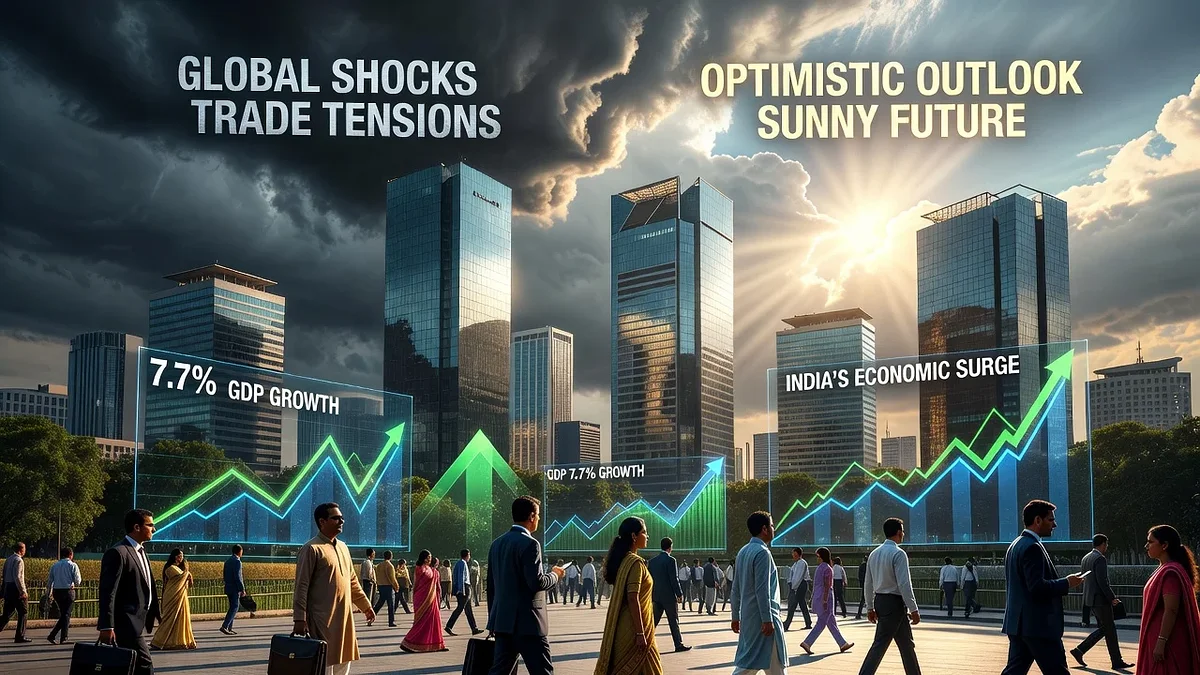
Illustration of India's Economic Survey 2025-26 tabling in Parliament, highlighting GDP growth, reforms, manufacturing revival, and PM Modi's approval.
በ AI የተሰራ ምስል

India's economic survey 2025-26 highlights growth and reforms

በ AI የተሰራ ምስል

India's Economic Survey 2025-26, tabled in Parliament on January 30, 2026, projects robust GDP growth amid global uncertainties and recommends key reforms for strategic resilience. It emphasizes manufacturing revival, digital curbs and policy overhauls to bolster economic stability. Prime Minister Narendra Modi praised it as a roadmap for inclusive development.

The Economic Survey 2025-26, presented by Finance Minister Nirmala Sitharaman in the Lok Sabha, underscores India's economy growing at 7.4% in FY26, outpacing global peers despite trade disruptions from US tariffs under President Trump. It forecasts 6.8-7.2% growth for FY27, raising the potential growth rate to 7% from 6.5% three years ago. Chief Economic Adviser V Anantha Nageswaran highlighted the resurgence of 'economic statecraft', where nations use trade tools like export controls and tariffs for geopolitical aims, citing US restrictions on semiconductors to China and China's curbs on rare earth minerals affecting India's auto sector. The survey warns of vulnerabilities in global value chains amid ultra-nationalism and skepticism toward free trade, urging India to cultivate 'strategic indispensability' through critical roles in supply chains. To boost manufacturing, it proposes a 'National Input Cost Reduction Strategy' via deregulation, noting services alone cannot sustain growth and advocating goods exports for national security stability. It calls for reducing government stakes in listed PSUs to 26% for deeper disinvestment, correcting inverted duty structures and pragmatic Quality Control Orders to enhance competitiveness. On rural employment, the survey praises MGNREGS gains but hails the VB-G RAM G Act 2025 as a 'decisive shift', replacing the 2005 law to align with Viksit Bharat 2047 goals, including infrastructure and climate resilience. Addressing digital addiction, it recommends age verification on social media and offline youth hubs, linking compulsive use to productivity losses in a nation with 970 million internet users. It also suggests re-examining the RTI Act to exempt deliberative processes, preventing it from becoming an 'end in itself'. Prime Minister Modi described the survey as a 'comprehensive picture of India’s Reform Express', focusing on farmers, MSMEs and youth employment. Critics, however, note its arcane language and lack of policy failure analysis, such as underperforming PLIs and internship schemes.
ሰዎች ምን እያሉ ነው

Discussions on X about India's Economic Survey 2025-26 are predominantly positive, led by government officials, BJP leaders, and supporters praising the projected 7.4% GDP growth, low inflation at 1.7%, manufacturing revival through PLI schemes, strong forex reserves, and economic resilience amid global uncertainties under PM Modi's leadership. Some neutral summaries from media highlight key data points like job creation and sectoral growth, while a few note challenges such as skilling gaps and global risks.

ተያያዥ ጽሁፎች

Realistic illustration of China's 2026 Two Sessions press conference highlighting GDP growth targets and leaders including Premier Li Qiang and Xi Jinping.
በ AI የተሰራ ምስል

Economy press conference highlights from China's 2026 Two Sessions

በAI የተዘገበ በ AI የተሰራ ምስል

Following Premier Li Qiang's government work report setting a 2026 GDP growth target of 4.5-5%, Zheng Shanjie of the National Development and Reform Commission projected over 6 trillion yuan GDP growth this year at the NPC economy press conference. The service sector is expected to exceed 100 trillion yuan during the 15th Five-Year Plan (2026-2030). Leaders including Xi Jinping emphasized high-quality development amid the sessions.

The Rajasthan Cabinet approved a new industrial development policy on May 22, 2026, with emphasis on the talent economy and private sector involvement. The policy aims to build world-class infrastructure and boost the state economy to $350 billion by 2028-29.

በAI የተዘገበ

Prime Minister Narendra Modi on Monday urged accelerating the process of linking India's education system to the real-world economy during a post-budget webinar. He emphasized the need to increase focus on subjects like AI, automation, digital economy, and design-driven manufacturing. He also highlighted strengthening sectors such as health, sports, and tourism.

India's economy could face challenges from the West Asia conflict, which may impact oil prices and overall growth. According to Crisil Intelligence, real GDP growth is expected to reach 7.1 percent in FY27, driven by consumer spending and investment. Exports are anticipated to increase, while retail inflation might climb to 4.3 percent.

በAI የተዘገበ

A new report calls for India to significantly increase research and development investment to strengthen its manufacturing sector and improve global competitiveness.

ይህ ድረ-ገጽ ኩኪዎችን ይጠቀማል

የእኛን ጣቢያ ለማሻሻል ለትንታኔ ኩኪዎችን እንጠቀማለን። የእኛን የሚስጥር ፖሊሲ አንብቡ የሚስጥር ፖሊሲ ለተጨማሪ መረጃ።
ውድቅ አድርግ