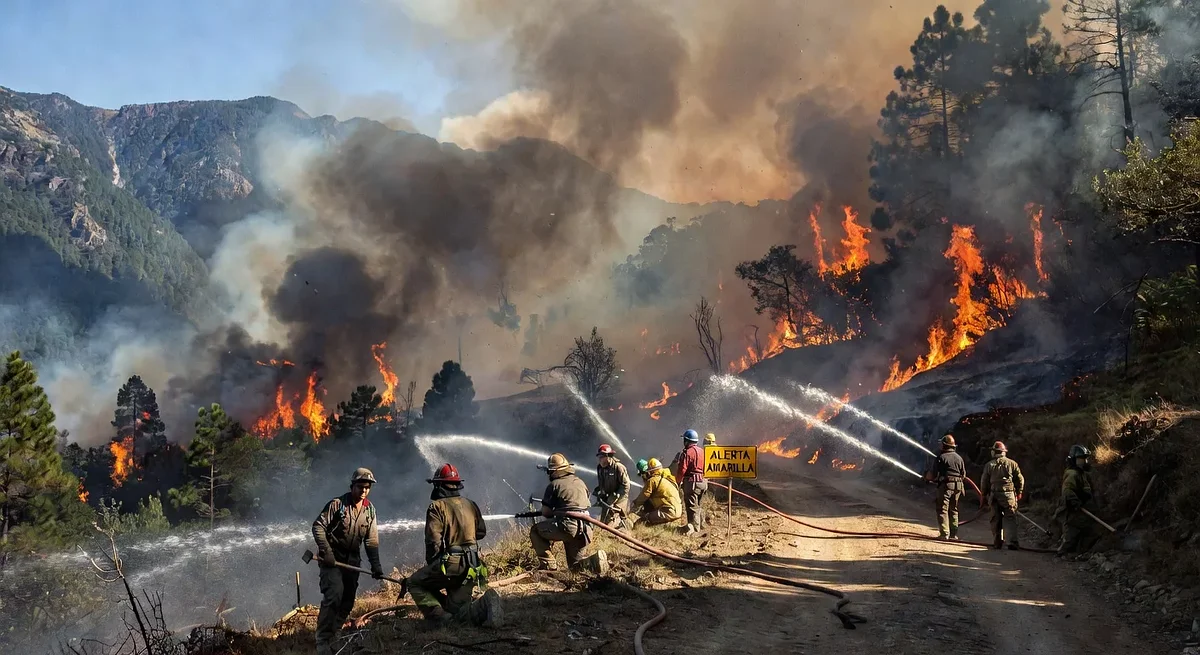
In an escalation of the Chubut wildfires that began January 5—previously linked to arson and prompting Chilean aid—Epuyén's council declared a comprehensive fire, social, environmental, economic, and health catastrophe after flames ravaged over 12,000 hectares. Reignited by winds, the fires have destroyed 24 homes and key sites, prompting high-level visits, donations, and aid requests amid paralyzed local activities.
Epuyén's Deliberative Council on January 13 declared a fire, social, environmental, economic, tourist, housing, and health catastrophe due to wildfires that have now consumed over 12,000 hectares in Chubut's cordillera, building on earlier reports of arson near Puerto Patriada and international support offers.
The blaze, which spread through Cerro Epuyén and Cerro Pirque, destroyed at least 24 homes, tourist facilities, and the Antu Quillen cultural center. Eight residents were evacuated, and one firefighter was severely injured. Reignited flames on hills bordering Lake Epuyén, fueled by 40 km/h gusts, produced smoke over the urban center amid 22°C heat, 20% humidity, and westerly winds. Light rains are forecast mid-week, but with potential 50 km/h winds, containment remains uncertain.
Over 50% of affected territory faces irreversible ecosystem damage, tourism is suspended, and services like power and water were cut. The declaration enables direct municipal contracts up to 120 provincial modules, donation acceptance, and aid requests from national/provincial governments for reconstruction and subsidies.
In Los Alerces National Park, over 200 firefighters from provinces, Chile, and the Argentine Army battle fronts with six aircraft and heavy machinery. Vice President Victoria Villarruel visited to assess damage and support crews; Interior Minister Diego Santilli pledged funds despite a canceled trip. Singer María Becerra donated significantly. Deputy Juan Pablo Luque proposed a Patagonian fire emergency bill for funds, victim aid, and AUH boosts. La Cámpora blamed budget cuts under President Javier Milei for weakening protections, with Luque warning of permanent landscape changes and rejecting Mapuche stigmatization.