Main issues in Ethiopian voter registration

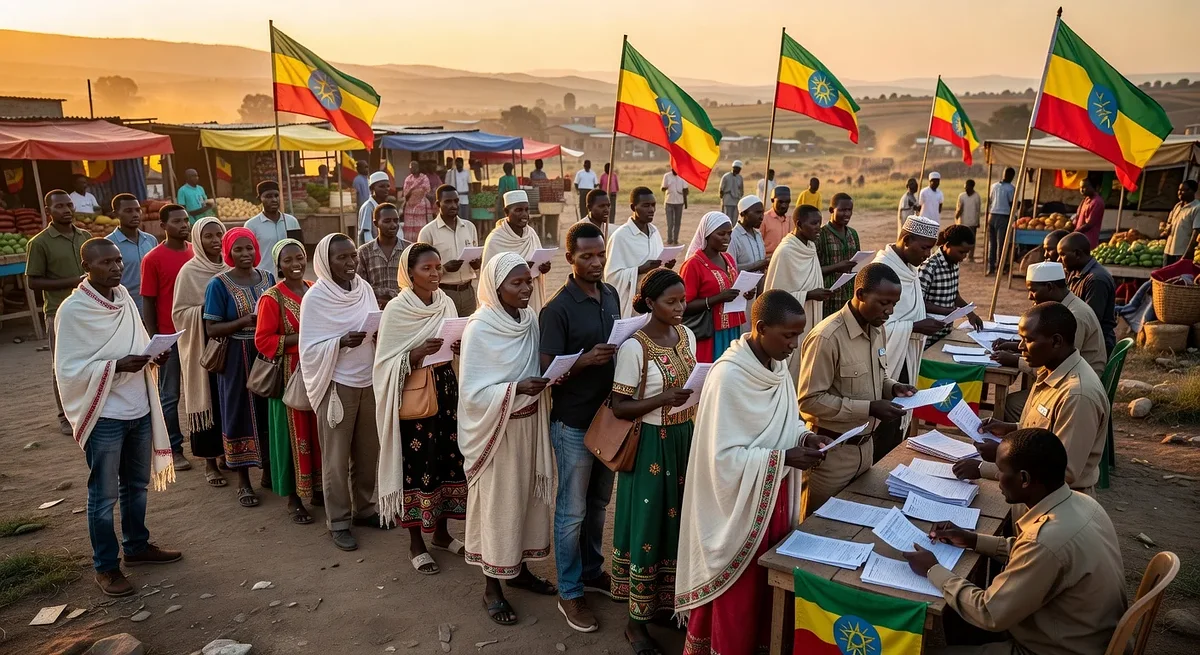
Participating in Ethiopian elections requires prior voter registration as a prerequisite. Under Proclamation No. 1162/2011, eligible individuals are Ethiopian citizens aged 18 or older who have resided in the electoral district for at least six months. However, those with mental illnesses impairing judgment, under court-ordered punishments, or legally deprived of voting rights cannot register.

The National Electoral Board of Ethiopia conducts voter registration only within the designated time frame. Registration occurs at polling stations in the voter's kebele of residence, though mobile centers can be established in remote areas if needed. Individuals register only once per polling station.

Required documents prove residency, such as a kebele identification, passport, or alternatives like a birth certificate, residence attestation, or refugee card. Without documents, registration is possible through witnesses or public guarantors confirming residency. Those unable to register personally may do so via representatives.

Registrations are processed daily, verified by registrars and public witnesses. Once completed, the voter list is posted for public viewing for 10 consecutive days. Appeals against inclusions or exclusions go to the polling station's appeal committee, with decisions governed by law. Unregistered voters cannot participate on election day.
Artikel Terkait

Young Ethiopians disengaged from 2026 election, scrolling phones amid ignored posters in Addis Ababa.
Gambar dihasilkan oleh AI

Young Ethiopians disengage from upcoming national election

Dilaporkan oleh AI Gambar dihasilkan oleh AI

Ethiopia's national election approaches in June 2026 amid a subdued atmosphere, particularly among young voters aged 18 to 30 who encounter politics mainly in passing on social media. The event unfolds with muted enthusiasm compared to past cycles that energized streets and campuses.

Fana Media Corporation has outlined the information required for voter registration in Ethiopia. This guide details various verification documents and special circumstances. It aims to ensure a smooth registration process for voters.

Dilaporkan oleh AI

Under Ethiopia's constitution, every Ethiopian citizen has the right to vote and run for office without discrimination. This right is outlined in Article 38(1) and detailed in election laws.

The Commission on Elections (Comelec) announced the suspension of overseas voter registration in Israel until March 7, 2026, and in Iran until further notice, amid the ongoing conflict in the Middle East.

Dilaporkan oleh AI

Ethiopia's Minister of Women and Social Affairs, Dr. Ergoge Tesfaye, stated that focused efforts are underway to enhance participation of women, persons with disabilities, and elders in the seventh general election. Previous initiatives have produced positive outcomes in boosting gender political involvement. These measures aim to strengthen democratic representation and sustainable peace.

Pemimpin Mayoritas Senat John Thune mengumumkan bahwa Partai Republik berencana merevisi Undang-Undang Perlindungan Kelayakan Pemilih Amerika untuk mewajibkan identifikasi foto pada pemilu federal. Perubahan ini bertujuan mengatasi celah dalam undang-undang pemilu saat ini dengan mewajibkan ID di tempat pemungutan suara. RUU asli, yang disahkan DPR pada April 2025, berfokus pada bukti kewarganegaraan saat pendaftaran.

Dilaporkan oleh AI

The Commission on Elections (Comelec) is launching its Special Register Anywhere/Anytime Program at select locations in Manila this February to facilitate voter registration for the upcoming Barangay and Sangguniang Kabataan Elections. The initiative forms part of the poll body's nationwide drive. It enables applicants to register or update records at convenient sites.


Situs web ini menggunakan cookie

Kami menggunakan cookie untuk analisis guna meningkatkan situs kami. Baca kebijakan privasi kami untuk informasi lebih lanjut.
Tolak