Main issues in Ethiopian voter registration

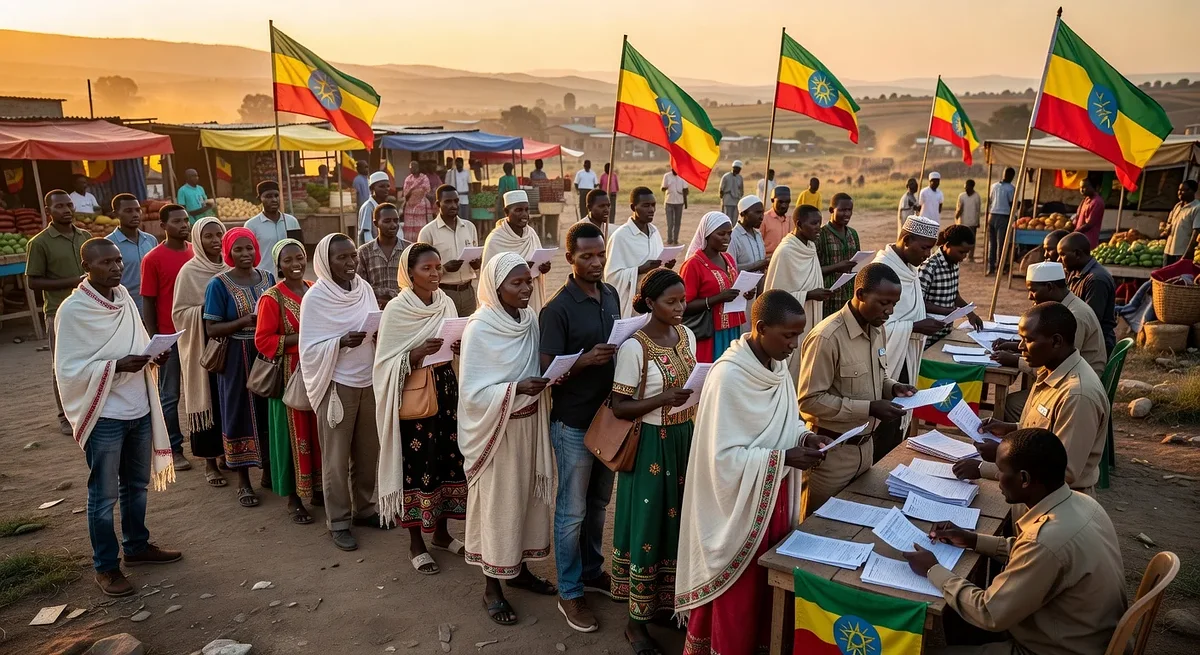
Participating in Ethiopian elections requires prior voter registration as a prerequisite. Under Proclamation No. 1162/2011, eligible individuals are Ethiopian citizens aged 18 or older who have resided in the electoral district for at least six months. However, those with mental illnesses impairing judgment, under court-ordered punishments, or legally deprived of voting rights cannot register.

The National Electoral Board of Ethiopia conducts voter registration only within the designated time frame. Registration occurs at polling stations in the voter's kebele of residence, though mobile centers can be established in remote areas if needed. Individuals register only once per polling station.

Required documents prove residency, such as a kebele identification, passport, or alternatives like a birth certificate, residence attestation, or refugee card. Without documents, registration is possible through witnesses or public guarantors confirming residency. Those unable to register personally may do so via representatives.

Registrations are processed daily, verified by registrars and public witnesses. Once completed, the voter list is posted for public viewing for 10 consecutive days. Appeals against inclusions or exclusions go to the polling station's appeal committee, with decisions governed by law. Unregistered voters cannot participate on election day.
Artículos relacionados

Young Ethiopians disengaged from 2026 election, scrolling phones amid ignored posters in Addis Ababa.
Imagen generada por IA

Young Ethiopians disengage from upcoming national election

Reportado por IA Imagen generada por IA

Ethiopia's national election approaches in June 2026 amid a subdued atmosphere, particularly among young voters aged 18 to 30 who encounter politics mainly in passing on social media. The event unfolds with muted enthusiasm compared to past cycles that energized streets and campuses.

Under Ethiopia's constitution, every Ethiopian citizen has the right to vote and run for office without discrimination. This right is outlined in Article 38(1) and detailed in election laws.

Reportado por IA

Ethiopia's National Electoral Board has begun consultations to set the voter registration timeline. The process will start on dates determined by the board at the national level and proceed regionally.

Opposition leader Fred Matiang'i has issued an urgent call to the Independent Electoral and Boundaries Commission (IEBC) to initiate a nationwide voter registration drive ahead of the 2027 elections. He warned that without robust voter turnout, Kenya risks extending the current administration's term. In his New Year message, he criticized the government's performance and pledged opposition efforts to offer an alternative.

Reportado por IA

Ethiopia's National Election Board has annulled a decision concerning election districts under the control of the Amhara and Tigray regional governments. This annulment follows a recommendation from the House of the Federation, addressing territorial disputes between the two regions.

Ethiopia's National Election Commission has had its term extended by eight months. This decision allows the commission to continue its operations.

Reportado por IA

The Ethiopian National Electoral Board has established a national information agreement platform to counter false and misleading election-related information. This step aims to safeguard the transparency and fairness of the electoral process.


Este sitio web utiliza cookies

Utilizamos cookies para análisis con el fin de mejorar nuestro sitio. Lee nuestra política de privacidad para más información.
Rechazar