Transgender council members resign over lack of consultation on bill

Two members of the National Council for Transgender Persons have resigned, alleging no consultation on the Transgender Persons (Protection of Rights) Amendment Bill, 2026. They failed to meet the minister, who skipped a scheduled meeting. The bill passed the Lok Sabha on March 24 and the Rajya Sabha on March 25.

Four transgender members, including Kalki Subramaniam, the South India representative, Rituparna Neog from the Northeast, Raveena Bareeha, Vidya Rajput, and Abhina Aher, attended a meeting scheduled for March 21 at the Dr Ambedkar International Centre in New Delhi. Social Justice and Empowerment Minister Virendra Kumar did not attend, citing illness.

A Senior Economic Adviser listened to their opposition to the bill but was dismissive of most suggestions, according to Subramaniam. The members sought retention of self-identification for gender and opposed reliance on a medical board. "Even without our suggestions, the bill will pass—that was the crux," Subramaniam said.

They later tried to meet the minister at his residence but were turned away. On March 22, Subramaniam sent a document outlining objections via the minister's personal assistant. The National Council for Transgender Persons, formed in August 2020, advises on policies for transgender persons. Subramaniam and Neog resigned on March 25.

Replying to the Lok Sabha debate, Kumar stated, "Provisions have been brought to ensure security... along with giving legal rights, this law also provides respect and dignity."

The ministry did not respond to queries.
Articoli correlati

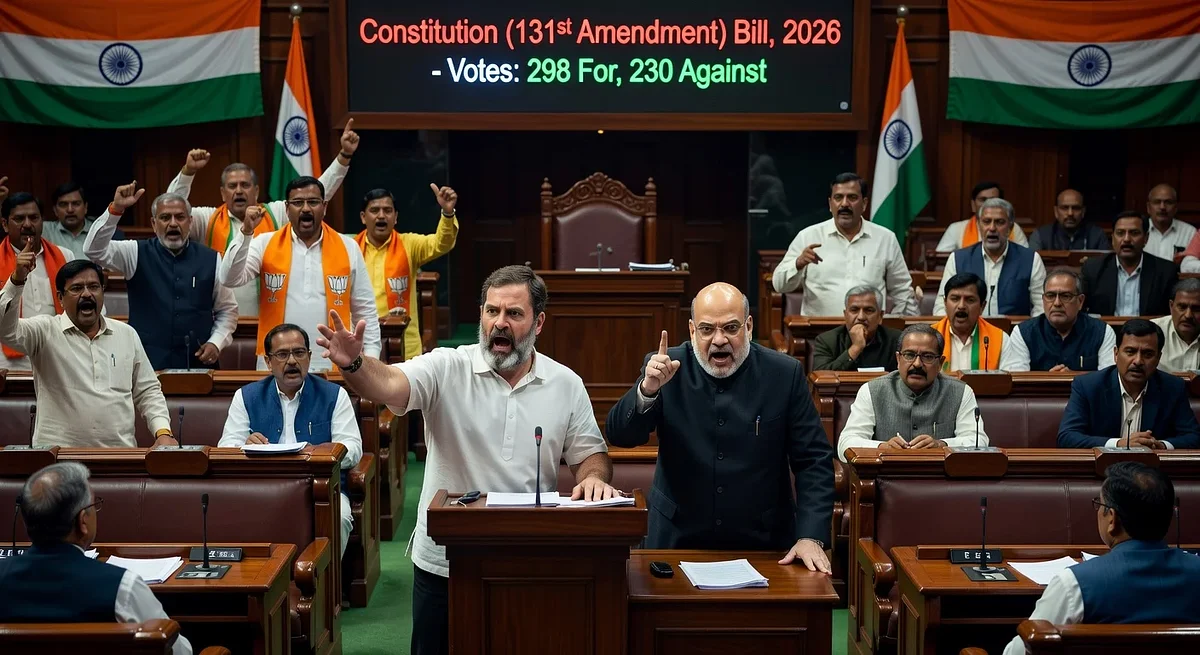
Dramatic Lok Sabha session: Women's reservation bill rejected with 298-230 vote; Rahul Gandhi criticizes as Amit Shah rebukes amid protests.
Immagine generata dall'IA

Lok Sabha rejects women's reservation amendment bill in special session

Riportato dall'IA Immagine generata dall'IA

In the ongoing special parliamentary session, the Constitution (131st Amendment) Bill, 2026—for one-third women's reservation tied to delimitation—failed in Lok Sabha on Friday with 298 votes in favour and 230 against, missing the required two-thirds majority of 352 out of 528. This follows the bills' contentious introduction the previous day. Opposition leader Rahul Gandhi branded it a 'shameful law,' drawing a sharp rebuke from Home Minister Amit Shah, as BJP vowed nationwide protests.

Rajya Sabha passed the Transgender Persons (Protection of Rights) Amendment Bill 2026 by voice vote on March 26 amid opposition calls for wider debate. The Lok Sabha had cleared it on Tuesday. Social Justice Minister Virendra Kumar described it as a symbol of justice for long-marginalised sections.

Riportato dall'IA

Transgender rights activist Harish Iyer resigned on March 26, 2026, from his position as advisor on the NHRC's Core Group on LGBTQI+ issues. He criticised the National Human Rights Commission for its silence on the Transgender Persons Amendment Bill, 2026.

Ahead of a special Parliament session starting April 16 to discuss amendments for implementing one-third women's reservation in Lok Sabha from 2029 elections, Prime Minister Narendra Modi wrote to floor leaders of all parties seeking their support. The opposition has raised concerns over lack of details on delimitation and the timing. The government described it as fulfilling responsibility towards women.

Riportato dall'IA

Uttarakhand Chief Minister Pushkar Singh Dhami addressed a special session of the assembly, proposing a unanimous resolution to support the early implementation of the Centre’s Nari Shakti Vandan Adhiniyam. He stated there should be no politics in empowering women, who are taking on leadership roles. The bill seeks 33% reservation for women in Parliament and state assemblies.

Maharashtra's legislature passed the Freedom of Religion Bill in both houses during the budget session, with support from opposition parties like Shiv Sena UBT and NCP SP. Once the Governor assents, Maharashtra will become India's 13th state with anti-forced conversion legislation. Congress and Samajwadi Party opposed it.

Riportato dall'IA

Justice Minister Mmamoloko Kubayi has confirmed the circulation of a draft bill to make South Africa's National Register for Sex Offenders (NRSO) accessible to the public. The move responds to long-standing calls from activists and addresses concerns over child protection. The amendments await a constitutionality review.


Questo sito web utilizza i cookie

Utilizziamo i cookie per l'analisi per migliorare il nostro sito. Leggi la nostra politica sulla privacy per ulteriori informazioni.
Rifiuta