DepEd fast-tracks classroom construction for 2026

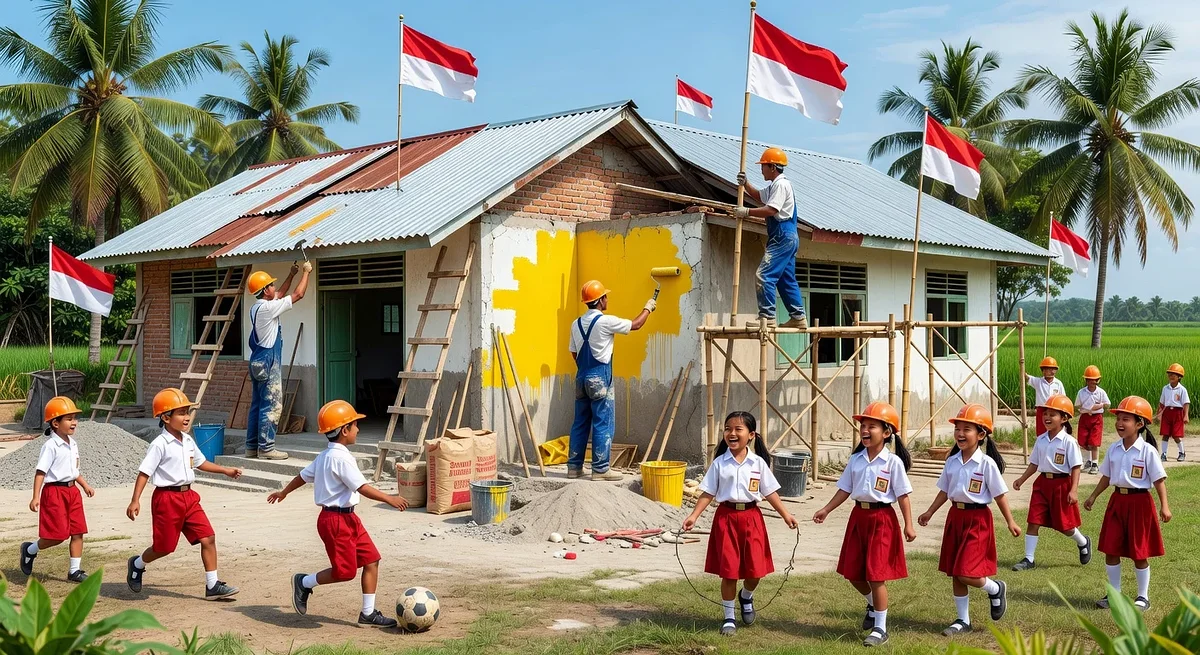
To address a nationwide shortage of 165,000 classrooms, Education Secretary Sonny Angara has directed the Department of Education's infrastructure group to finalize steps to accelerate construction in 2026, as part of a broader goal to build at least 200,000 classrooms over the next five to ten years. Priorities include last-mile schools and temporary learning spaces for disaster-hit communities.

On the last Monday of the year, the DepEd infrastructure group met to prepare various construction modalities for 2026. "In each option, we will ensure that every peso is used correctly," Angara stated in a Facebook post.

Starting January 2026, DepEd will maintain a running list of school sites with available space and no legal issues, prioritizing development with local government units (LGUs) and civil society organizations. The department is also seeking LGU help to secure land, as 67% of the country's 40,000 public schools occupy land they do not own. Buildings over 50 years old will be condemned for safety reasons.

A proposed cost cap of slightly over P3 million per classroom accounts for location and logistics variations. "The secret of getting ahead is getting started. Even during holiday break, we're working to hit full speed by the new year, building comfortable and safe classrooms," Angara added.

During a recent inspection with President Bongbong Marcos, the president pointed out outdated school designs from his father's era. "The expected lifespan is 20-25 years, but many are over 50, built in the 1970s," Angara noted.
Awọn iroyin ti o ni ibatan

President Marcos signs P6.793-trillion 2026 national budget, highlighting education and infrastructure allocations amid vetoes for prudent spending.
Àwòrán tí AI ṣe

Marcos signs P6.793-trillion budget for 2026

Ti AI ṣe iroyin Àwòrán tí AI ṣe

President Ferdinand Marcos Jr. signed the P6.793-trillion national budget for 2026 on January 5, allocating a record P1.015 trillion to the Department of Education and P530.9 billion to the DPWH. He vetoed P92.5 billion in unprogrammed appropriations, leaving P150.9 billion, while vowing prudent spending to curb corruption. The budget bars political involvement in aid distribution, though critics question the remaining funds.

In Metro Manila and other urban areas, building new classrooms is no longer feasible due to lack of space. An opinion piece argues that school congestion, rather than just the 165,000 classroom backlog as of 2025, needs addressing to improve learning environments.

Ti AI ṣe iroyin

Education Secretary Sonny Angara led the inauguration of the country's first fully air-conditioned public school building in San Pedro City, Laguna.

Following the bicameral conference committee's reconciliation of the 2026 budget, Senate President Pro Tempore Panfilo Lacson advocated for a reenacted budget in early January over a rushed one unresponsive to needs, allowing time for review of the P6.793-trillion proposal amid public funds controversies. Acting Executive Secretary Ralph Recto said President Marcos will scrutinize it before signing.

Ti AI ṣe iroyin

The House of Representatives suspended sessions and extended its legislative calendar after approving the P6.793-trillion 2026 national budget in the country's first livestreamed bicameral conference. Speaker Faustino Dy III called it a 'turning point for transparency in the budget process.' The extension ensures proper ratification of the bicam report.

The Palace has received the ratified 2026 General Appropriations Bill from Congress, placing any changes in the hands of President Ferdinand Marcos Jr. Executive Secretary Ralph Recto confirmed that a thorough review of the P6.793-trillion budget has begun, expected to last about a week.

Ti AI ṣe iroyin

Education Secretary Sonny Angara stated that the Palace has confirmed no plans for a Cabinet revamp under President Marcos. He cited Executive Secretary Ralph Recto as denying it. Angara also thanked a communications undersecretary for the clarification.


Ojú-ìwé yìí nlo kuki

A nlo kuki fun itupalẹ lati mu ilọsiwaju wa. Ka ìlànà àṣírí wa fun alaye siwaju sii.
Kọ