Ancien président de la CFTC : les banques ont plus besoin de la loi CLARITY bloquée que les firmes crypto

Dans les dernières nouvelles sur le Digital Asset Market Clarity Act bloqué, l'ancien président de la CFTC Christopher Giancarlo affirme que les banques ont besoin de clarté réglementaire de manière plus urgente que les entreprises crypto pour les paiements numériques. Le projet de loi reste bloqué sur les récompenses des stablecoins après avoir raté l'échéance du 1er mars de la Maison Blanche, au milieu des craintes des banques de fuite des capitaux.

À la suite de rapports faisant état d'un élan croissant pour le Digital Asset Market Clarity Act (CLARITY Act)—qui a passé la Chambre en juillet après que le GENIUS Act a établi des règles pour les stablecoins—, le projet de loi fait face à un blocage persistant au Sénat sur des propositions visant à restreindre les récompenses sur les stablecoins, des tokens indexés sur des monnaies fiat pour les paiements blockchain.  Sur le podcast Wolf Of All Streets, l'ancien président de la CFTC Christopher Giancarlo a souligné que « les banques en ont plus besoin que la crypto », notant que leurs conseils généraux bloquent les investissements majeurs dans l'infrastructure numérique en raison de l'incertitude. Des banques comme JPMorgan, dirigée par le PDG Jamie Dimon appelant à un « niveau de jeu égal », craignent que les récompenses ne drainent les dépôts des comptes traditionnels. Ricardo Correia de Bain & Company a qualifié les récompenses d'intérêt indirect contournant les interdictions.  Crypto advocates including Coinbase CEO Brian Armstrong resist Senate Banking Committee bans, while the Trump administration accused banks of stalling post-Trump's missed March 1 social media deadline. Giancarlo pegs passage odds at 60-40, warning U.S. banks risk falling behind as activity shifts to Europe/Asia. Experts like Troutman Pepper Locke's Deborah Kovsky-Apap note asset classifications can evolve (e.g., company tokens becoming commodities on open markets), and President's Council advisor Patrick Witt urges balanced regulation.
Articles connexes

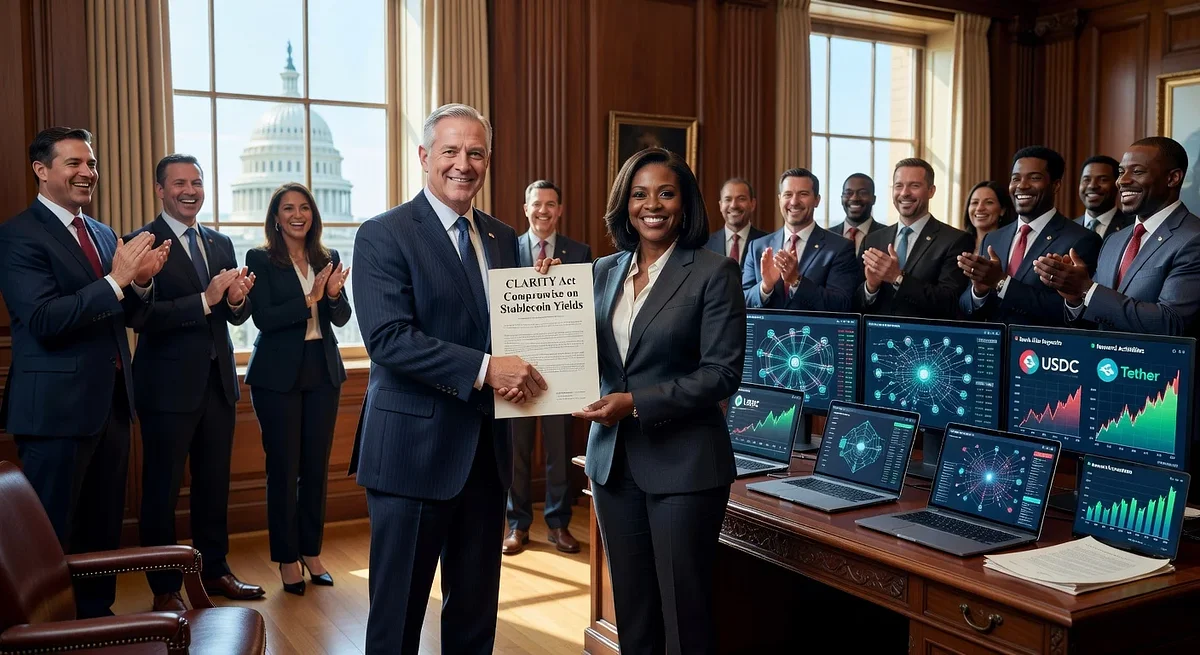
US Senate hearing on CLARITY Act: Senators, President Trump, and crypto leaders discuss digital asset regulation amid rising charts of XRP and Stellar.
Image générée par IA

Clarity Act gains momentum in US Senate for crypto regulation

Rapporté par l'IA Image générée par IA

The CLARITY Act, aimed at providing regulatory clarity for digital assets, is advancing in Washington with hopes of passage by mid-2026. Negotiations focus on stablecoin yields, drawing involvement from President Trump and industry leaders. The bill could benefit ISO 20022-compliant coins like XRP and Stellar amid ongoing debates between banks and crypto firms.

The Senate Banking Committee plans to mark up the CLARITY Act next week, but Democratic demands for conflict-of-interest rules and banking opposition to stablecoin rewards threaten to derail the effort. Negotiators reached a compromise on stablecoin yields earlier this month, yet banks argue the language still permits evasion. A long-delayed vote on the bill, which aims to clarify digital asset oversight between the SEC and CFTC, now hangs in the balance.

Rapporté par l'IA

The US CLARITY Act has hit an impasse after major banks rejected a White House compromise limiting stablecoin yield rewards to peer-to-peer payments. This follows President Trump's recent criticism of banks and builds on stalled talks over incentives that crypto firms say are vital for innovation. Trump met with Coinbase CEO Brian Armstrong amid the deadlock.

Lawmakers are accelerating efforts to advance the Digital Asset Market Clarity Act through the Senate, with a key committee markup scheduled for the week of May 11. White House and congressional officials are pushing for passage by July 4 amid ongoing negotiations over stablecoin rules and ethics provisions.

Rapporté par l'IA

The Senate Banking Committee voted 15-9 to advance the Digital Asset Market Clarity Act on May 17. The move signals progress toward a regulatory framework for cryptocurrencies in the United States, though the bill still requires a full Senate vote.

Ce site utilise des cookies

Nous utilisons des cookies pour l'analyse afin d'améliorer notre site. Lisez notre politique de confidentialité pour plus d'informations.
Refuser