RBI bulletin sees favorable near-term economic outlook

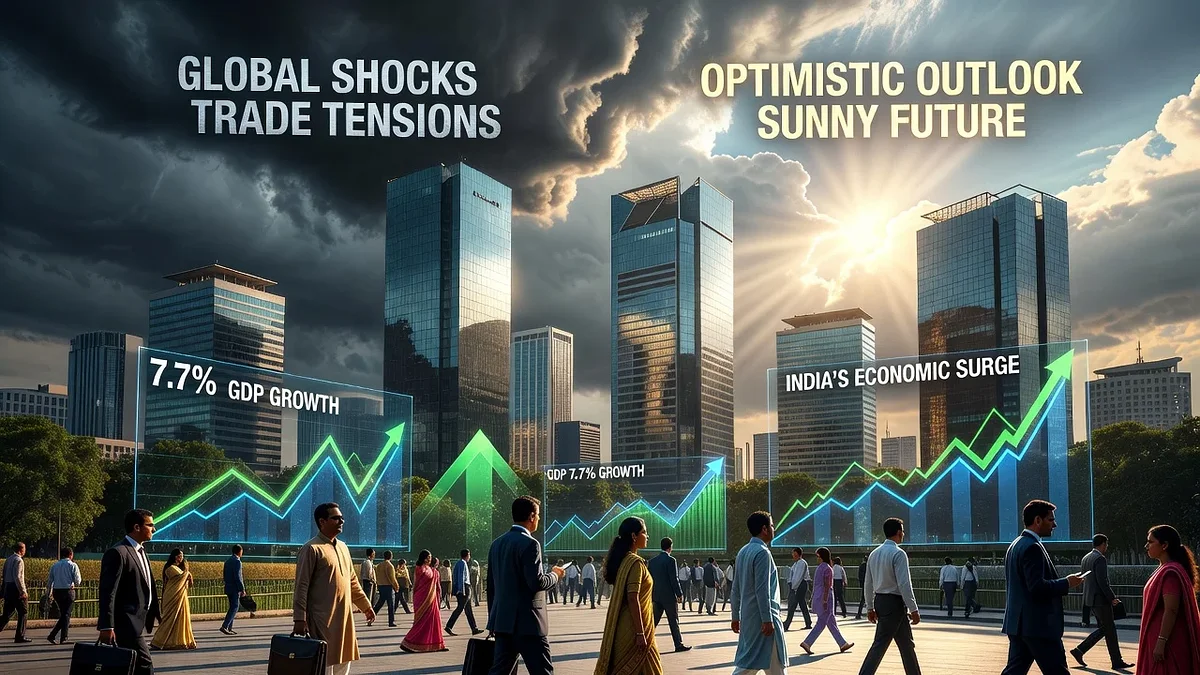
RBI officials stated that the near-term economic outlook remains favorable and well-positioned to sustain high growth momentum, driven by consumption, investment, and productivity-enhancing reforms. Inflation is expected to remain benign and near the target. However, global conditions introduce some volatility.

In the State of the Economy chapter of the February 2026 RBI Bulletin, released on February 20, 2026, officials noted that the economy is well-positioned to sustain its high growth momentum. They emphasized that inflation is expected to remain benign and near the target, providing a positive growth-inflation balance in the near term.

However, the global economic outlook and financial market conditions are in flux, influenced by diverse signals that impart volatility to market movements. Officials stated, “While the simmering geopolitical tensions, public debt sustainability concerns in Advanced Economies (AEs), stretched valuation of AI firms and disruptions of AI on software services industry, are posing negative risk to outlook, robust macro-economic data releases including corporate earnings, on the other hand, have added to the positive sentiments.”

The completion of India-EU free trade negotiations in late January and the interim trade agreement between India and the U.S. are expected to improve market access, enhance export competitiveness, and integrate Indian firms more deeply into global value chains. This has led to a shift in investor sentiments in the immediate term. Foreign portfolio investment into equity and debt segments made a comeback in February.

On the fiscal front, the continued commitment to fiscal consolidation and debt sustainability signals prudent macroeconomic management. The gradual reduction in the fiscal deficit, combined with a sustained emphasis on capital expenditure, would crowd in private investment and improve productive capacity. Support to states for capital investment is also likely to reinforce sub-national growth and infrastructure development.
Artikel Terkait

Illustration of India's Economic Survey 2025-26 tabling in Parliament, highlighting GDP growth, reforms, manufacturing revival, and PM Modi's approval.
Gambar dihasilkan oleh AI

India's economic survey 2025-26 highlights growth and reforms

Dilaporkan oleh AI Gambar dihasilkan oleh AI

India's Economic Survey 2025-26, tabled in Parliament on January 30, 2026, projects robust GDP growth amid global uncertainties and recommends key reforms for strategic resilience. It emphasizes manufacturing revival, digital curbs and policy overhauls to bolster economic stability. Prime Minister Narendra Modi praised it as a roadmap for inclusive development.

The Reserve Bank of India's Monetary Policy Committee decided to keep interest rates unchanged at 5.25% in its February meeting, citing improved growth prospects from the recent India-US trade deal. This pauses a series of rate cuts from 2025 amid benign inflation. The decision reflects optimism about GDP growth and external sector stability.

Dilaporkan oleh AI

Following the RBI's February decision to maintain rates at 5.25%, Governor Sanjay Malhotra reiterated that policy rates are likely to remain at current levels or decrease for an extended period. He cited benign inflation and low underlying inflation expectations but cautioned on risks and global uncertainties influencing growth-inflation dynamics.

India's private credit market is projected to stay resilient despite turmoil in global counterparts. This stability stems from strong local regulations and a focus on domestic investors. Unique fund structures help avoid common international risks.

Dilaporkan oleh AI

Japan's Q4 2025 GDP was revised upward to 1.3% annualized from the preliminary 0.2% reported on February 16, driven by strong business spending. January household spending on goods and private services held steady despite a year-on-year drop, with contained retail gasoline prices easing inflation. Analysts now expect the Bank of Japan to hold rates in April and hike in June.

Finance Minister Enoch Godongwana is set to deliver South Africa's 2026 Budget speech on February 25, amid positive economic signals including a credit rating upgrade and rising commodity prices. These factors are expected to support efforts to cap the country's debt at 77.9% of GDP and advance fiscal consolidation. Economists anticipate a focus on stabilizing debt and outlining a path to lower ratios in the medium and long term.

Dilaporkan oleh AI

India's Nifty index closed lower following sustained selling pressure, remaining above long-term averages while exhibiting short-term weakness. Technical indicators point to market consolidation with a corrective bias ahead of a cautious week. Expert Daljeet Kohli highlights potential selective rebounds driven by Q4 earnings in certain sectors.


Situs web ini menggunakan cookie

Kami menggunakan cookie untuk analisis guna meningkatkan situs kami. Baca kebijakan privasi kami untuk informasi lebih lanjut.
Tolak