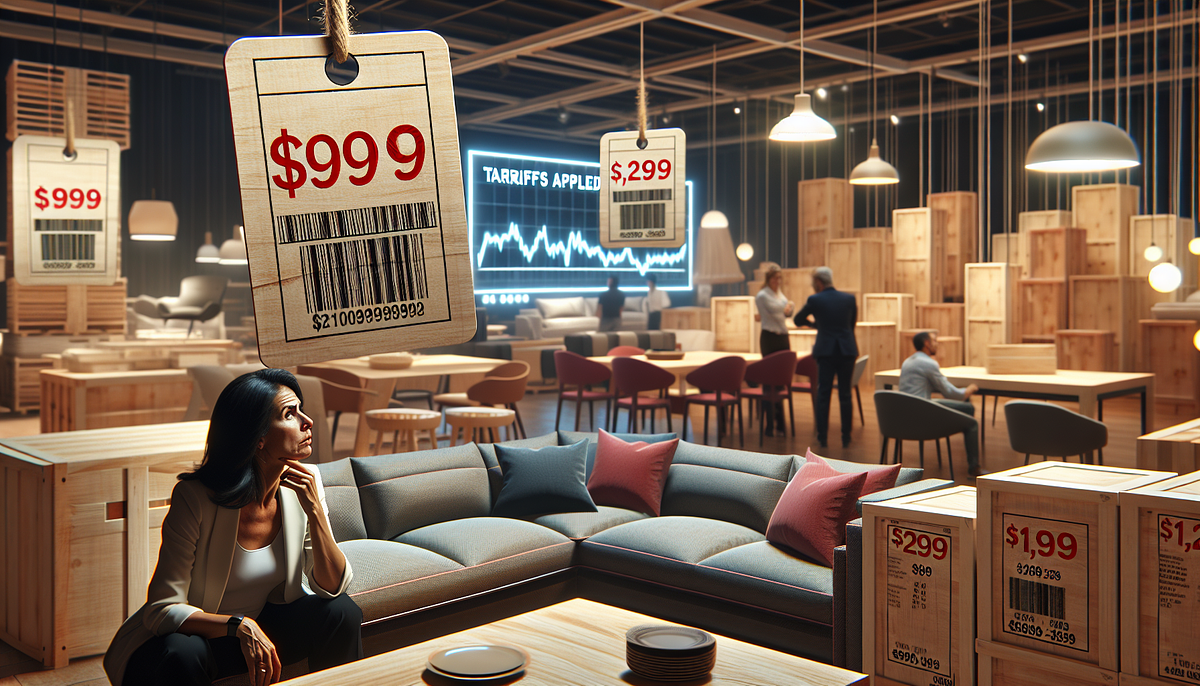
Photo illustration of a furniture store with rising price tags and tariff-impacted wood products, highlighting increased costs since 2020.
Picha iliyoundwa na AI

Furniture prices climb since 2020 as new tariffs and costs add pressure

Picha iliyoundwa na AI
Imethibitishwa ukweli

Prices for key furniture categories have risen since the pandemic, even as they trail overall inflation. Fresh U.S. tariffs on wood products and broad import duties could push costs higher, industry figures and federal data indicate.

• What changed since 2020

According to Bureau of Labor Statistics data cited by NPR, prices for living room, kitchen and dining room furniture are up about 25% since February 2020, while bedroom furniture is up roughly 11%. Overall consumer prices have risen nearly 26% over the same period, and furniture prices have eased from a 2022 peak. Industry executives also note lingering cost pressures from utilities, insurance and wages, compounded by pandemic-era spikes in demand and shipping.

• Competition kept a lid on some prices

“The barriers to entry are very, very low, and the furniture business is incredibly fragmented,” said Bill McLoughlin, editor in chief of Furniture Today. “Manufacturing follows low‑cost labor. That has been true for 60 years.” Even in U.S. hubs such as Mississippi and North Carolina, many components — fabrics, hardware and electronics like recliner power modules — are still sourced from abroad, largely China, NPR reported.

David Koehler, who runs the Delaware-based Johnny Janosik Furniture chain, said the market still accommodates aggressively priced items despite rising costs: “You could buy a $399 sofa in 1984, and you could still buy a $399 sofa today.” Consumers often tell retailers they want American‑made goods, he added, but many ultimately choose lower‑priced imports when faced with big price gaps.

• Tariffs and trade shifts

Tariffs imposed during President Donald Trump’s first term increased costs on Chinese imports and accelerated a sourcing shift to Vietnam rather than a large-scale return to U.S. production, trade data and industry reporting show. This year, the administration announced broad import duties and, separately, new sector‑specific tariffs on wood products. Reuters reports a 10% tariff on lumber and a 25% duty on kitchen cabinets, bathroom vanities and upholstered furniture took effect Oct. 14, with higher rates possible in 2026 for some countries. Parts of the broader tariff program face ongoing court challenges, and appeals are pending.

Companies have begun to respond. In June, Ashley Furniture Industries notified dealers it would add surcharges on most product categories — including import case goods and upholstery — citing tariff-related costs, according to Furniture Today. The Home Furnishings Association has warned that additional duties would raise costs for retailers and shoppers and be difficult to avoid given the industry’s global supply chains.

• What shoppers are seeing

Some consumers are deferring purchases. Erin Cummins of Connecticut told NPR she keeps eyeing replacements for her well‑worn couches but walks away at checkout because of “sticker shock,” with insurance and other essentials straining her budget.

• The outlook

If the new tariffs remain in place, retailers and manufacturers say they expect continued price pressure — though the market’s breadth, from entry‑level imports to domestic, higher‑end goods, means not every category will move in lockstep. For now, furniture inflation since 2020 remains below the overall rise in consumer prices, even as the industry braces for higher costs tied to trade policy and inputs.

Makala yanayohusiana

U.S. Treasury Secretary Scott Bessent at a press conference announcing measures to lower prices on coffee and banana imports, with symbolic items in the foreground.
Picha iliyoundwa na AI

Bessent says ‘substantial’ moves coming to cut prices of coffee, bananas

Imeripotiwa na AI Picha iliyoundwa na AI Imethibitishwa ukweli

U.S. Treasury Secretary Scott Bessent said Wednesday the Trump administration will announce measures in the coming days aimed at quickly lowering prices on imports such as coffee and bananas, following months of tariff-driven cost pressures.

Rising furniture prices in Addis Abeba highlight challenges for local manufacturers amid economic pressures. Workshops face forex shortages, policy delays, and supply chain issues affecting the urban economy. Stories from firms like Posh Woodwork and Zerufam Industry illustrate the growing vulnerabilities.

Imeripotiwa na AI

Tariffs may ebb and supply chains may detour, but US shoppers and giants like Walmart and Amazon still rely heavily on Chinese goods. At the National Retail Federation (NRF) showcase, attendees expressed more optimism for the year ahead.

As Donald Trump's first year of unpredictable tariffs drew to a close in 2025, major technology firms largely acquiesced rather than resisted, opting for deals and donations amid rising costs and legal uncertainties. From Apple's golden gift to the US securing stakes in chipmakers, the industry navigated a chaotic landscape of threats and negotiations. With Supreme Court challenges looming, the sector braces for more disruptions in 2026.

Imeripotiwa na AI

Ripoti ya hivi karibuni ya Shirika la Taifa la Takwimu la Kenya (KNBS) inaonyesha kuwa mfumuko wa bei umefikia asilimia 4.5 kwa mwaka, na bei za chakula zikipanda asilimia 7.8. Bidhaa za kila siku kama unga wa mahindi na sukuma wiki zinatarajiwa kuwa ghali zaidi Januari 2026. Baadhi ya misaada inatoka kwa kupungua kwa bei za sukari na umeme.

As 2026 begins, homeowners worldwide are shifting toward personalized interior designs that reflect individual stories and preferences, moving away from generic styles. This trend emphasizes authenticity, craftsmanship, and meaningful elements over mass-produced décor. Experts note that such personalization is reshaping investments in furniture, accessories, and rugs.

Imeripotiwa na AI

President Donald Trump's tariffs on green coffee beans, imposed in April 2025 and later exempted, caused price volatility and uncertainty for Montana roasters. Helena-based roaster Steven Ladefoged described weekly fluctuations in costs due to negotiations with various countries. While some benefits emerged for other sectors, the measures raised retail prices and strained importers.

Jumanne, 10. Mwezi wa tatu 2026, 22:38:04

February CPI holds steady above Fed's target

Jumatatu, 9. Mwezi wa tatu 2026, 07:50:08

Home textile market to reach USD 200.28 billion by 2031

Jumatatu, 9. Mwezi wa tatu 2026, 03:21:49

China's consumer prices keep rising after holiday spending surge

Jumanne, 24. Mwezi wa pili 2026, 07:33:18

Designers predict handmade furniture as 2026's dominant trend

Jumapili, 22. Mwezi wa pili 2026, 08:09:36

Tariffs backlash: Democrats seize on Trump plan ahead of midterms

Ijumaa, 13. Mwezi wa pili 2026, 13:41:40

Inflation cools to 2.4% and wages rise in January

Jumatano, 11. Mwezi wa pili 2026, 05:24:10

China's January consumer price growth cools as inflation outlook remains unclear

Jumatatu, 19. Mwezi wa kwanza 2026, 00:15:03

Apple and Samsung top 2025 phone sales as 2026 prices may rise

Ijumaa, 26. Mwezi wa kumi na mbili 2025, 03:36:50

South Africa's retail sector shows cautious festive growth

Jumatano, 17. Mwezi wa kumi na mbili 2025, 15:03:13

Questions grow over Trump’s late-2025 economy as prices stay elevated


Tovuti hii inatumia vidakuzi

Tunatumia vidakuzi kwa uchambuzi ili kuboresha tovuti yetu. Soma sera ya faragha yetu kwa maelezo zaidi.
Kataa