Collapse of last US-Russia nuclear treaty affects China and world

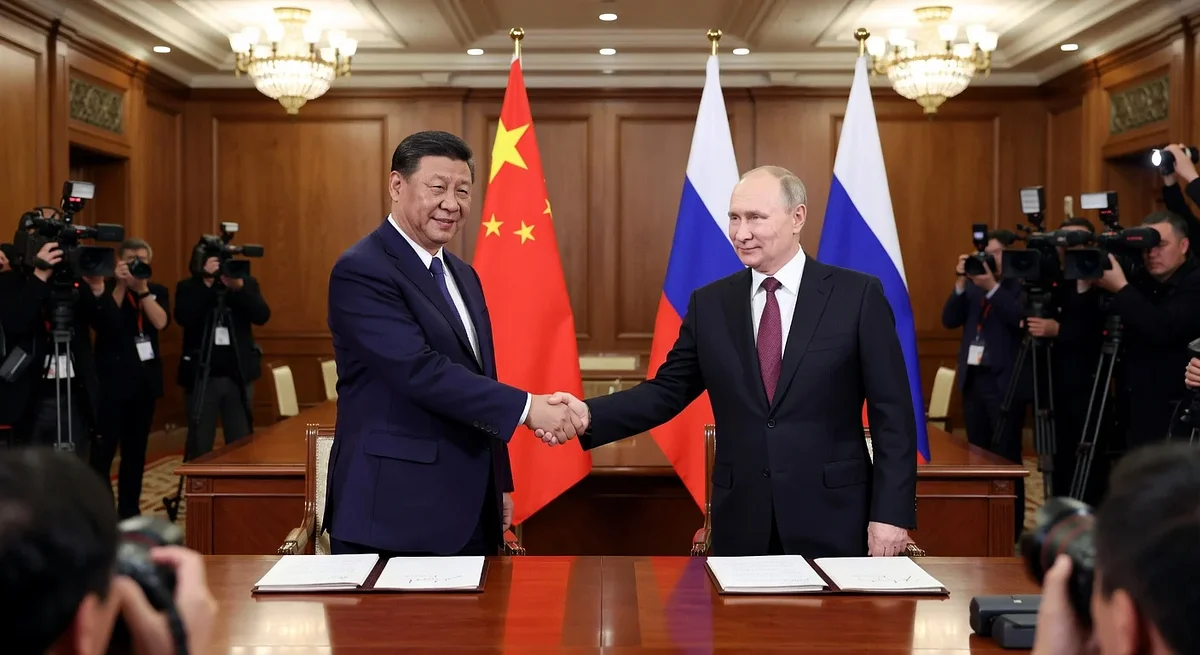
The expiry of the New Strategic Arms Reduction Treaty (New Start) between the US and Russia could trigger a three-way arms race involving Beijing, Washington, and Moscow, analysts warn. China has reiterated its refusal to join trilateral nuclear disarmament talks with the US and Russia, citing disparities in nuclear stockpile sizes. Beijing hopes the US responds positively to Russia's suggestions to safeguard global strategic stability.

The New Strategic Arms Reduction Treaty (New Start) between the US and Russia is set to expire soon, marking a significant break in over five decades of bilateral nuclear arms control. Absent a last-minute move, the world will for the first time in decades be without a treaty limiting nuclear deployments by the United States and Russia, which together account for about 90 per cent of the world’s nuclear weapons.

“China has taken note of the constructive suggestions previously made by Russia regarding the follow-up arrangements of the New Strategic Arms Reduction Treaty (New Start) and hopes that the United States will respond positively to truly safeguard global strategic stability,” Chinese foreign ministry spokesman Lin Jian said on Tuesday.

Beijing also reiterated its refusal to join trilateral nuclear disarmament negotiations with Washington and Moscow, despite repeated calls for such talks by US President Donald Trump. China cited the disparity in nuclear stockpile sizes as the reason for its refusal. Analysts warn the expiry of New Start could trigger a vicious circle and three-way arms race between Beijing, Washington, and Moscow.

This development highlights vulnerabilities in global nuclear stability, involving key terms like nuclear weapons, nuclear warheads, ICBMs, and strategic deterrence.
Relaterede artikler

Shocked South Korean diplomat reacts to U.S. and China redacting North Korea denuclearization from key security documents, illustrated on a map of the Korean Peninsula.
Billede genereret af AI

U.S. and China omit North Korea denuclearization in security strategies

Rapporteret af AI Billede genereret af AI

The Trump administration's new National Security Strategy, released on December 5, omitted any mention of North Korea's denuclearization, shocking South Korea. China's recent defense white paper also removed support for a nuclear-free Korean Peninsula. Seoul must now urgently strengthen self-reliant defense and alliance coordination.

Leading Chinese think tanks released a report on Thursday in Beijing, warning of rising nuclear weapon ambitions by Japan's right-wing forces and calling on the international community to closely monitor and counter the threat. The report highlights Japan's recent attempts to revise its three non-nuclear principles, raising concerns over the international nuclear nonproliferation regime.

Rapporteret af AI

Following a Chinese think tank report warning of Japan's nuclear ambitions, Beijing's foreign and defense ministries issued sharp condemnations on Thursday against Tokyo's alleged remilitarization, including pushes to revise non-nuclear principles and explore nuclear submarines—moves that risk further souring bilateral relations.

Chinese President Xi Jinping called on China and Russia to boost high-level exchanges and pragmatic cooperation during a virtual meeting with Russian President Vladimir Putin on Wednesday, while urging joint efforts to maintain global strategic stability. Xi extended New Year greetings to Putin and the Russian people, expressing readiness to chart a new blueprint for bilateral ties with him. Putin reciprocated with Spring Festival wishes to Xi and the Chinese people.

Rapporteret af AI

During the 20th round of China-Russia strategic security consultations in Moscow, the two sides exchanged views on Japan and reached a high degree of consensus, vowing to uphold World War II victory outcomes and oppose any whitewashing of colonial aggression. Chinese Foreign Ministry spokesperson Lin Jian urged Japan to retract erroneous remarks on Taiwan and take concrete actions to enable normal exchanges.

The US-China race for hi-tech resources intensifies across the Global South, pressuring swing nations in the middle to strike a balance. The Venezuela crisis has laid bare the limits of China's economic-centric diplomacy in competing with the US, serving as a stark reminder that spheres of influence continue to shape global politics in this new era of great power rivalry.

Rapporteret af AI

As 2026 dawns, Japan grapples with uncertainties over the US alliance under President Trump, fearing a potential regional deal with China amid fresh lows in Beijing-Tokyo ties following PM Sanae Takaichi's Taiwan comments.


Dette websted bruger cookies

Vi bruger cookies til analyse for at forbedre vores side. Læs vores privatlivspolitik for mere information.
Afvis