Collapse of last US-Russia nuclear treaty affects China and world

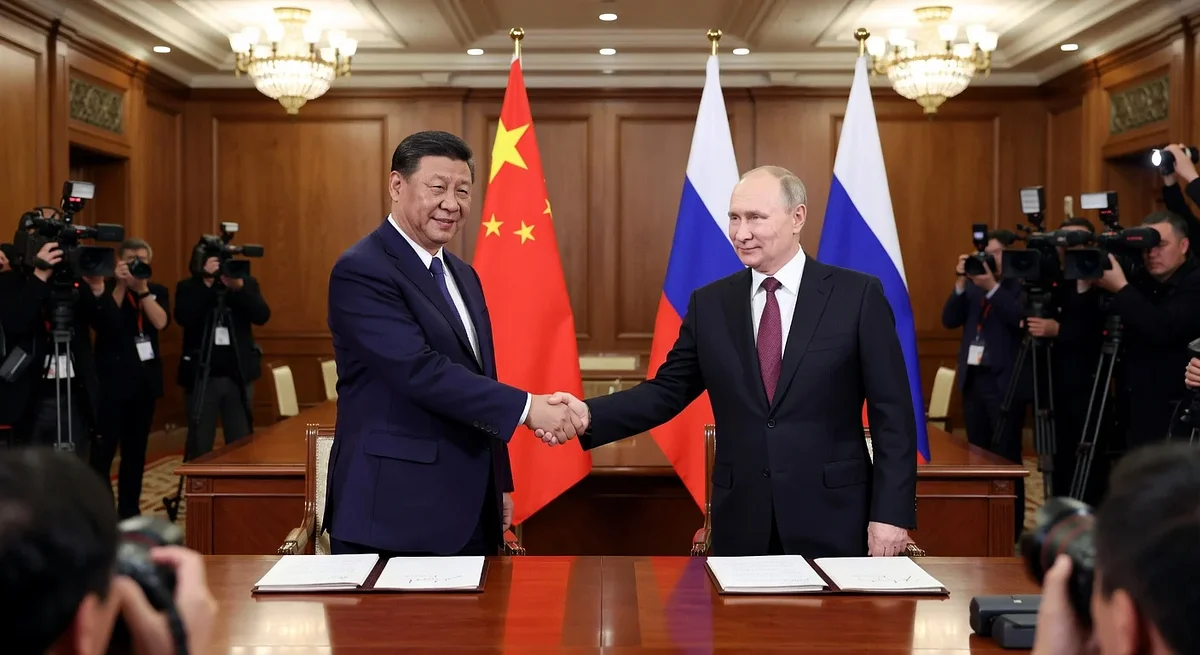
The expiry of the New Strategic Arms Reduction Treaty (New Start) between the US and Russia could trigger a three-way arms race involving Beijing, Washington, and Moscow, analysts warn. China has reiterated its refusal to join trilateral nuclear disarmament talks with the US and Russia, citing disparities in nuclear stockpile sizes. Beijing hopes the US responds positively to Russia's suggestions to safeguard global strategic stability.

The New Strategic Arms Reduction Treaty (New Start) between the US and Russia is set to expire soon, marking a significant break in over five decades of bilateral nuclear arms control. Absent a last-minute move, the world will for the first time in decades be without a treaty limiting nuclear deployments by the United States and Russia, which together account for about 90 per cent of the world’s nuclear weapons.

“China has taken note of the constructive suggestions previously made by Russia regarding the follow-up arrangements of the New Strategic Arms Reduction Treaty (New Start) and hopes that the United States will respond positively to truly safeguard global strategic stability,” Chinese foreign ministry spokesman Lin Jian said on Tuesday.

Beijing also reiterated its refusal to join trilateral nuclear disarmament negotiations with Washington and Moscow, despite repeated calls for such talks by US President Donald Trump. China cited the disparity in nuclear stockpile sizes as the reason for its refusal. Analysts warn the expiry of New Start could trigger a vicious circle and three-way arms race between Beijing, Washington, and Moscow.

This development highlights vulnerabilities in global nuclear stability, involving key terms like nuclear weapons, nuclear warheads, ICBMs, and strategic deterrence.
Artigos relacionados

Shocked South Korean diplomat reacts to U.S. and China redacting North Korea denuclearization from key security documents, illustrated on a map of the Korean Peninsula.
Imagem gerada por IA

U.S. and China omit North Korea denuclearization in security strategies

Reportado por IA Imagem gerada por IA

The Trump administration's new National Security Strategy, released on December 5, omitted any mention of North Korea's denuclearization, shocking South Korea. China's recent defense white paper also removed support for a nuclear-free Korean Peninsula. Seoul must now urgently strengthen self-reliant defense and alliance coordination.

US President Donald Trump stated on Thursday via social media that the expiring New Start treaty should not be extended, advocating instead for a new, modernized nuclear agreement involving China and Russia. The treaty expired this week, leaving the world without a legally binding nuclear weapons control pact for the first time in half a century. Experts fear this could end arms control efforts amid heightened global tensions.

Reportado por IA

O tratado de controlo de armas nucleares New START entre os Estados Unidos e a Rússia expirou no início de fevereiro de 2026 sem extensão. O Presidente Donald Trump recusou uma proposta de renovação por um ano, criticando o acordo da era Obama e pedindo um novo tratado que inclua a China. O Secretário de Estado Marco Rubio enfatizou a necessidade de abordar o rápido acúmulo nuclear da China em qualquer quadro futuro.

Following recent Foreign Ministry warnings, China has urged the United States to join a united front against resurgent Japanese militarism, citing threats to its Taiwan interests. State media highlight Tokyo's blurring of civilian-military lines, including PM Sanae Takaichi's nuclear armament proposal.

Reportado por IA

Beijing has accused the United States of exaggerating the so-called "China threat" via its new defense policy act, urging Washington to adopt a rational view of bilateral ties and avoid enforcing negative provisions. The foreign ministry stated that the act interferes in China's internal affairs and undermines its sovereignty, security, and development interests.

Chinese President Xi Jinping called on China and Russia to boost high-level exchanges and pragmatic cooperation during a virtual meeting with Russian President Vladimir Putin on Wednesday, while urging joint efforts to maintain global strategic stability. Xi extended New Year greetings to Putin and the Russian people, expressing readiness to chart a new blueprint for bilateral ties with him. Putin reciprocated with Spring Festival wishes to Xi and the Chinese people.

Reportado por IA

China is considering transitioning to an all-nuclear submarine fleet, prompting discussions on whether Japan will follow suit. Tokyo faces numerous hurdles, including personnel issues and potential redundancies.

terça-feira, 17 de março de 2026, 08:07h

Postponed Trump-Xi summit raises concerns over US arms sales to Taiwan

quinta-feira, 26 de fevereiro de 2026, 22:00h

Rubio calls for nuclear control agreement including US, Russia, and China

domingo, 22 de fevereiro de 2026, 23:51h

U.S. and Japan discuss China's nuclear buildup

sexta-feira, 20 de fevereiro de 2026, 10:59h

Japan-U.S. ties grow in importance in new Cold War

terça-feira, 17 de fevereiro de 2026, 11:45h

US offers more details on claim of China's secret nuclear test

sexta-feira, 09 de janeiro de 2026, 05:05h

China's ministries echo think tank report, slam Japan's nuclear moves as ties strain

quinta-feira, 08 de janeiro de 2026, 13:23h

Chinese think tanks report slams Japan's nuclear ambitions

terça-feira, 06 de janeiro de 2026, 20:48h

Chinese foreign ministry warns of Japan's accelerating remilitarization

sexta-feira, 19 de dezembro de 2025, 06:11h

Japan reaffirms non-nuclear policy after official's weapons suggestion

quinta-feira, 18 de dezembro de 2025, 23:15h

China’s military accuses Japan of raising space arms race risk


Este site usa cookies

Usamos cookies para análise para melhorar nosso site. Leia nossa política de privacidade para mais informações.
Recusar