India's 8.2% GDP growth raises sustainability concerns

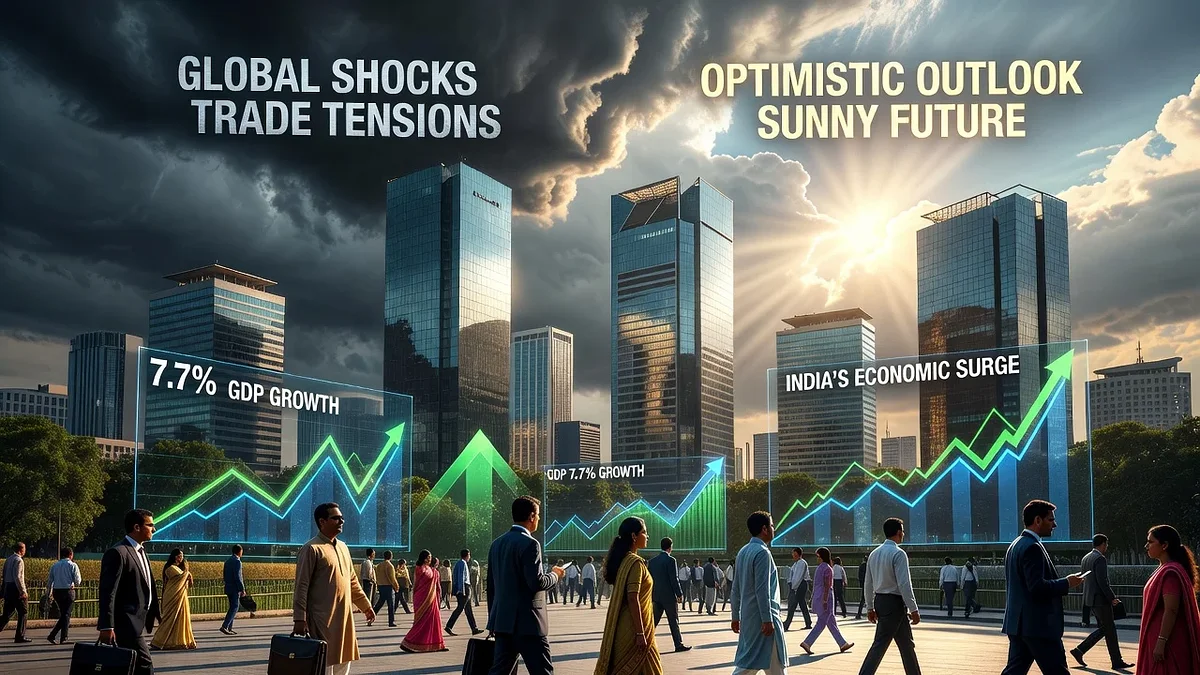
India recorded an 8.2% GDP growth in the second quarter, driven by strong manufacturing and services sectors. However, the International Monetary Fund has assigned a 'Grade C' to the country's national income accounting practices, highlighting structural weaknesses. This assessment underscores questions about the long-term sustainability of the growth amid uneven sectoral performance.

India's economy expanded by 8.2% in the second quarter of 2024-25, with projected output reaching ₹48.63 lakh crore. This growth reflects genuine momentum, as real Gross Value Added rose from ₹82.88 lakh crore to ₹89.41 lakh crore across agriculture, industry, and services. Manufacturing grew by 9.1%, indicating increased industrial demand and higher factory capacity utilization. The services sector, comprising 60% of GDP, advanced 9.2%, with financial services up 10.2% due to robust credit activity and urban demand.

Private Final Consumption Expenditure increased by 7.9%, signaling stronger household spending. Agriculture saw a 3.5% rise, aided by fuller reservoirs and better horticulture yields, contributing to modest rural income improvements. Nominal GDP grew 8.8%, keeping inflation in check, which eased below target levels by the end of 2024-25. Banks supported this with significant credit expansion, maintaining excess capital buffers. Fiscal consolidation continued through strong GST and direct tax collections, while the external sector stayed stable with a small current account deficit and healthy services exports.

Despite these positives, challenges persist. The IMF's 'Grade C' rating points to flaws in national income accounting, including an outdated 2011-12 base year, reliance on wholesale price indices for deflators, excessive single deflation, discrepancies between production and expenditure approaches, lack of seasonally adjusted data, and incomplete state-level data post-2019. Mining output stagnated at 0.04% due to a prolonged monsoon, and electricity generation grew only 4.4% amid a mild winter reducing demand. Sectoral shares show primary at 14%, secondary at 26%, and tertiary at 60%, but employment remains skewed toward low-productivity agriculture and services.

The Reserve Bank of India notes risks to exports from trade protectionism and geopolitical tensions. While the rupee appeared stable, it faced pressures from a strong U.S. dollar and volatile foreign capital flows. These factors suggest that while short-term growth is robust, institutional and structural reforms are needed for sustained progress.
Relaterede artikler

Illustration of India's Economic Survey 2025-26 tabling in Parliament, highlighting GDP growth, reforms, manufacturing revival, and PM Modi's approval.
Billede genereret af AI

India's economic survey 2025-26 highlights growth and reforms

Rapporteret af AI Billede genereret af AI

India's Economic Survey 2025-26, tabled in Parliament on January 30, 2026, projects robust GDP growth amid global uncertainties and recommends key reforms for strategic resilience. It emphasizes manufacturing revival, digital curbs and policy overhauls to bolster economic stability. Prime Minister Narendra Modi praised it as a roadmap for inclusive development.

The National Statistics Office has forecasted a 7.4% growth for the Indian economy in 2025-26, surpassing earlier expectations. While the first half of the year saw 8% expansion, the second half is expected to moderate to 6.8%. Services sector leads the acceleration, though nominal growth raises fiscal worries.

Rapporteret af AI

China's National Bureau of Statistics announced on Monday that the country's gross domestic product grew 5 percent in 2025 to reach 14.02 trillion yuan, meeting the government's target of around 5 percent. Despite a slowdown to a three-year low of 4.5 percent in the fourth quarter, the economy remained steady amid the US trade war.

Egypt is aiming to increase the private sector's share of total investment to over 70% by 2030, Planning Minister Rania Al-Mashat announced, following a 5.3% GDP growth in the first quarter of fiscal year 2025/26. This growth surpassed government expectations, fueled by industrial recovery and robust performance in tourism and ICT. Al-Mashat emphasized structural reforms to boost private investment and ensure economic stability.

Rapporteret af AI

As China enters the first year of its 15th Five-Year Plan, policymakers are prioritizing underlying stability and balance over mere growth rates. Recent measures include targeted fiscal support and incentives for care services. This approach aims to foster sustainable development amid global uncertainties.

Union Minister Hardeep S Puri has called for responsible, evidence-based criticism of India's economic reforms in 2026. He argued that pessimistic commentary weakens institutions and undermines progress.

Rapporteret af AI

The World Bank has projected that South Sudan will lead Africa's fastest economic growth in 2026. This forecast stems from the resumption of oil production to pre-war levels and economic stabilization. The country's GDP is expected to expand by 48.8 percent.


Dette websted bruger cookies

Vi bruger cookies til analyse for at forbedre vores side. Læs vores privatlivspolitik for mere information.
Afvis