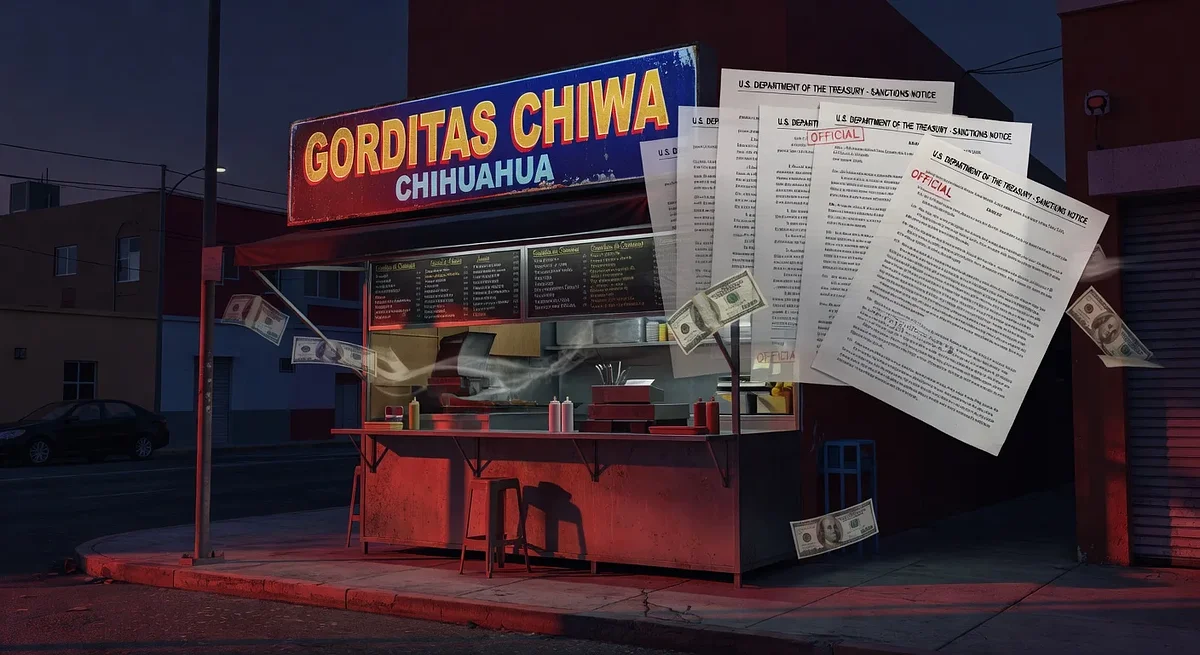
Illustration of the Gorditas Chiwas restaurant in Chihuahua sanctioned by the US Treasury for alleged Sinaloa Cartel money laundering ties.
Image générée par IA

Les États-Unis sanctionnent Gorditas Chiwas pour des liens présumés avec le cartel de Sinaloa

Image générée par IA

Le département du Trésor des États-Unis a imposé des sanctions financières le mercredi 20 mai à l'encontre du restaurant Gorditas Chiwas à Chihuahua et de 12 individus pour leur rôle présumé dans des réseaux de blanchiment d'argent liés au cartel de Sinaloa.

Les sanctions visent Alfredo Orozco Romero, identifié comme conseiller en sécurité et recouvreur de créances pour Armando de Jesús Ojeda Avilés, qui dirige un réseau collectant l'argent liquide issu de la vente de fentanyl et d'autres drogues pour le convertir en cryptomonnaies. Orozco contrôle le restaurant par l'intermédiaire de ses proches Amalia Margarita Romero Moreno et Liliana Orozco Romero, désignées comme des prête-noms.

Le département du Trésor a déclaré que Gorditas Chiwas et la société Grupo Especial Mamba Negra ont apporté un soutien financier ou matériel à l'organisation criminelle. Ces mesures gèlent les avoirs des personnes sanctionnées aux États-Unis et interdisent toute transaction avec des ressortissants américains.

L'Unité de renseignement financier du Mexique a annoncé qu'elle enquêtait sur les individus et entités nommés afin d'identifier d'éventuelles opérations impliquant des fonds illicites. Le secrétaire au Trésor, Scott Bessent, a déclaré que l'administration ne laisserait pas les narcoterroristes inonder les frontières de poison.
Ce que les gens disent

Les premières réactions sur X comprennent des reportages soulignant les sanctions américaines contre Gorditas Chiwas pour des liens présumés de blanchiment d'argent avec le cartel de Sinaloa, certains utilisateurs notant l'utilisation de cryptomonnaies et exprimant de la surprise ou du scepticisme quant aux implications politiques.

Articles connexes

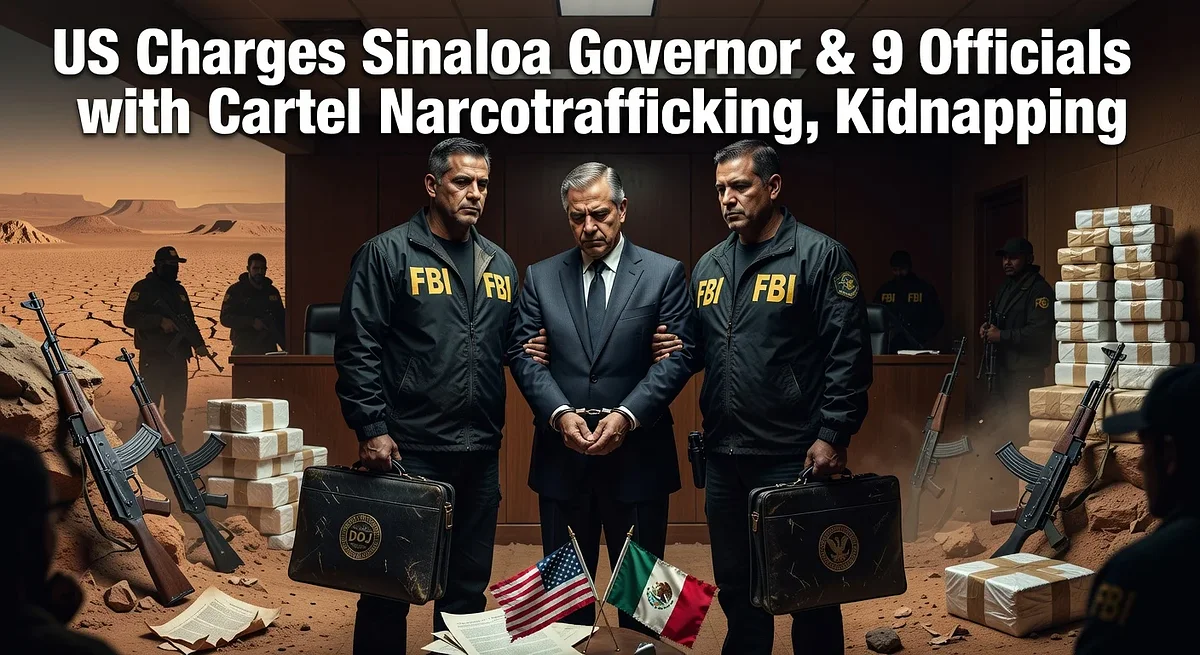
Dramatic illustration of Sinaloa Governor Rubén Rocha Moya arrested for alleged Sinaloa Cartel ties, featuring US agents, drugs, weapons, and flags.
Image générée par IA

US charges Sinaloa governor and nine officials with cartel ties

Rapporté par l'IA Image générée par IA

The US Department of Justice charged Sinaloa Governor Rubén Rocha Moya and nine other officials on April 29 with conspiring with Los Chapitos of the Sinaloa Cartel to traffic narcotics into the US in exchange for bribes. Charges include narcotrafficking, weapons possession, and kidnapping resulting in death. Mexican authorities are reviewing extradition requests lacking attached evidence.

The Office of Foreign Assets Control (OFAC) of the U.S. Treasury Department sanctioned six people on April 14 linked to a money laundering and cash smuggling network operated by the Northeast Cartel. Among those sanctioned is lawyer Juan Pablo Penilla Rodríguez, connected to Miguel Ángel “Z-40” Treviño Morales. Two casinos used for illicit activities in Tamaulipas were also targeted.

Rapporté par l'IA

The US Treasury Department sanctioned six individuals linked to the Northeast Cartel, including Eduardo Javier Valdez Islas, alias ‘El Crosty’, for human smuggling and money laundering. The cartel operates mainly in Tamaulipas, Nuevo León, and Coahuila. The measures block their assets in US territory.

A federal judge ordered pretrial detention for five former officials from morelos municipalities accused of ties to the sinaloa cartel as part of operation enjambre.

Rapporté par l'IA

The US Financial Crimes Enforcement Network issued an amendment allowing fund transfers needed for Mexico to liquidate CIBanco, accused of money laundering. This follows the bank's voluntary request to revoke its banking license. The Institute for the Protection of Bank Savings confirmed the process for paying guaranteed obligations.

The U.S. Department of the Treasury has sanctioned a Russian exploit brokerage network accused of buying stolen U.S. government cyber tools with cryptocurrency and reselling them. This marks the first use of authorities under the Protecting American Intellectual Property Act. The network, led by Sergey Sergeyevich Zelenyuk, obtained at least eight proprietary tools from a U.S. defense contractor.

Rapporté par l'IA

The US Department of State has begun a review of the 53 Mexican consulates operating in its territory, which could lead to the closure of some offices.


Ce site utilise des cookies

Nous utilisons des cookies pour l'analyse afin d'améliorer notre site. Lisez notre politique de confidentialité pour plus d'informations.
Refuser