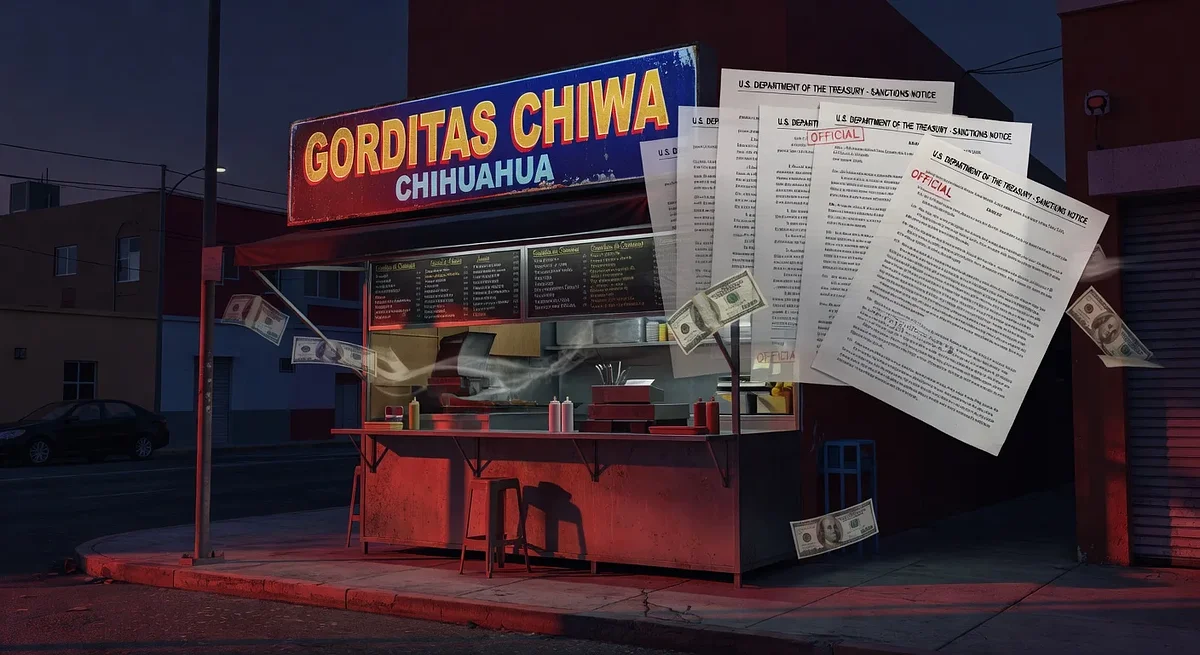
Illustration of the Gorditas Chiwas restaurant in Chihuahua sanctioned by the US Treasury for alleged Sinaloa Cartel money laundering ties.
Immagine generata dall'IA

Gli Stati Uniti sanzionano Gorditas Chiwas per presunti legami con il Cartello di Sinaloa

Immagine generata dall'IA

Il Dipartimento del Tesoro degli Stati Uniti ha imposto mercoledì 20 maggio sanzioni finanziarie contro il ristorante Gorditas Chiwas di Chihuahua e 12 individui per il loro presunto ruolo in reti di riciclaggio di denaro collegate al Cartello di Sinaloa.

Le sanzioni colpiscono Alfredo Orozco Romero, identificato come consulente per la sicurezza e addetto al recupero crediti per Armando de Jesús Ojeda Avilés, a capo di una rete che raccoglie contanti derivanti dalla vendita di fentanyl e altre droghe per convertirli in criptovalute. Orozco controlla il ristorante attraverso i parenti Amalia Margarita Romero Moreno e Liliana Orozco Romero, designate come prestanome.

Il Dipartimento del Tesoro ha dichiarato che Gorditas Chiwas e la società Grupo Especial Mamba Negra hanno fornito sostegno finanziario o materiale all'organizzazione criminale. I provvedimenti congelano i beni dei soggetti sanzionati negli Stati Uniti e vietano qualsiasi transazione con cittadini statunitensi.

L'Unità di Intelligence Finanziaria del Messico ha annunciato che sta indagando sugli individui e sulle entità citati per identificare possibili operazioni con fondi illeciti. Il Segretario al Tesoro Scott Bessent ha affermato che l'amministrazione non permetterà ai narcoterroristi di inondare i confini di veleno.
Cosa dice la gente

Le reazioni iniziali su X includono resoconti giornalistici che evidenziano le sanzioni statunitensi contro Gorditas Chiwas per presunti legami di riciclaggio di denaro con il Cartello di Sinaloa, con alcuni utenti che sottolineano l'uso di criptovalute ed esprimono sorpresa o scetticismo riguardo alle implicazioni politiche.

Articoli correlati

Dramatic illustration of Sinaloa Governor Rubén Rocha Moya arrested for alleged Sinaloa Cartel ties, featuring US agents, drugs, weapons, and flags.
Immagine generata dall'IA

US charges Sinaloa governor and nine officials with cartel ties

Riportato dall'IA Immagine generata dall'IA

The US Department of Justice charged Sinaloa Governor Rubén Rocha Moya and nine other officials on April 29 with conspiring with Los Chapitos of the Sinaloa Cartel to traffic narcotics into the US in exchange for bribes. Charges include narcotrafficking, weapons possession, and kidnapping resulting in death. Mexican authorities are reviewing extradition requests lacking attached evidence.

The Office of Foreign Assets Control (OFAC) of the U.S. Treasury Department sanctioned six people on April 14 linked to a money laundering and cash smuggling network operated by the Northeast Cartel. Among those sanctioned is lawyer Juan Pablo Penilla Rodríguez, connected to Miguel Ángel “Z-40” Treviño Morales. Two casinos used for illicit activities in Tamaulipas were also targeted.

Riportato dall'IA

The US Treasury Department sanctioned six individuals linked to the Northeast Cartel, including Eduardo Javier Valdez Islas, alias ‘El Crosty’, for human smuggling and money laundering. The cartel operates mainly in Tamaulipas, Nuevo León, and Coahuila. The measures block their assets in US territory.

A federal judge ordered pretrial detention for five former officials from morelos municipalities accused of ties to the sinaloa cartel as part of operation enjambre.

Riportato dall'IA

The US Financial Crimes Enforcement Network issued an amendment allowing fund transfers needed for Mexico to liquidate CIBanco, accused of money laundering. This follows the bank's voluntary request to revoke its banking license. The Institute for the Protection of Bank Savings confirmed the process for paying guaranteed obligations.

The U.S. Department of the Treasury has sanctioned a Russian exploit brokerage network accused of buying stolen U.S. government cyber tools with cryptocurrency and reselling them. This marks the first use of authorities under the Protecting American Intellectual Property Act. The network, led by Sergey Sergeyevich Zelenyuk, obtained at least eight proprietary tools from a U.S. defense contractor.

Riportato dall'IA

The US Department of State has begun a review of the 53 Mexican consulates operating in its territory, which could lead to the closure of some offices.


Questo sito web utilizza i cookie

Utilizziamo i cookie per l'analisi per migliorare il nostro sito. Leggi la nostra politica sulla privacy per ulteriori informazioni.
Rifiuta