Konflikten i Västasien hotar Indiens prognostiserade BNP-tillväxt

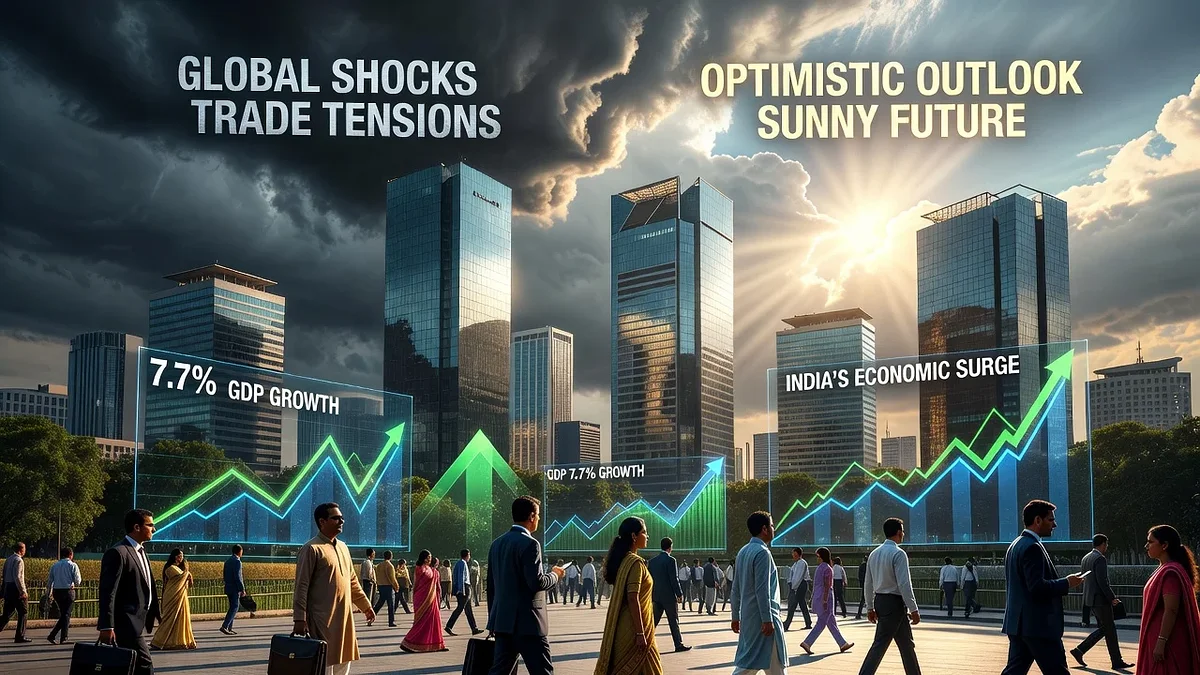
Indiens ekonomi riskerar att drabbas av utmaningar från konflikten i Västasien, som kan påverka oljepriser och den övergripande tillväxten. Enligt Crisil Intelligence väntas den reala BNP-tillväxten nå 7,1 procent under FY27, driven av konsumentutgifter och investeringar. Exporten väntas öka, medan detaljhandelsinflationen kan stiga till 4,3 procent.

Den pågående konflikten i Västasien innebär en nedsiderisk för Indiens ekonomiska utsikter, främst genom dess potentiella effekter på råoljepriser. Crisil Intelligence, en ledande betygssättnings- och forskningsfirma, prognostiserar Indiens reala BNP-tillväxt till 7,1 procent för räkenskapsåret 2027 (FY27). Denna prognos förutsätter stadigt stöd från inhemska konsumentutgifter och investeringsaktiviteter. Exports are expected to contribute positively to this growth trajectory. However, the conflict introduces uncertainties that could disrupt these trends. Retail inflation is projected to rise to 4,3 procent, reflecting pressures possibly linked to higher oil costs. In response to these dynamics, the Reserve Bank of India (RBI) is likely to hold its interest rates steady, aiming to balance growth and inflationary pressures. The report highlights the importance of monitoring geopolitical developments in West Asia, including tensions involving Iran, as keywords such as 'west asia conflict' and 'iran war' underscore the regional focus. This assessment comes amid broader economic indicators, emphasizing resilience in consumer and investment sectors despite external risks. Crisil's analysis provides a measured view, prioritizing factors that could sustain India's growth path while acknowledging vulnerabilities from global events.
Relaterade artiklar

Dramatic illustration of fiery oil tanker attack in Strait of Hormuz driving Brent crude prices over $100, with naval response, reserve releases, and India inflation impacts.
Bild genererad av AI

West Asia conflict surges oil prices past $100 per barrel

Rapporterad av AI Bild genererad av AI

Brent crude oil prices have exceeded $100 a barrel amid Iranian attacks on commercial shipping and disruptions in the Strait of Hormuz. The International Energy Agency and the United States are releasing oil reserves to counter supply concerns. In India, the crisis is fueling inflation risks, higher agricultural input costs, and trade disruptions.

Building on earlier concerns over GDP growth projections, the escalating West Asia war is pressuring Indian equity markets and disrupting footwear and textile sectors through supply shortages and cost spikes. Prashant Jain of 3P Investment Managers views the impact as marginal and transient, while industry reports show input costs up 10-50%.

Rapporterad av AI

Reserve Bank of India Governor Sanjay Malhotra said the central bank is in “wait and watch mode” amid uncertainties from the West Asia war, with second-round effects being the real concern. In a speech at Princeton University on April 18, he stressed preventing supply shocks from embedding in price levels through inflation expectations rather than demand compression. He highlighted India’s significant exposure to the region.

With Brent crude already past $100 due to prior Iranian attacks and Strait of Hormuz issues, escalating US-Iran tensions now raise worst-case fears of $200 per barrel oil prices. India's stock markets have plunged, hitting oil firms hardest, amid risks of wider deficits, rupee weakness, and inflation.

Rapporterad av AI

India's 10-year benchmark bond yield rose 7 basis points to 6.94% on Friday, signaling concerns over inflation and potential monetary tightening. High Brent crude prices above $100 per barrel, driven by the West Asia conflict, have intensified fears, compounded by the rupee falling below 94 to the dollar.

RBI officials stated that the near-term economic outlook remains favorable and well-positioned to sustain high growth momentum, driven by consumption, investment, and productivity-enhancing reforms. Inflation is expected to remain benign and near the target. However, global conditions introduce some volatility.

Rapporterad av AI

The Bank of France has cut its GDP growth forecasts to 0.9% for 2026 and 0.8% for 2027 due to surging energy prices from the Middle East conflict. This adjustment is based on a main scenario of temporary hydrocarbon price increases. The bank also expects inflation at 1.7% this year.


Denna webbplats använder cookies

Vi använder cookies för analys för att förbättra vår webbplats. Läs vår integritetspolicy för mer information.
Avböj