Le conflit en Asie de l'Ouest fait peser des risques sur la croissance projetée du PIB indien

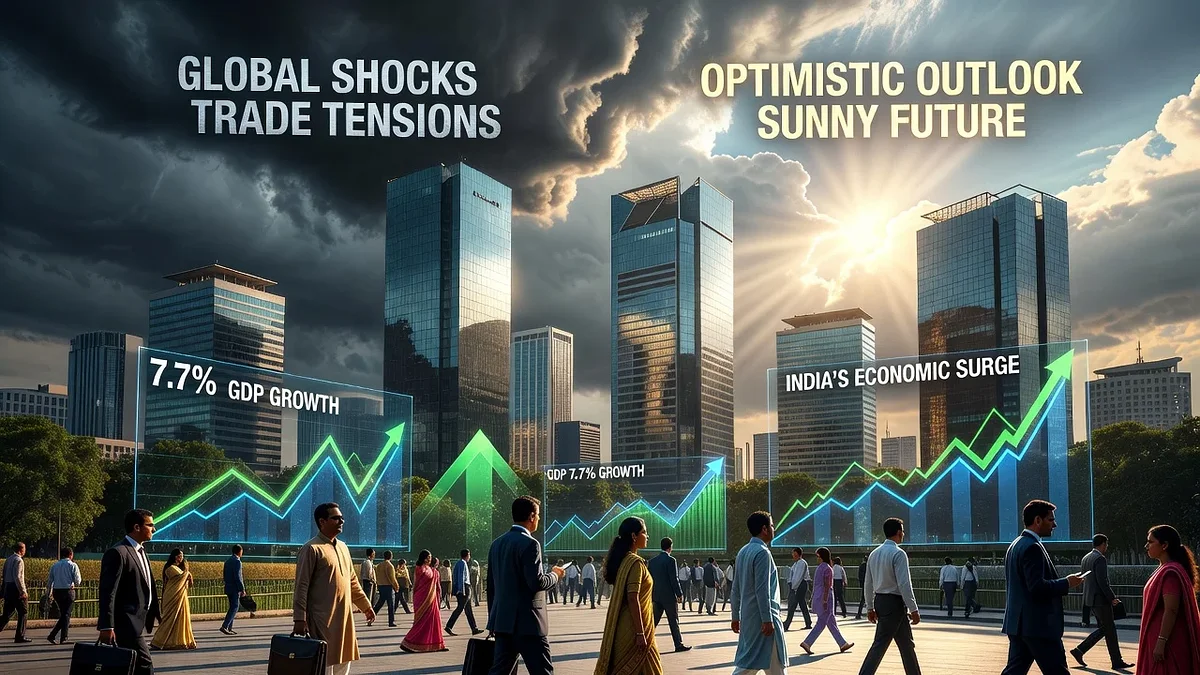
L'économie indienne pourrait être confrontée à des défis en raison du conflit en Asie de l'Ouest, qui pourrait affecter les prix du pétrole et la croissance globale. Selon Crisil Intelligence, la croissance réelle du PIB devrait atteindre 7,1 % en FY27, soutenue par les dépenses de consommation et les investissements. Les exportations devraient augmenter, tandis que l'inflation de détail pourrait grimper à 4,3 %.

Le conflit en cours en Asie de l'Ouest représente un risque à la baisse pour les perspectives économiques de l'Inde, principalement par ses effets potentiels sur les prix du pétrole brut. Crisil Intelligence, une société leader en notation et recherche, prévoit une croissance réelle du PIB indien de 7,1 % pour l'exercice fiscal 2027 (FY27). Cette projection suppose un soutien stable des dépenses de consommation domestiques et des activités d'investissement.  nnLes exportations devraient contribuer positivement à cette trajectoire de croissance. Cependant, le conflit introduit des incertitudes qui pourraient perturber ces tendances. L'inflation de détail est projetée à 4,3 %, reflétant des pressions potentiellement liées à des coûts pétroliers plus élevés.  nnFace à ces dynamiques, la Banque de réserve de l'Inde (RBI) devrait maintenir ses taux d'intérêt stables, afin d'équilibrer croissance et pressions inflationnistes. Le rapport souligne l'importance de surveiller les développements géopolitiques en Asie de l'Ouest, y compris les tensions impliquant l'Iran, des mots-clés tels que « west asia conflict » et « iran war » soulignant le focus régional.  nnCette évaluation intervient au milieu d'indicateurs économiques plus larges, mettant en avant la résilience des secteurs de la consommation et des investissements malgré les risques externes. L'analyse de Crisil offre une vision mesurée, priorisant les facteurs qui pourraient soutenir la trajectoire de croissance de l'Inde tout en reconnaissant les vulnérabilités liées aux événements mondiaux.
Articles connexes

Dramatic illustration of fiery oil tanker attack in Strait of Hormuz driving Brent crude prices over $100, with naval response, reserve releases, and India inflation impacts.
Image générée par IA

West Asia conflict surges oil prices past $100 per barrel

Rapporté par l'IA Image générée par IA

Brent crude oil prices have exceeded $100 a barrel amid Iranian attacks on commercial shipping and disruptions in the Strait of Hormuz. The International Energy Agency and the United States are releasing oil reserves to counter supply concerns. In India, the crisis is fueling inflation risks, higher agricultural input costs, and trade disruptions.

Building on earlier concerns over GDP growth projections, the escalating West Asia war is pressuring Indian equity markets and disrupting footwear and textile sectors through supply shortages and cost spikes. Prashant Jain of 3P Investment Managers views the impact as marginal and transient, while industry reports show input costs up 10-50%.

Rapporté par l'IA

Reserve Bank of India Governor Sanjay Malhotra said the central bank is in “wait and watch mode” amid uncertainties from the West Asia war, with second-round effects being the real concern. In a speech at Princeton University on April 18, he stressed preventing supply shocks from embedding in price levels through inflation expectations rather than demand compression. He highlighted India’s significant exposure to the region.

With Brent crude already past $100 due to prior Iranian attacks and Strait of Hormuz issues, escalating US-Iran tensions now raise worst-case fears of $200 per barrel oil prices. India's stock markets have plunged, hitting oil firms hardest, amid risks of wider deficits, rupee weakness, and inflation.

Rapporté par l'IA

India's 10-year benchmark bond yield rose 7 basis points to 6.94% on Friday, signaling concerns over inflation and potential monetary tightening. High Brent crude prices above $100 per barrel, driven by the West Asia conflict, have intensified fears, compounded by the rupee falling below 94 to the dollar.

RBI officials stated that the near-term economic outlook remains favorable and well-positioned to sustain high growth momentum, driven by consumption, investment, and productivity-enhancing reforms. Inflation is expected to remain benign and near the target. However, global conditions introduce some volatility.

Rapporté par l'IA

The Bank of France has cut its GDP growth forecasts to 0.9% for 2026 and 0.8% for 2027 due to surging energy prices from the Middle East conflict. This adjustment is based on a main scenario of temporary hydrocarbon price increases. The bank also expects inflation at 1.7% this year.


Ce site utilise des cookies

Nous utilisons des cookies pour l'analyse afin d'améliorer notre site. Lisez notre politique de confidentialité pour plus d'informations.
Refuser