West Asia conflict poses risks to India's projected GDP growth

India's economy could face challenges from the West Asia conflict, which may impact oil prices and overall growth. According to Crisil Intelligence, real GDP growth is expected to reach 7.1 percent in FY27, driven by consumer spending and investment. Exports are anticipated to increase, while retail inflation might climb to 4.3 percent.

The ongoing West Asia conflict presents a downside risk to India's economic outlook, primarily through its potential effects on crude oil prices. Crisil Intelligence, a leading ratings and research firm, forecasts India's real GDP growth at 7.1 percent for the fiscal year 2027 (FY27). This projection assumes steady support from domestic consumer spending and investment activities.

Exports are expected to contribute positively to this growth trajectory. However, the conflict introduces uncertainties that could disrupt these trends. Retail inflation is projected to rise to 4.3 percent, reflecting pressures possibly linked to higher oil costs.

In response to these dynamics, the Reserve Bank of India (RBI) is likely to hold its interest rates steady, aiming to balance growth and inflationary pressures. The report highlights the importance of monitoring geopolitical developments in West Asia, including tensions involving Iran, as keywords such as 'west asia conflict' and 'iran war' underscore the regional focus.

This assessment comes amid broader economic indicators, emphasizing resilience in consumer and investment sectors despite external risks. Crisil's analysis provides a measured view, prioritizing factors that could sustain India's growth path while acknowledging vulnerabilities from global events.
관련 기사

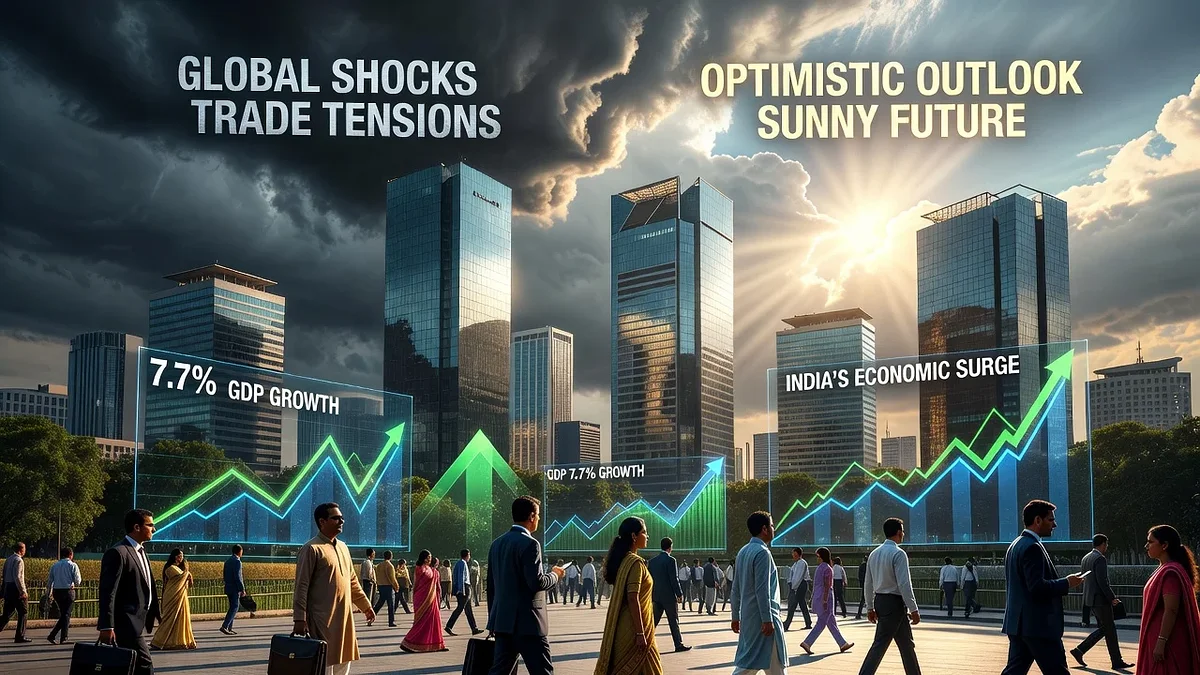
Realistic illustration showing India's economic growth with cityscape and financial symbols amid global challenges.
AI에 의해 생성된 이미지

India's economy grows 7.7 per cent in 2025-26 amid global shocks

AI에 의해 보고됨 AI에 의해 생성된 이미지

Provisional GDP estimates released on Friday show 7.7 per cent growth for 2025-26. The figure exceeds the government's February prediction by 0.1 percentage points. Outlook for 2026-27 points to a slowdown.

The Reserve Bank of India cautioned that an escalation in the West Asia conflict could derail the country's positive growth trajectory. The central bank assessed that the impact is likely to remain contained in the near term.

AI에 의해 보고됨

Building on earlier concerns over GDP growth projections, the escalating West Asia war is pressuring Indian equity markets and disrupting footwear and textile sectors through supply shortages and cost spikes. Prashant Jain of 3P Investment Managers views the impact as marginal and transient, while industry reports show input costs up 10-50%.

Net profit growth for Nifty 50 companies in the fourth quarter of fiscal 2026 is expected to slow on a year-on-year basis due to price effects from the Iran-US war, brokerages said. Estimates range from 0.6% to 6%.

AI에 의해 보고됨

Prime Minister Narendra Modi has urged citizens to reduce spending on gold and petroleum products amid falling foreign exchange reserves and rising import bills linked to the West Asia conflict.

국제통화기금(IMF)이 중동 위기에도 불구하고 한국의 2026년 경제성장률 전망치를 1.9%로 유지했다. 기관은 올해 인플레이션 전망을 0.7%p 상향한 2.5%로 제시하며 글로벌 원유 가격 상승을 이유로 꼽았다. 기획재정부는 강한 수출과 추가경정예산 효과로 성장 전망이 변동되지 않았다고 밝혔다.

AI에 의해 보고됨

Indian stock markets staged a significant rebound on Wednesday, fueled by hopes for peace in West Asia and falling oil prices. The NSE Nifty and BSE Sensex climbed substantially during the day, though some gains moderated by the close. Sectoral indices ended higher across the board amid cautious investor sentiment.


이 웹사이트는 쿠키를 사용합니다

사이트를 개선하기 위해 분석을 위한 쿠키를 사용합니다. 자세한 내용은 개인정보 보호 정책을 읽으세요.
거부