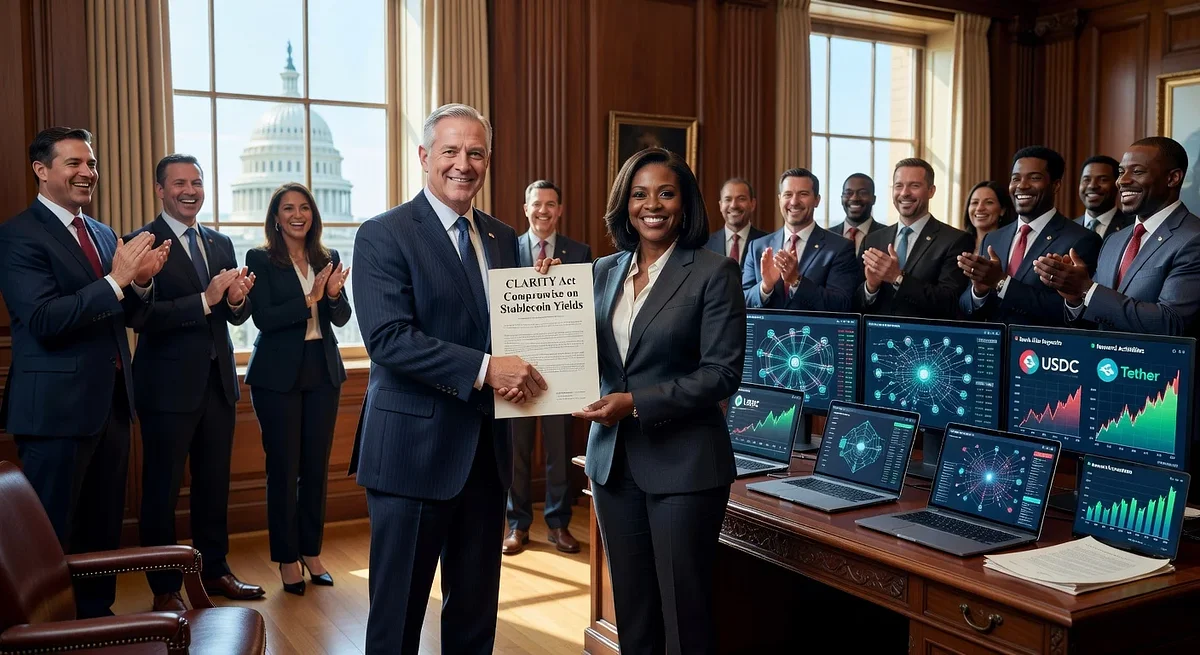
La CLARITY Act, destinada a proporcionar claridad regulatoria para los activos digitales, avanza en Washington con esperanzas de aprobación para mediados de 2026. Las negociaciones se centran en los rendimientos de stablecoins, atrayendo la participación del presidente Trump y líderes de la industria. La ley podría beneficiar a monedas compatibles con ISO 20022 como XRP y Stellar en medio de debates en curso entre bancos y empresas cripto.
La Ley de Claridad para el Mercado de Activos Digitales, conocida como la CLARITY Act, es una propuesta legislativa de EE. UU. diseñada para establecer reglas claras para los activos digitales y delimitar la autoridad regulatoria entre la Securities and Exchange Commission (SEC) y la Commodity Futures Trading Commission (CFTC). Actualmente en trámite en el Senado, la ley aborda ambigüedades que han obstaculizado la adopción institucional de las criptomonedas en Estados Unidos. Key advocates, including Kristin Smith, project passage by July 2026, aligning with JPMorgan analysts' mid-year timeline. Ripple CEO Brad Garlinghouse expressed optimism, estimating a 90% probability by April. Earlier this year, Coinbase CEO Brian Armstrong withdrew support, citing provisions that favor traditional banks over crypto-native companies, but the bill has since regained momentum. Central to negotiations are provisions on stablecoin yields. Banks argue that rewarding stablecoin holdings could undermine deposits essential to their operations, with Standard Chartered estimating potential reductions by one-third of stablecoin market capitalization. Crypto representatives, however, see shared challenges with community banks. Blockchain Association CEO Summer Mersinger noted that White House involvement adds momentum, while Digital Chamber CEO Cody Carbone expressed optimism about discussions with Senator Thom Tillis on stablecoin yields. President Donald Trump has intervened, arguing on Truth Social that banks should not undermine the recently passed Guiding and Establishing National Innovation for U.S. Stablecoins (GENIUS) Act. After meeting Armstrong, Trump emphasized advancing the CLARITY Act to position the US as the crypto capital. JPMorgan CEO Jamie Dimon indicated openness to limited stablecoin rewards, provided they do not mimic savings interest and crypto firms adhere to banking regulations. Eric Trump criticized banks as “anti-consumer and straight-up anti-American” on X. Support comes from Senators Chuck Schumer and Ruben Gallego, with Trump advisors David Sacks and Patrick Witt aiding policy disputes, countering opposition from Senator Elizabeth Warren over consumer protections. Senators Tillis and Angela Alsobrooks are reviewing banker proposals on stablecoin rewards. If advanced through the Senate Banking Committee markup, it would merge with a prior Agriculture Committee version, requiring Democratic backing for full Senate passage. The timeline is tight, with Senate floor time limited before midterm elections. Passage could accelerate integration of ISO 20022-compliant assets like XRP, Stellar (XLM), Algorand (ALGO), Hedera (HBAR), and IOTA into financial infrastructure, particularly cross-border payments. Bitcoin holders also stand to gain from reduced regulatory uncertainty.