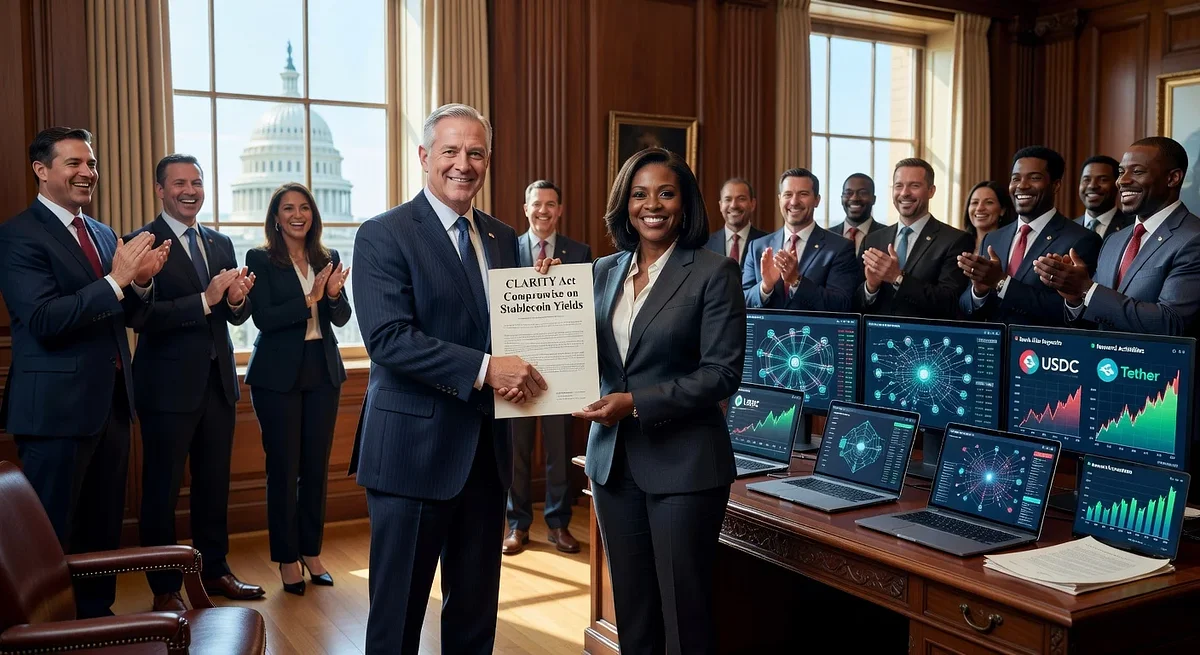
Dramatic illustration depicting stalled CLARITY Act talks in the White House, with President Trump, bank executives rejecting a stablecoin deal, and Coinbase CEO Brian Armstrong amid negotiation impasse.
Imagen generada por IA

Las negociaciones de la Ley CLARITY se estancan mientras los bancos rechazan el compromiso de la Casa Blanca sobre stablecoins

Imagen generada por IA

La Ley CLARITY de EE.UU. ha llegado a un punto muerto después de que los grandes bancos rechazaran un compromiso de la Casa Blanca que limita las recompensas por rendimiento de las stablecoins a pagos peer-to-peer. Esto sigue la reciente crítica del presidente Trump a los bancos y se basa en conversaciones estancadas sobre incentivos que las empresas cripto dicen que son vitales para la innovación. Trump se reunió con el CEO de Coinbase, Brian Armstrong, en medio del bloqueo.

Las negociaciones sobre la Ley CLARITY —un marco federal para activos digitales que sigue las normas sobre stablecoins de la Ley GENIUS del año pasado— se han estancado después de que los grandes bancos rechazaran un compromiso de la Casa Blanca sobre las recompensas con rendimiento para stablecoins, ancladas a 1 dólar estadounidense.  nnComo se informó anteriormente, la disputa se intensificó con la publicación de Trump del 3 de marzo en Truth Social instando al Congreso a aprobar la ley y criticando a los bancos por socavar el progreso cripto. Los bancos advierten que permitir que exchanges cripto como Coinbase ofrezcan rendimientos sobre las tenencias de stablecoins podría absorber hasta 500.000 millones de dólares en depósitos para 2028, amenazando la estabilidad. Exigen una prohibición total o regulaciones similares a las bancarias.  nnEl compromiso rechazado permitiría recompensas solo para transacciones peer-to-peer, no para saldos inactivos. Las empresas cripto aceptan esto, pero los bancos se oponen, temiendo lagunas. El CEO de JPMorgan, Jamie Dimon, pidió igualdad de condiciones bajo las reglas bancarias.  nnTrump agudizó su postura, publicando que los bancos deben comprometerse y «los estadounidenses deberían ganar más dinero con su dinero». Se reunió privadamente el martes con el CEO de Coinbase, Brian Armstrong. La senadora Cynthia Lummis reiteró la urgencia: «América no puede permitirse esperar». El representante French Hill expresó optimismo por una solución sin tratar las stablecoins como bancos.  nnLos debates continúan sobre ética y normas AML, pero el tiempo en el Senado es ajustado antes del receso. Los analistas advierten que las perspectivas podrían desvanecerse si los demócratas ganan en las elecciones midterm de noviembre.
Qué dice la gente

Las reacciones en X critican predominantemente a los grandes bancos por rechazar el compromiso de la Casa Blanca sobre recompensas por rendimiento de stablecoins limitadas a pagos peer-to-peer, estancando las negociaciones de la Ley CLARITY. Los defensores de las cripto elogian la crítica del presidente Trump a los bancos y su reunión con el CEO de Coinbase Brian Armstrong, viéndolo como un impulso a la innovación sobre la protección de las finanzas tradicionales. Publicaciones de alto engagement destacan temores de fuga de 500.000 millones de dólares en depósitos hacia stablecoins y escepticismo sobre la aprobación de la ley antes de las midterm. Los sentimientos van desde optimismo pro-cripto hasta reportajes neutrales y defensas menores de bancos.

Artículos relacionados

President Trump passionately urges Congress to pass the Clarity Act amid bank-crypto dispute, illustrated with Truth Social post, banks, and crypto symbols.
Imagen generada por IA

Trump urges passage of clarity act amid bank-crypto dispute

Reportado por IA Imagen generada por IA

U.S. President Donald Trump criticized banks in a Truth Social post for undermining the GENIUS Act and holding the Clarity Act hostage over stablecoin yield issues. He called for swift congressional action to advance crypto market structure legislation. The dispute has stalled negotiations between banking and crypto sectors.

The latest White House meeting between bankers and crypto experts showed progress on stablecoin yield issues, though no agreement was reached. This third session aimed to resolve a key impasse blocking the Digital Asset Market Clarity Act. Participants described the discussions as constructive, with more talks expected.

Reportado por IA

The White House convened its second closed-door meeting with cryptocurrency and banking industry representatives to address disputes over stablecoin yields in the stalled CLARITY Act. The discussions focused on resolving tensions that have halted the bill's progress in the Senate. Banking groups emphasized the need for innovation without risking bank deposits.

Treasury Secretary Scott Bessent has urged lawmakers to pass the Digital Asset Market Clarity Act before the end of the spring legislative window. In a recent interview, he emphasized the need for clear market structure rules amid ongoing volatility in crypto markets. Bessent highlighted bipartisan support and the importance of resolving disputes over stablecoin provisions.

Reportado por IA

A White House summit on February 2, 2026, aimed to bridge gaps between banking and crypto industries over stablecoin rewards but ended without agreement. Patrick Witt, the president's digital assets adviser, emphasized that ethics provisions targeting President Trump remain unacceptable. Negotiations continue amid Democratic demands for stricter rules on officials' crypto involvement.

Momentum for a comprehensive regulatory framework for cryptocurrencies has slowed in the U.S. Senate, reducing chances of passage this year. Ohio Republican Sen. Bernie Moreno, a former crypto entrepreneur leading negotiations, highlighted disputes over stablecoin rewards as the primary obstacle. This follows last July's GENIUS Act, which regulated stablecoins but left broader crypto oversight unresolved.

Reportado por IA

A delay in passing U.S. crypto market structure legislation is limiting valuation growth for American-exposed crypto firms, according to Benchmark analyst Mark Palmer. The holdup prolongs regulatory uncertainty amid rising global adoption, though bitcoin and infrastructure plays remain relatively insulated. Palmer still expects the bill to pass, albeit possibly later than anticipated.


Este sitio web utiliza cookies

Utilizamos cookies para análisis con el fin de mejorar nuestro sitio. Lee nuestra política de privacidad para más información.
Rechazar