Premierminister Abiy bezeichnet die Viehhaltung als ein Kapitel der Not bei der Nahrungsmittelselbstversorgung

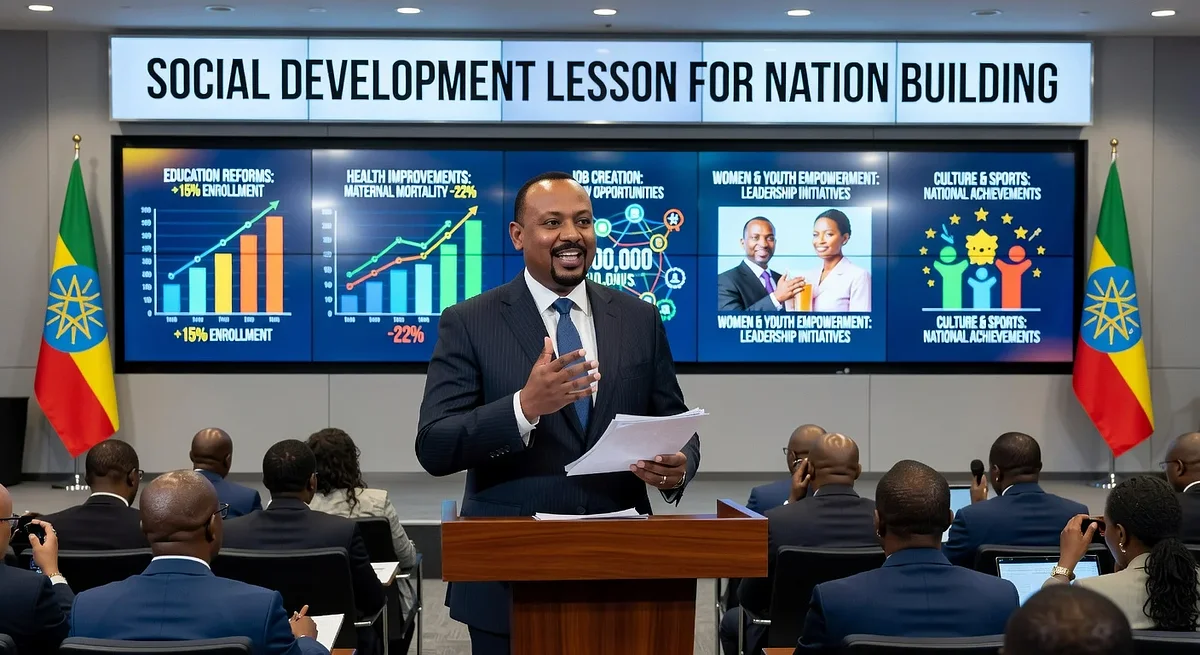
In Addis Abeba erklärte Premierminister Dr. Abiy Ahmed am 20. Miyaziya 2018 (äthiopischer Kalender) bei einer Veranstaltung für soziale Dienste, dass die Viehhaltung ein Kapitel der Not auf Äthiopiens Weg zur Nahrungsmittelselbstversorgung darstellt. Er betonte, dass die ordnungsgemäße Nutzung von Wasserressourcen, ungenutztes Potenzial und Einfallsreichtum Hoffnung auf eine nachhaltige Ernährungssicherheit bieten.

Premierminister Dr. Abiy Ahmed sprach auf einer Veranstaltung für soziale Dienste und beschrieb die Viehhaltung als ein Kapitel der Not auf dem Weg zu einer unabhängigen Versorgung der äthiopischen Bevölkerung mit Lebensmitteln.

„Viehhaltung; auf dem Weg, uns selbst zu ernähren, ist sie ein Kapitel der Not“, erklärte er.

Er merkte an, dass die angemessene Nutzung der Wasserressourcen des Landes, die Erschließung ungenutzter Potenziale und die Anwendung von Einfallsreichtum den Weg für eine verlässliche und nachhaltige Ernährungssicherheit ebnen würden.

Die Bemerkungen wurden von der Fana Media Corporation in Addis Abeba gemeldet.
Verwandte Artikel

Dr. Fitsum Assefa announces Ethiopia's strong economic growth at Prosperity Party meeting in Addis Ababa.
Bild generiert von KI

Ethiopia registers strong economic growth, says Fitsum Assefa

Von KI berichtet Bild generiert von KI

The Prosperity Party's executive committee concluded its three-day regular meeting in Addis Ababa. Minister of Planning and Development Fitsum Assefa (Dr.) stated that Ethiopia is registering strong and quality economic growth. The meeting discussed national and party issues.

Prime Minister Abiy Ahmed (Dr.) stated that cabbage farming, one of Ethiopia's national priority products, is achieving high success. He shared this in a social media message responding to public inquiries. The initiative marks progress toward Ethiopia feeding itself rather than relying on food aid.

Von KI berichtet

Ethiopia's Agriculture Minister Adisu Arega stated that the agricultural sector is playing a key role in efforts to build a job-creating non-subsistence economy. He visited wheat production sites in Oromia region's East Shewa zone, Adaa woreda. The agricultural transformation is registering encouraging results.

Ethiopia has saved billions of dollars through its homegrown economic policy in the manufacturing sector. In just the past nine months, domestic production substituted imports worth 4.85 billion dollars, while exports reached 433 million dollars. Data from the Ministry of Industry confirms these gains.

Von KI berichtet

Prime Minister Dr. Abiy Ahmed stated that large industries are being established across all sectors in an interview with Qana TV. He noted significant revenue from industrial import substitution now. Five solar plants are exporting products.

In a statement delivered in Tigrinya, Ethiopian Prime Minister Dr. Abiy Ahmed shared key thoughts prioritizing peace and development for Tigray's people over war. The government expressed a firm commitment to sustaining peace in the Tigray region and preventing renewed conflict.

Von KI berichtet

Ethiopia's Ministry of Agriculture states it will take necessary action against elements hindering and sabotaging coffee production. Coffee plays a key role in the national economy, with a target to export 600,000 tons in the budget year. Challenges have affected export volumes despite revenue gains.


Diese Website verwendet Cookies

Wir verwenden Cookies für Analysen, um unsere Website zu verbessern. Lesen Sie unsere Datenschutzrichtlinie für weitere Informationen.
Ablehnen