El Rajya Sabha aprueba el proyecto de ley de reforma de los derechos de las personas transgénero

El Rajya Sabha aprobó el 26 de marzo el Proyecto de Ley de Reforma de las Personas Transgénero (Protección de Derechos) de 2026 mediante votación oral, en medio de peticiones de la oposición para un debate más amplio. El Lok Sabha lo había aprobado el martes. El ministro de Justicia Social, Virendra Kumar, lo describió como un símbolo de justicia para sectores marginados durante mucho tiempo.

Nueva Delhi: El Rajya Sabha aprobó el miércoles el Proyecto de Ley de Reforma de las Personas Transgénero (Protección de Derechos) de 2026 mediante votación oral. El Lok Sabha lo aprobó el martes y ahora está a la espera de la sanción presidencial. El ministro de Justicia Social y Empoderamiento, Virendra Kumar, declaró: “Hemos presentado este proyecto de ley para garantizar la dignidad de la comunidad transgénero”. Destacó los esfuerzos del ministerio desde la Ley de 2019, incluyendo talleres de concienciación, ferias de empleo para personas transgénero y una línea de ayuda iniciada hace cuatro años. Kumar afirmó que la legislación pretende integrar a todos los segmentos de la sociedad y llevar a las personas transgénero a la corriente principal. El proyecto de ley define el término “transgénero” y excluye las “diferentes orientaciones sexuales e identidades sexuales autopercibidas”. Establece penas graduadas basadas en el daño infligido. La diputada del BJP Medha Vishram Kulkarni argumentó a favor de distinguir a las personas transgénero “reales” de las “falsas”, citando que hay 805 votantes transgénero registrados en Pune a pesar de que se ven más en público. El doctor Parmar Jashvantsinh Salamsinh dijo que las variaciones intersexuales ofrecen una base verificable para la certificación, al igual que los certificados de nacimiento. Los diputados de la oposición cuestionaron la prisa. El diputado del DMK, Tiruchi Siva, señaló: “Incluso si este proyecto de ley se aprueba con la mayoría del gobierno, el Tribunal Supremo lo anulará por violar los artículos 14, 15, 19 y 21”. Expresó su preocupación por la criminalización de la tradición guru-chela. La diputada del Congreso, Renuka Chowdhury, propuso 15 enmiendas. Sandeep Pathak, del AAP, señaló que 5.566 de las 34.000 solicitudes de certificación bajo la Ley de 2019 fueron rechazadas. La diputada del Shiv Sena (UBT), Priyanka Chaturvedi, preguntó por la base de los rechazos. La jueza jubilada Asha Menon, presidenta de un comité asesor del Tribunal Supremo, escribió al ministro instando a la retirada del proyecto. De los 19 diputados que debatieron durante cuatro horas, 13 pertenecían a partidos de la oposición. El proyecto de ley, presentado en el Lok Sabha el 13 de marzo, se enfrentó a protestas con más de 60.000 correos electrónicos y 40.000 firmas.
Artículos relacionados

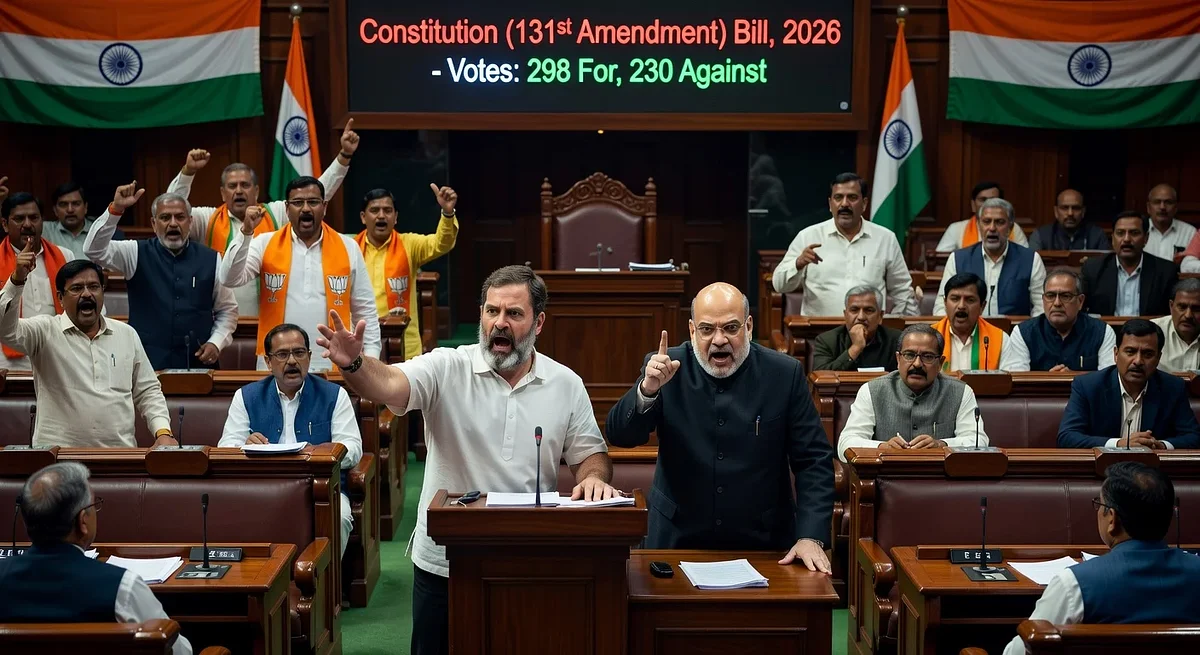
Dramatic Lok Sabha session: Women's reservation bill rejected with 298-230 vote; Rahul Gandhi criticizes as Amit Shah rebukes amid protests.
Imagen generada por IA

Lok Sabha rejects women's reservation amendment bill in special session

Reportado por IA Imagen generada por IA

In the ongoing special parliamentary session, the Constitution (131st Amendment) Bill, 2026—for one-third women's reservation tied to delimitation—failed in Lok Sabha on Friday with 298 votes in favour and 230 against, missing the required two-thirds majority of 352 out of 528. This follows the bills' contentious introduction the previous day. Opposition leader Rahul Gandhi branded it a 'shameful law,' drawing a sharp rebuke from Home Minister Amit Shah, as BJP vowed nationwide protests.

Two members of the National Council for Transgender Persons have resigned, alleging no consultation on the Transgender Persons (Protection of Rights) Amendment Bill, 2026. They failed to meet the minister, who skipped a scheduled meeting. The bill passed the Lok Sabha on March 24 and the Rajya Sabha on March 25.

Reportado por IA

The Rajasthan High Court has removed portions of its March 30 judgment criticizing the Transgender Persons (Protection of Rights) Amendment Act, 2026, stating they were included by mistake. In an April 2 clarificatory order, the bench said the observations were neither intended nor necessary. The case stemmed from a petition by a transgender woman in the Rajasthan Police.

The Lok Sabha passed the Central Armed Police Forces (General Administration) Bill 2026 by voice vote on Thursday as opposition members protested and walked out, demanding scrutiny by a Select Committee. The bill, cleared by the Rajya Sabha on Wednesday, is likely to undo a Supreme Court verdict directing the reduction of IPS officers' deputation in CAPFs. Opposition leaders criticised the move for undermining CAPF personnel's morale.

Reportado por IA

Following the government's circulation of three bills to implement 33% women's reservation in Lok Sabha and assemblies, India's first woman president Pratibha Patil, former Lok Sabha speaker Meira Kumar, and BSP chief Mayawati have voiced support in letters to PM Narendra Modi.

Congress has reiterated support for the women’s reservation law but opposes delimitation without a fresh census. The party plans to convene a meeting of INDIA bloc leaders on April 15. It urged the government to hold an all-party meeting after April 29.

Reportado por IA

Trinamool Congress MPs have submitted notices in both Lok Sabha and Rajya Sabha to discuss voter disenfranchisement amid concerns over electoral roll revisions in West Bengal. The move highlights opposition to the Special Intensive Revision process affecting millions of voters. West Bengal Chief Minister Mamata Banerjee has been protesting the exercise through a dharna in Kolkata.


Este sitio web utiliza cookies

Utilizamos cookies para análisis con el fin de mejorar nuestro sitio. Lee nuestra política de privacidad para más información.
Rechazar