Äthiopien treibt Wirtschaftsreformen für nachhaltiges Wachstum voran

Die Regierung der Wohlstandspartei führt umfassende wirtschaftliche Maßnahmen durch, um Äthiopien auf einem schnellen Wachstumspfad zu halten und breit gefächerte öffentliche Vorteile zu sichern.

Die Regierung hat bedeutende Projekte wie den Grand Ethiopian Renaissance Dam fertiggestellt. Auch die Green Legacy-Bewegung sowie Initiativen zur städtischen Modernisierung wurden erfolgreich umgesetzt.

Das Handelsrecht wurde nach 60 Jahren Geltungsdauer reformiert. Die Sektoren Bankwesen und Kapitalmarkt wurden für den Wettbewerb geöffnet. Die Weizenproduktion durch Sommerbewässerung hat es dem Land ermöglicht, die Selbstversorgung mit Lebensmitteln zu erreichen und Türen für Exporte zu öffnen.

Die Wirtschaft verzeichnete im Haushaltsjahr 2017 ein Wachstum von 9,2 Prozent. Es werden Anstrengungen unternommen, das Wachstum in diesem Jahr auf über 10,2 Prozent zu steigern. Die sieben strategischen Guba Birhanat-Projekte, die zu Kosten von 30 Milliarden Dollar errichtet wurden, befinden sich in der Umsetzungsphase.
Verwandte Artikel

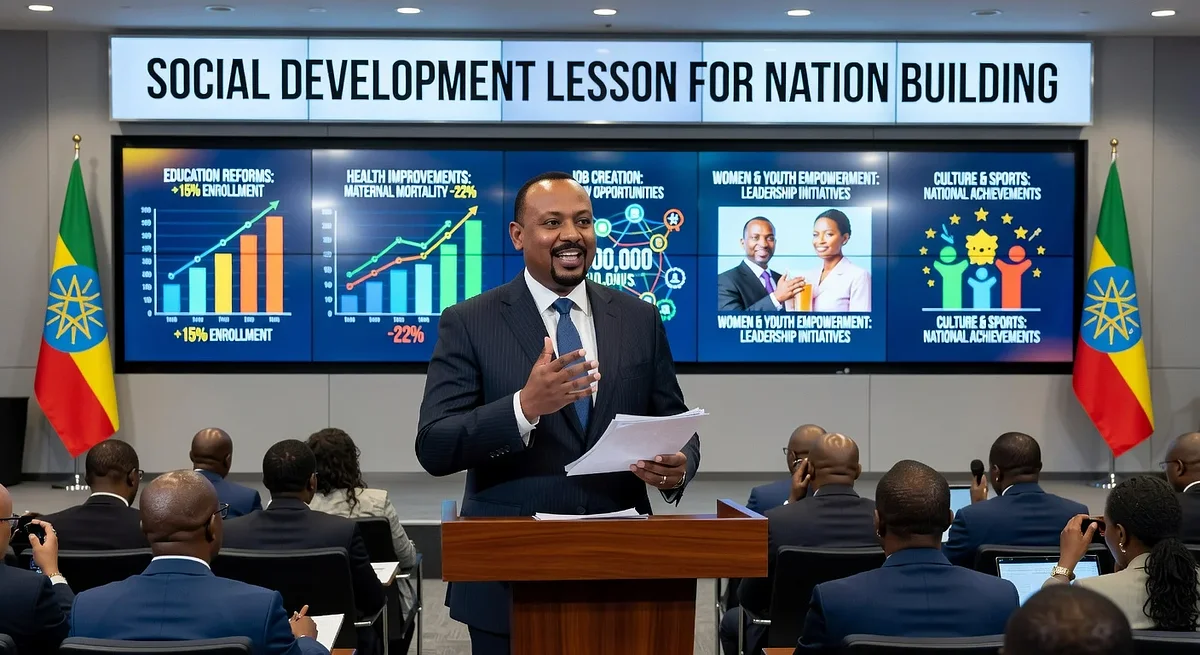
Dr. Fitsum Assefa announces Ethiopia's strong economic growth at Prosperity Party meeting in Addis Ababa.
Bild generiert von KI

Ethiopia registers strong economic growth, says Fitsum Assefa

Von KI berichtet Bild generiert von KI

The Prosperity Party's executive committee concluded its three-day regular meeting in Addis Ababa. Minister of Planning and Development Fitsum Assefa (Dr.) stated that Ethiopia is registering strong and quality economic growth. The meeting discussed national and party issues.

Deputy Prime Minister Temesgen Tiruneh began reviewing the third 100-day implementation report for Ethiopia's 2018 budget year with federal institution leaders today. He stated that Ethiopia has continued her renaissance journey through study since the start of internal reforms. The review highlights progress in governance, economy, and diplomacy.

Von KI berichtet

The World Bank states that Ethiopia's government development enterprises have shifted from budget burdens to job opportunities. A new report details reforms turning these entities into efficient revenue generators.

Deputy Prime Minister Temesgen Tiruneh stated at the launch of Ethiopia's Basic Infrastructure and Construction Week in Addis Ababa that ongoing national projects serve as reliable foundations for sustainable development. He emphasized the leadership principle of creativity, speed, and quality as key to Ethiopia's transformation. The event aligns with efforts toward national development visions.

Von KI berichtet

Ethiopia has saved billions of dollars through its homegrown economic policy in the manufacturing sector. In just the past nine months, domestic production substituted imports worth 4.85 billion dollars, while exports reached 433 million dollars. Data from the Ministry of Industry confirms these gains.

Minister of Planning and Economic Development Ahmed Rostom told parliament that Egypt’s economy is projected to grow by 5.4% by the end of fiscal year 2026/2027, rising to 6.8% by the end of the medium-term plan in 2029/2030. The government adopted a cautious growth scenario amid regional and global uncertainty.

Von KI berichtet

Egypt's Minister of Planning and Economic Development Ahmed Rostom said the national economy has withstood five major external shocks over the past six years, while delivering positive performance indicators. He spoke during a presentation of Egypt’s economic development plan at an American Chamber of Commerce conference. Rostom highlighted new initiatives to support startups and foster a better business environment.


Diese Website verwendet Cookies

Wir verwenden Cookies für Analysen, um unsere Website zu verbessern. Lesen Sie unsere Datenschutzrichtlinie für weitere Informationen.
Ablehnen